
Alison Gopnik on Childhood Learning, AI as a Cultural Technology, and Rethinking Nature vs. Nurture
Tyler Cowen interviews Alison Gopnik, professor of psychology and philosophy at UC Berkeley and renowned expert in human learning and child developmental psychology. Gopnik has written extensively for major publications including the New York Times and Wall Street Journal, where she served as a columnist.

Episode


- 01
Children learn like scientists by systematically analyzing data to figure out causal structures in the world - "they're looking at data and systematically figuring out what kind of structure out there in the world could have caused this pattern" - Gopnik
- 02
Babies are more conscious than adults because they take in vast amounts of information simultaneously, while adults compress experience into focused narratives - "they are conscious of all the things that are going on around them" - Gopnik
- 03
The effect of good caregiving is to increase variability in children's development rather than create similarities - "what nurture will do is let you have variability" - Gopnik
- 04
Current AI systems work by reproducing patterns from human text rather than genuine reasoning - "it's trained on all the stuff that very intelligent humans have done" - Gopnik
- 05
Twin studies oversimplify nature vs. nurture by missing that genetics and environment interact in complex developmental processes rather than operating independently
- 06
Modern schools teach children to be good at school rather than developing actual scientific thinking skills - "we teach kids how to be good at school, which we think is correlated with being smart" - Gopnik
- 07
IQ tests measure school performance rather than genuine intelligence, which involves multiple cognitive capacities often in tension with each other
Get the latest ideas from Conversations with Tyler.
Plus the best new takeaways about parenting from other top podcasts — read in minutes, not hours.
By continuing, you agree to podbrain's Terms and Privacy Policy.
These notes may contain occasional inaccuracies. Learn how podbrain notes are made
Tyler Cowen interviews Alison Gopnik, professor of psychology and philosophy at UC Berkeley and renowned expert in human learning and child developmental psychology. Gopnik has written extensively for major publications including the New York Times and Wall Street Journal, where she served as a columnist.
The conversation explores Gopnik's central hypothesis that children learn through the same systematic processes as human scientists, examining how both groups analyze data to build models of the world. They discuss computational approaches to understanding theory change, the nature of consciousness in babies versus adults, and whether humans can be truly Bayesian in their reasoning.
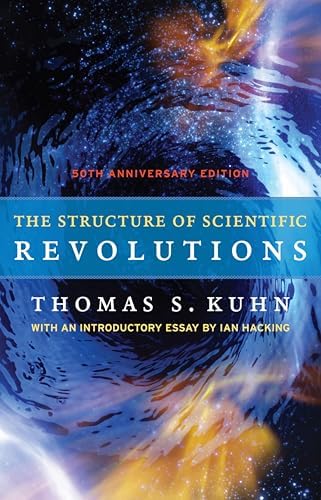
Gopnik challenges conventional wisdom about intelligence, arguing against simple nature-nurture divisions and IQ as a meaningful measure. The discussion covers practical applications for education, the role of caregiving in development, and how generative AI relates to human learning. Throughout, Gopnik draws on insights from The Structure of Scientific Revolutions and references her own work in The Scientist in the Crib while discussing her brother Blake's Warhol The Biography.
How Children Learn Like Scientists Through Data Analysis
Gopnik's core theory suggests children systematically analyze sensory data to build causal models, similar to how scientists develop theories from observations - "they're looking at data and systematically figuring out what kind of structure out there in the world could have caused this pattern."
This approach emerged as philosophers of science, moving beyond The Structure of Scientific Revolutions, developed computational models showing systematic patterns in scientific theory change that also apply to children's learning.
Children excel at experimental behavior, like a two-year-old systematically testing an avocado with a spoon - "he bangs it on the side, he picks it up and turns it over" - demonstrating the same exploratory approach scientists use.
The Bayesian Brain: Children vs. Scientists in Rational Thinking
Children are more Bayesian than adult scientists because they have flatter priors and adapt more readily to surprising evidence, while scientists become stubborn with peaked priors from extensive training.
Scientists exhibit predictable bias patterns, moving incrementally in one direction rather than following random walks that true Bayesian updating would produce - "they'll move a bit in the direction of thinking it matters, then they'll move a bit more."
The simulated annealing model from computer science explains this difference: children engage in high-temperature search (random exploration) while adult scientists prefer low-temperature search (incremental changes).
Baby Consciousness: More Aware Than Adult Minds
Babies experience heightened consciousness compared to adults because their brains are highly plastic and they process vast amounts of simultaneous information without adult-like filtering.
Adult consciousness involves compression and focus - "this adult tendency is to try to reduce the, compress the information around you into a particular narrative" - while babies remain present-focused and experientially rich.
Weaker episodic memory in young children may actually enhance consciousness by preventing the narrative compression that characterizes adult experience.
Rethinking Intelligence: Beyond IQ and Twin Studies
Gopnik rejects IQ as meaningful, arguing it measures school performance rather than genuine intelligence, which involves multiple cognitive capacities often in tension with each other.
Twin studies oversimplify development because genetics and environment interact in complex ways throughout developmental processes, as Eric Turkheimer's research demonstrates with socioeconomic status effects.
Good caregiving increases variability in children's outcomes rather than creating similarities - "what nurture will do is let you have variability" - explaining why siblings in the same family can be so different.
Educational Reform: From School Performance to Real Learning
Current schools suffer from Goodhart's Law, teaching children to excel at school metrics rather than developing genuine learning abilities - "we teach kids how to be good at school, which we think is correlated with being smart."
Early childhood education should emphasize inquiry-based, play-based learning with warm caregivers, as described in The Scientist in the Crib, allowing natural exploration and experimentation.
School-age children need apprenticeship models similar to music and sports, where they practice skills with immediate feedback rather than just learning about subjects theoretically.
Generative AI should be treated as a cultural technology like print or libraries, requiring students to learn both its capabilities and limitations, including persistent hallucination issues.
AI Limitations: Pattern Matching vs. Genuine Intelligence
Generative AI systems, including reasoning models, work by reproducing statistical patterns from human text rather than engaging in genuine reasoning - "it's trained on all the stuff that very intelligent humans have done."
These systems excel at reproducing reasoning processes they've seen but fail at novel experimental design and real-world interaction, unlike even two-year-olds who actively experiment with their environment.
AI represents "Derrida's revenge" - pure text manipulation without grounding in external reality, contrasting with children's embodied learning through physical experimentation.
Family Dynamics and the Gopnik Legacy
The Gopnik family exemplifies how good caregiving produces variability: six children in eleven years, all with similar genetics and environment, developed completely different strengths and career paths.
Their upbringing combined intellectual stimulation (visiting the Guggenheim at ages three and four) with complete freedom and minimal structure, allowing each child to develop unique capabilities.
Blake Gopnik's Warhol The Biography represents the family's diverse achievements, with Alison noting Andy Warhol was "someone who was really shifting the way that people thought about art" rather than being overrated.


These notes may contain occasional inaccuracies. Learn how podbrain notes are made
More in Philosophy

You Need An Ethical Will | Lt. Gen. Mark Hertling
Jun 21, 2026
Hollywood, The CIA & UFOs: The History Beyond Spielberg
Jun 20, 2026
What Our Fathers Teach Us, For Better Or Worse | Tom Junod
Jun 20, 2026
How To Love Your Country Without Lying About It | Ty Seidule
Jun 19, 2026
Recognize These Signs of Weakness | 7 Daily Habits That Will Change Your Life
Jun 15, 2026.svg)