
Inside The Democratic Party Civil War - Ezra Klein - #1114
This episode features Ezra Klein, journalist, podcast host, and co-author of Abundance, in conversation with Chris Williamson. Klein is known for founding Vox, hosting The Ezra Klein Show at The New York Times, and for his influential...


- 01
"The input of good work is independence of mind. Once the world's idea of you gets into your head, it is poison." - Ezra
- 02
Amusing Ourselves to Death argues Sesame Street is more dangerous than TV trash — it teaches kids that education should be entertainment, corrupting all serious discourse
- 03
Whoever dominates Twitter pays for it 3-4 years later: progressives dominated in 2020, got burned in 2024; Ezra predicts the right faces the same reckoning in 2-3 years
- 04
Abundance argues blue states make it 2-4x more expensive to build affordable housing than market-rate — one D.C. project cost $1.2 million per affordable unit
- 05
"AI makes you feel superhuman and it's making you less than human" — Ezra warns that the ghost of productivity is replacing actual deep thinking
- 06
The right has one ordinating principle (loyalty to Trump); the left has a plurality of purity tests — making the right easier to join but the left more ideologically coherent
- 07
"You cannot solve a problem whose shape you do not know" — Ezra argues AI safety debate must shift from speculative scenarios to regulating systems that exist right now
- 08
Reading paper books is a technology of thinking, not just information transfer — the value is what happens in your mind while reading, not the content alone
Get the latest ideas from Chris Williamson.
Plus the best new takeaways about artificial intelligence from other top podcasts — read in minutes, not hours.
By continuing, you agree to podbrain's Terms and Privacy Policy.
These notes may contain occasional inaccuracies. Learn how podbrain notes are made
This episode features Ezra Klein, journalist, podcast host, and co-author of Abundance, in conversation with Chris Williamson. Klein is known for founding Vox, hosting The Ezra Klein Show at The New York Times, and for his influential commentary on politics, media, and technology.
The conversation opens with Klein's unexpected cultural moment as an 'unlikely thirst trap' before pivoting to a wide-ranging discussion on protecting creative backstage from algorithmic capture, drawing on Super Sad True Love Story and Fame Sick as prophetic texts. Klein and Williamson then move through the 2024 election, the Democratic civil war sparked by Abundance, the tragedy-of-the-commons dynamics of political attention, and the structural failures of liberal governance on housing and clean energy.
The latter half covers AI regulation, the public goods agenda missing from AI policy, the dangers of outsourcing thinking to machines, and a frank debate about whether the left has adequately addressed the crisis facing men and boys — touching on Amusing Ourselves to Death, Of Boys and Men, and Young Man in a Hurry along the way.
Protecting Your Backstage in the Age of Streaming
Klein warns that seeing yourself in the third person is "very, very dangerous for doing good work" — the input of good work is independence of mind, and public perception is poison to that.
Super Sad True Love Story by Gary Shteyngart, written 10-15 years ago, is described as the most prophetic book on the current moment: a world of streamers, public ratings, looksmaxing, and physical books considered déclassé. "We have built the dystopia. We have done the thing the sci-fi writers warned us against."
Fame Sick by Lena Dunham captures why Klein limits public engagements: "Everything you do creates more of itself. If you get on different circuits, it just eats you. It eats the time." Klein structures his week around exactly three outputs — two podcast episodes and one column.
Mary Harrington's concept of a 'digital hijab' — deliberately concealing parts of yourself from the internet — resonated with Klein. Harrington described finishing a race, taking a selfie, and seeing the universe split: "How much of this is for me and how much of this is for the internet?"
Williamson's strategy: making his personal life deliberately boring. "Purposefully making my private life very boring and not really talking about it all that much — people just move on."
McLuhan, Postman, and the Medium That Changes You
Klein cites Marshall McLuhan: "The content of a medium is the juicy steak thrown to distract the watchdog of the mind." While you argue about a tweet, the medium is reshaping how you think ideas should feel, look, and how long they should be.
Amusing Ourselves to Death by Neil Postman — one of Klein's most-recommended books — makes the counterintuitive argument that Sesame Street is more dangerous than TV trash. Trash is obviously trash; Sesame Street subtly trains children to expect education to be entertainment, corrupting standards for all serious discourse.
Klein describes attention as a public good subject to tragedy-of-the-commons problems: "We are being attention-fracked." Political emails now arrive with siren emojis and phrases like 'I'm on my knees begging you' because the competition for attention forces escalation.
Dostoevsky or Nietzsche — Klein recounts the story of a writer whose sentences became shorter and punchier after switching from handwriting to typewriter. "Their writing style changed because of the medium." With algorithmic social media operating bidirectionally, the derangement goes both ways.
Klein's theory: people get into local maximums but long-term minimums by optimizing for Twitter. "The way you think is degrading. And in the long run, it's hard to maintain a career where you have to be interesting over an extended period of time."
The Democrats' Civil War and the Abundance Debate
Abundance, co-authored with Derek Thompson, became the unexpected text at the center of a Democratic civil war between populist and liberal factions — even though, Klein notes, the book was embraced most aggressively by the very people it was criticizing, including Gavin Newsom and Barack Obama.
The core Abundance argument: blue states have made it structurally harder to build housing and clean energy than red states. Climate tech entrepreneurs with Californian politics say: "I can get things done in Texas, in Arizona, and I can't get them done here."
A Washington D.C. case study: affordable housing units built with public and nonprofit dollars cost $1.2 million per unit. One developer built affordable and market-rate side by side — affordable at ~$800,000 per unit, market-rate at ~$400,000. "You just can't achieve the goal of affordable housing that way."
Klein argues the online factional fight is largely fake: Zohran Mamdani's housing plan (Block by Block) is about cutting bureaucracy and making it easier to build. "The fights people are scoring on Twitter are not even the fights and difficulties our ideas really face."
Klein's political evolution: he called for Biden to step down early, which "caused problems," and began writing supply-side progressive columns in 2021 — before the term Abundance existed. The intellectual arc went: Supply Side Progressivism → Liberalism Builds → Abundance.
Algorithmic Purity Spirals and the Twitter Debt Cycle
Klein's theory: "Whoever dominates Twitter pays for it 3 to 4 years later." Progressives dominated in 2020, talked themselves into wild ideas, and got burned in 2024. His prediction: the right, now captured by Nick Fuentes and conspiratorial Tucker Carlson content, faces the same reckoning in 2-3 years.
The asymmetry between parties: Trump collapsed Republican purity to a single dimension — loyalty to him personally. The left has a plurality of purity tests around policy positions. "There's a unity of ways you can get in trouble on the right. There's a plurality of ways on the left."
The DNC's 'Shut up, you ugly fuck' reply to Stephen Miller reached 50 million people and got 300,000 likes. Klein frames it as a tragedy-of-the-commons problem: it worked as attention, but "it's a way in, not a way out" — and degrades the entire system.
Politicians like Mamdani had to publicly disown things said on Twitter in 2020: "2020 was a crazy time. I said some shit." That came from an online milieu where people were pushed to say ever-more-extreme things to prove they 'got it' — optimizing for a very specific echo chamber.
Klein sees a pendulum swing toward political sunniness: Mamdani's smile, Tallarico's progressive Christianity framed in the language of virtue and morality. "The winning move in politics in the next couple of years is going to be the way out, not the way in."
AI Regulation: From Speculative Doom to Present-Day Governance
Klein's core AI safety argument: "You cannot solve a problem whose shape you do not know." The debate has been stuck in speculative scenarios — recursive superintelligence, mass automation overnight — while the actual systems that exist now go under-regulated.
On the fast-takeoff scenario: "If we create recursive superintelligence that slips out of our control overnight, we better just hope for the best because I think we are kind of fucked in that scenario." But Klein is skeptical it will happen that quickly, citing the gap between intelligence and the capacity to wield power.
AlphaFold — solving the protein folding problem — is described as the most impressive thing AI has done yet, made possible by the Protein Database: "Arguably the cleanest scientific database in existence." Klein argues many problems have this shape but require building the data infrastructure first.
Klein's public goods agenda for AI: the IRS could run an LLM that does your taxes with you (it already has ground truth on income and writes the tax code); orphan diseases — rare conditions with no commercial incentive — are ideal for AI-plus-advanced-market-commitment models like Operation Warp Speed.
Four buckets Klein would prioritize with coordination power: (1) massively increase public AI evaluation capacity; (2) regulate AI around children — AI companions and lovers before real relationships is "quite scary"; (3) create a public goods agenda for AI; (4) establish human-in-the-loop requirements and restrict AI in surveillance and kill-chain decisions.
On OpenAI's stated pro-regulation stance: "Greg Brockman, its president, has helped fund a super PAC dumping money against candidates who want to regulate AI. On the one hand, they'll come to a hearing and say we want to be regulated. Then somebody runs for office saying we should do some light regulation — 'Not you, not by you, we don't.'"
Books, Attention, and the Ghost of Productivity
"AI makes you feel superhuman and it's making you less than human." Klein has watched people use AI more and their work get worse — the constant simulacrum of productivity replaces actual deep thinking.
Klein's advice to college students: read books on paper. "People think of books as a technology of information, but they're a technology of thinking. They are a scaffold for thinking. The value of a book is not just the information on it — it is what happens in your mind when you read it."
The lesson of McLuhan and Postman applied to AI: "Everybody thinks they're using the AI as a prosthetic. But eventually the AI is going to be using you as a prosthetic" — in the same way Amazon has made delivery workers into prosthetics of the boxes they carry.
If forced to choose between an AI-forward school and a St. John's-style all-paper-and-pens school for his kids: "I would go that one. What I need to develop in them is the ability to be a human being."
Williamson's list of things that feel unproductive but are: driving in silence, walking without AirPods, dinner with friends, lying in a hammock. Things that feel productive but aren't: sitting at a laptop when not working, Slack, check-in calls. "Deeper productivity often doesn't look or even feel like productivity."
Klein's most important daily practice: going to a coffee shop or beautiful space and reading paper books long enough for his mind to settle. "That is, I think, the most important thing I do for my work." He also no longer consumes anything on the subway — "like a psychopath" — just sits and thinks.
The Left's Blind Spot on Men and the Virtue Vacuum
Klein argues liberalism made a damaging error: it began to see individualistic explanations as excuses for structural dysfunction, becoming hostile to any politics of self-improvement. "That's a betrayal of the long history of liberalism, which has always been about self-cultivation — go read your Kant or your John Stuart Mill."
Of Boys and Men by Richard Reeves is cited as a serious and widely recognized account of male underperformance. Klein endorses Reeves's argument that modern education is not well-built for boys, while noting the framing of male vs. female competition may be less useful than human vs. machine.
Klein's observation on the right's trajectory: the masculinist online space moved from Jordan Peterson (who thought seriously about virtue, myth, and self-mastery) to Andrew Tate and Nick Fuentes (who have, in Klein's view, no real concept of virtue). "The left gave up on virtue and the right rejected it."
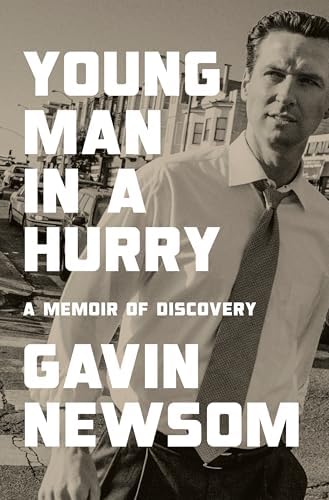
Young Man in a Hurry by Gavin Newsom is described as unusually interesting for a politician's book and interpreted as "a confrontation with a certain kind of maleness" — evidence that the left's political water has changed on this issue.
Klein's view on healthy masculinity: "You have to start any vision of masculinity with the reality that men are stronger and through testosterone more aggressive. So self-mastery has always been an important part — the constructive channeling of those impulses is foundational to any healthy masculinity."
Williamson pushes back that identifying the problem is only useful insofar as it enables solutions — and that talking about solutions for men still generates more online hostility than identifying the problem. Klein partially concedes but argues the zeitgeist has shifted more than the comment section suggests.
Handling Criticism Without Being Captured By It
Ethan Strauss's essay 'Criticism Capture Is More Warping Than Audience Capture' is cited as one of the most canonical pieces for the modern media age — the idea that creators change their positions preemptively to defend against or react to anticipated criticism.
Klein's practice: when facing a wave of critique, he invites critics onto the show to deliberate directly. "If I can pull it into spaces where I can deliberate about it — but if all I'm doing is exposing myself to the roar of anger getting algorithmically boosted, that's not constructive."
Klein batches criticism intentionally: he prints it out or watches critical videos at 9:30 AM when resourced and energized — not at the end of the day during transitions between work, family, and sleep. "Resilience is highest" in the morning.
"Nobody is hated like an apostate." Anti-Trump conservatives get far more hostility from the right than Klein does as a lifelong critic. The small differences make the most noise because critique is often a form of in-group disciplining — "get in line."





These notes may contain occasional inaccuracies. Learn how podbrain notes are made
More in Self-Development

#871: The “Divine Leaf” with 8,000+ Years of Use — Exploring the Many Benefits of Coca with Dr. Andrew Weil and Wade Davis
Jun 25, 2026
Gary's Economics Can't Answer This One Question About Wealth Taxes | Tom Reacts
Jun 25, 2026
Why You Don’t Feel Loved (even when you are) - Sonja Lyubomirsky - #1115
Jun 25, 2026
A User’s Guide To Kava: The Most UNDERRATED Plant Medicine w/ Cameron George #537
Jun 24, 2026
What Society Values in Men, Where Does a Man Start, and Why Humility Makes or Breaks Us | ASK ME ANYTHING
Jun 24, 2026
.svg)