
21 Harsh Truths About Why You’re Still Lost - Mark Manson -
Chris Williamson hosts Mark Manson, bestselling author of ***The Subtle Art of Not Giving a F*ckand founder of the AI coaching app Purpose. Manson pioneered the concept of non-neediness in dating through his 2011 bookModels***, which remains foundational reading...


- 01
The most important skill in the 21st century is the ability to live happily with uncertainty - Chris Williamson
- 02
Neediness occurs when you place a higher priority on what others think of you than what you think of yourself - Mark Manson
- 03
There's an inverse relationship between convenience and significance - we only appreciate things that require friction or sacrifice
- 04
When selecting a partner, you're choosing their entire lifestyle: sleep schedule, money habits, stress levels, and coping mechanisms
- 05
Learning more is a smart person's favorite form of procrastination - guilty as charged - Mark Manson
- 06
AI basically regresses you back to the mean - if you're in the bottom 50% it makes you better, top 50% it makes you worse
- 07
At some point you realize the permission you've been waiting for all along was your own - Mark Manson
- 08
95% of people don't get enough fiber, not because they're careless, but because hitting daily targets through food alone is quite hard
Get the latest ideas from Chris Williamson.
Plus the best new takeaways from other top podcasts — read in minutes, not hours.
By continuing, you agree to podbrain's Terms and Privacy Policy.
These notes may contain occasional inaccuracies. Learn how podbrain notes are made
Chris Williamson hosts Mark Manson, bestselling author of ***The Subtle Art of Not Giving a F*ckand founder of the AI coaching app Purpose. Manson pioneered the concept of non-neediness in dating through his 2011 bookModels***, which remains foundational reading alongside Mate by Geoffrey Miller and Tucker Max.
The conversation explores living with uncertainty in an information-saturated world, the relationship between convenience and significance, and why friction creates meaning. They discuss partner selection as lifestyle choice, the paradox of over-optimization in personal development, and how AI is reshaping content creation.
Manson shares insights from re-reading his own work during a personal crisis, the evolution of personal development from exclusive seminars to democratized content, and predictions about the return of authority and credibility in an AI-saturated future. The discussion touches on relationship dynamics, the British versus American cultural approaches to encouragement, and the fundamental human need for permission to pursue what matters.
Living with Uncertainty in an Information Age
"The most important skill in the 21st century is the ability to live happily with uncertainty" - Chris, noting that despite 24/7 access to information, people feel less moored to reality than ever.
When you can't deal with uncertainty, "you will over-index on one single belief, right? So you'll become radical about one idea" - Mark, explaining how anxiety stems from trying to compress uncertainty.
The antidote is zooming out until you find confidence at a macro level - with AI disruption, society has always adapted to technological revolutions, even if micro-level job security remains uncertain.
COVID served as a "lifestyle Rorschach test" where people's lives either went off the rails or got stupendously better, with little middle ground.
The Inverse Relationship Between Convenience and Significance
"There's an inverse relationship between convenience and significance. We tend to only appreciate things that require some degree of friction or sacrifice" - Mark.
Technology has added "cheat codes" to life areas, making everything more efficient but robbing the satisfaction of completion - "like playing a video game with cheat codes, it's fun for a minute but not satisfying when you beat it."
Dating apps exemplify this problem by optimizing for convenience of introduction while losing the friction that serves as a filtration system for compatible partners.
"AI basically regresses you back to the mean" - if you're in the bottom 50% of anything, AI makes you better; if you're in the top 50%, it makes you worse.
Partner Selection as Lifestyle Architecture
"When you select a partner, you're choosing their sleep schedule, money habits, stress levels, family drama, cleanliness, work ethic, and coping mechanisms as your daily baseline."
"Love does not cancel out people's flaws. In fact, love just makes you tolerate them for longer" - the intensity of love can trap people in unsuitable relationships.
Most people obsess over romantic chemistry while skipping the crucial question: "Can I live with this person's version of a Tuesday for the next 10 years?"
The Warren Buffett exercise applies to dating: list 20 desired qualities, rank them, then cross out everything but the top three non-negotiables.
Rory Sutherland's "air fryer girlfriend" concept: find someone whose disadvantages only you can tolerate and whose value only you can see.
The Evolution and Saturation of Personal Development
"Learning more is a smart person's favorite form of procrastination" - Mark admits guilt, explaining how learning feels like progress while avoiding actual implementation.
The personal development industry democratized information that was previously behind $10,000 Tony Robbins seminars or exclusive academic programs, but now faces saturation.
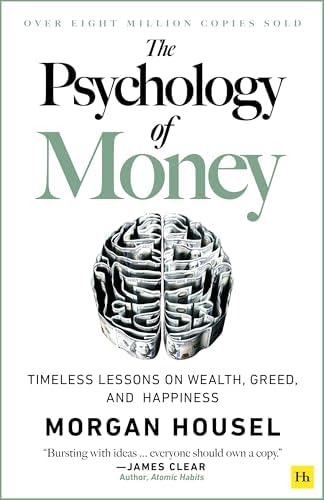
Essential reading includes Getting Things Done, Atomic Habits, The Psychology of Money, and ***The Subtle Art of Not Giving a F*ck*** - people should obsess over these for 3-6 years before graduating to essentialized principles.
"Most of this advice operates like having a fire extinguisher in the room" - it's about consistent reminders of principles you already know, delivered with enough novelty to satisfy our need for new information.
Neediness and Authentic Attraction
From Models: "Neediness occurs when you place a higher priority on what others think of you than what you think of yourself."
"What determines neediness, and therefore attractiveness, is the why behind your behavior" - you can say the coolest thing, but if done for wrong reasons, you'll come off as desperate.
Models provided a unified theory of male attractiveness after Mark noticed that successful men prioritized their self-perception over women's approval, while struggling men constantly asked "what does she want to hear?"
The book remains relevant 15 years later alongside Mate as the "two-car garage of dating books for men" because non-neediness is a timeless concept.
The Future of Authority in an AI-Saturated World
"I'm bullish on authority and credibility over the next 10 years" - Mark predicts a mass return toward expertise as AI creates infinite derivative content.
There will be "so much slop out there" that people will crave "somebody who actually knows what they're talking about or who's actually done something."
Mark experienced this firsthand when prestigious journalists interviewed him for logos, then immediately asked for his book advice, trading prestige for expertise.
The ironic reversal: the explosion of democratized information that destroyed credibility 15 years ago will create massive demand for authority and credibility.
Permission and Self-Authorization
"At some point, you realize that the permission you've been waiting for all along was your own" - most advice-seeking boils down to wanting someone to say "it's okay."
The world splits into "people who don't know how to improve their lives and those who are too scared to start" - thoughtful people often get paralyzed by their capacity to think.
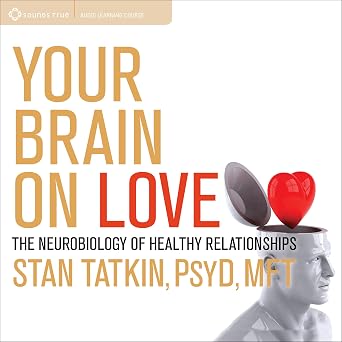
Your Brain on Love by Stan Tatkin defines relationships as "sets of agreements" with the fundamental agreement being "the relationship comes first before everything else."
Cultural differences emerge: Americans hope you succeed in case you take them with you, while British people hope you fail in case you leave them behind.





These notes may contain occasional inaccuracies. Learn how podbrain notes are made
More in Self-Development

#871: The “Divine Leaf” with 8,000+ Years of Use — Exploring the Many Benefits of Coca with Dr. Andrew Weil and Wade Davis
Jun 25, 2026
Gary's Economics Can't Answer This One Question About Wealth Taxes | Tom Reacts
Jun 25, 2026
Why You Don’t Feel Loved (even when you are) - Sonja Lyubomirsky - #1115
Jun 25, 2026
A User’s Guide To Kava: The Most UNDERRATED Plant Medicine w/ Cameron George #537
Jun 24, 2026
What Society Values in Men, Where Does a Man Start, and Why Humility Makes or Breaks Us | ASK ME ANYTHING
Jun 24, 2026
.svg)