
Will Guidara - The Hotdog Effect: Secrets of the World’s #1 Restaurants
Will Guidara is a hospitality entrepreneur and author who transformed Eleven Madison Park from the lowest-ranked restaurant on the World's 50 Best list to the #1 restaurant globally. He worked under legendary restaurateur Danny Meyer before purchasing and revolutionizing the fine dining experience through his...


- 01
Will Guidara transformed Eleven Madison Park from last place (#50) to the world's #1 restaurant by being 'unreasonable in pursuit of people' rather than just food excellence
- 02
The 'rule of 95.5' - manage 95% of expenses like a maniac to earn the right to spend 5% 'foolishly' on extraordinary guest experiences
- 03
Service is black and white (getting the right plate to the right person), while hospitality is color (making people feel genuinely seen and connected)
- 04
Pattern recognition of recurring moments allows you to systemize graciousness - identify things that happen sometimes and create scalable responses
- 05
Danny Meyer's 'enlightened hospitality' framework: take care of your team first, then customers - investment in people creates scalable culture
- 06
The hot dog story exemplifies genuine hospitality: being present, caring more about guests than brand image, and recognizing that hospitality is 'one size fits one'
- 07
As described in The Infinite Game, combining finite goals (winning awards) with infinite pursuits (redefining hospitality) prevents victory from feeling hollow
- 08
14-year-old you is the ultimate judge of success - maintaining childlike wonder while learning to 'act like an adult when needed'
Get the latest ideas from Chris Williamson.
Plus the best new takeaways from other top podcasts — read in minutes, not hours.
By continuing, you agree to podbrain's Terms and Privacy Policy.
These notes may contain occasional inaccuracies. Learn how podbrain notes are made
Will Guidara is a hospitality entrepreneur and author who transformed Eleven Madison Park from the lowest-ranked restaurant on the World's 50 Best list to the #1 restaurant globally. He worked under legendary restaurateur Danny Meyer before purchasing and revolutionizing the fine dining experience through his philosophy of 'unreasonable hospitality.'
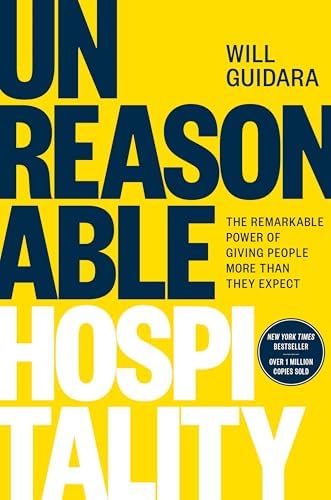
The conversation explores Guidara's journey from childhood dreams of restaurant work to achieving the pinnacle of culinary recognition. Drawing from his book Unreasonable Hospitality and upcoming Unreasonable Hospitality The Field Guide, he discusses the distinction between service and hospitality, the systematic approach to creating extraordinary guest experiences, and how his framework applies beyond restaurants to any business focused on human connection.
From 12-Year-Old Dreams to World's Best Restaurant
Guidara knew he wanted to work in restaurants from age 12, inspired by his father who worked restaurant hours while caring for his quadriplegic mother with brain cancer
His father's example of drawing joy from caring for others became the foundation for Guidara's hospitality philosophy: 'There are few things more energizing for me than when I get to see the look on someone else's face when they've received a gift I'm responsible for giving them'
Working under Danny Meyer provided the framework of 'enlightened hospitality' - take care of your team first, then customers - and taught him the power of language in creating culture through memorable isms and core values
The Philosophy Behind Unreasonable Hospitality
Service is 'black and white' (getting the right plate to the right person on time) while hospitality is 'color' (making people feel connection, belonging, and genuine welcome)
Maya Angelou's quote drives the approach: 'People will forget what you say, they will forget what you do, but they will never forget how you made them feel'
After ranking #50 on the World's Best list, Guidara wrote on a cocktail napkin 'we will be number one' and underneath it 'unreasonable hospitality' - choosing to be relentless in pursuit of human connection rather than just culinary innovation
As explored in The Infinite Game, combining finite goals (achieving #1 ranking) with infinite pursuits (redefining hospitality) prevents the hollowness that often follows major achievements
Systematic Approaches to Creating Magic
The 'rule of 95.5' - manage every expense like a maniac 95% of the time to earn the right to spend the last 5% on extraordinary guest experiences that create lasting loyalty
Pattern recognition of recurring moments: identify things that happen sometimes (engagements, delays, celebrations) and create scalable systems to respond extraordinarily every time
The Tiffany engagement box system exemplifies scalable magic - 1,000 blue boxes with champagne flutes allowed staff to easily gift personalized mementos to newly engaged couples
Every touchpoint analysis: obsess over every moment of customer interaction, elevating overlooked elements like greetings (memorizing names and faces) to create genuine connection from entry
Legendary Guest Experiences and Their Impact
The hot dog story: overheard European tourists lamenting they never got a NYC hot dog, so Guidara ran outside, bought one, and had the chef serve it elegantly before their final course
For Spanish family's children seeing snow for the first time, staff found sleds at 8pm on Friday night and arranged an Uber SUV with sleds and hot chocolate waiting outside
Jimmy Fallon's space elevator experience: transformed the one-floor elevator into a space shuttle with costumes, dry ice, and recreated space food after his joke about the restaurant going to space
City Hall wedding couple received an impromptu reception upstairs with staff party becoming their wedding celebration, complete with first dance to 'Lovely Day' by Bill Withers
The Business Case for Hospitality Investment
Hospitality creates the only sustainable competitive advantage: 'Someone's going to build a better product, someone will create a stronger brand, but relationships take a long time to build and erode'
Companies should add a P&L line item for 'reinvesting in the community you serve' - underspending on this line should be penalized as 'selling future colleagues down the river'
UPS store owner implemented rule requiring staff to comp one order daily up to $30 - transformed culture by making employees seek to understand customers deeply to choose who deserved it most
Extraordinary experiences become the best marketing: 'You give people stories like this to tell. What do you think they're going to do? They're going to tell them over and over and over again'
Balancing Ambition with Authentic Self-Worth
The 14-year-old test: 'What would 14-year-old you think about adult you?' serves as the ultimate gauge of whether life is going in the right direction
'Never grow up, just learn when to act like an adult' - maintaining childlike wonder while developing professional competence when situations require it
'Greatness doesn't cure pain, it just makes the pain more expensive' - achievement expands life and provides resources but doesn't repair sense of worth
The key distinction: 'I'm not warning anyone off ambition. I'm warning them off confusing ambition with self-acceptance' - separate the fuel from the wound


These notes may contain occasional inaccuracies. Learn how podbrain notes are made
More in Self-Development

#871: The “Divine Leaf” with 8,000+ Years of Use — Exploring the Many Benefits of Coca with Dr. Andrew Weil and Wade Davis
Jun 25, 2026
Gary's Economics Can't Answer This One Question About Wealth Taxes | Tom Reacts
Jun 25, 2026
Why You Don’t Feel Loved (even when you are) - Sonja Lyubomirsky - #1115
Jun 25, 2026
A User’s Guide To Kava: The Most UNDERRATED Plant Medicine w/ Cameron George #537
Jun 24, 2026
What Society Values in Men, Where Does a Man Start, and Why Humility Makes or Breaks Us | ASK ME ANYTHING
Jun 24, 2026
.svg)