
Top NASA Scientist Shows Me Antigravity Proof [Shocking Result Revealed]
Dr. Charles Buehler leads NASA's Electrostatics and Surface Physics Laboratory at Kennedy Space Center and serves as the incoming president of the Electrostatic Society of America. His credentials include discovering two fundamental electrostatic principles now widely accepted in the field. Alongside engineer Andrew...

Episode

![Jesse Michels episode thumbnail: Top NASA Scientist Shows Me Antigravity Proof [Shocking Result Revealed]](https://podbrain.gumlet.io/storage/v1/object/public/thumbnails/channel-UCuG2KzrIMe3qoNcuDVpwnXw.webp?w=1200&h=630&mode=fill&q=85&format=auto)
- 01
NASA's lead electrostatic scientist Dr. Charles Buehler has measured real, repeatable thrust of 5-10 millinewtons using only electricity - no fuel, no reaction mass
- 02
After 2,000 experimental variations since 2010, Buehler's team has eliminated ion wind and demonstrated the effect works better in vacuum chambers
- 03
The force persists even after power is turned off, suggesting a quantum electrodynamics effect involving virtual scalar photons rather than classical mechanics
- 04
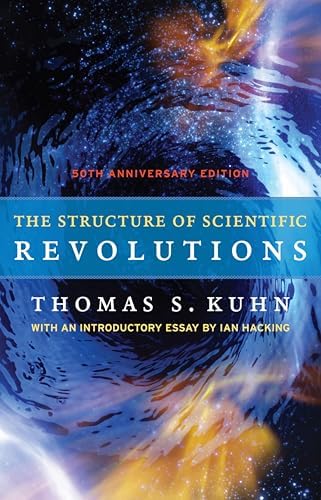
Thomas Kuhn's The Structure of Scientific Revolutions explains how science advances through anomaly buildup rather than pure truth, as seen with this stigmatized research
- 05
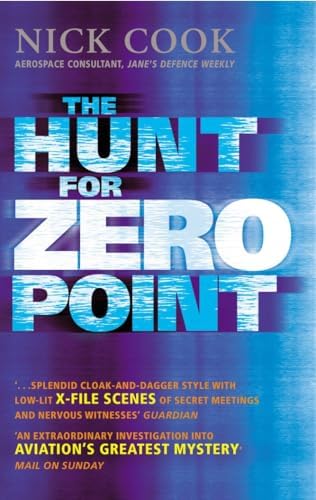
Nick Cook's The refref-book-the-hunt-for-zero-pointrefref-book-the-hunt-for-zero-pointHunt for Zero Point documents extensive classified gravity research from the 1950s that mysteriously vanished from public view
- 06
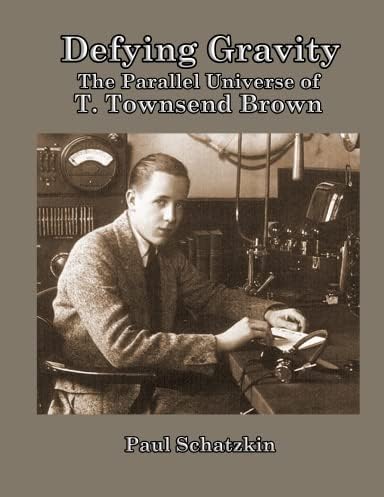
Paul Schatzkin's biography reveals Thomas Townsend Brown worked with Curtis LeMay and Edward Teller, suggesting his electrogravitics wasn't amateur quackery
- 07
The effect shows up in spacecraft momentum anomalies when passing through Van Allen belts, requiring extra fuel to compensate for unexplained acceleration
- 08
Buehler's quantum electrodynamics theory proposes third-order perturbation effects create asymmetric charge interactions that violate classical energy conservation
Get the latest ideas from Jesse Michels.
Plus the best new takeaways about science from other top podcasts — read in minutes, not hours.
By continuing, you agree to podbrain's Terms and Privacy Policy.
These notes may contain occasional inaccuracies. Learn how podbrain notes are made
Dr. Charles Buehler leads NASA's Electrostatics and Surface Physics Laboratory at Kennedy Space Center and serves as the incoming president of the Electrostatic Society of America. His credentials include discovering two fundamental electrostatic principles now widely accepted in the field. Alongside engineer Andrew Arujima at Exodus Propulsion Technologies, Buehler has spent over a decade investigating anomalous thrust effects that appear to violate Newton's third law.
The conversation explores Buehler's replication and advancement of Thomas Townsend Brown's controversial electrogravitics experiments from the 1950s. As documented in Defying Gravity The Parallel Universe of T. Townsend Brown by Paul Schatzkin, Brown worked with high-level military figures like Curtis LeMay despite mainstream physics dismissing his work. MIT physicist David Chester joins to examine Buehler's quantum electrodynamics theory explaining how virtual scalar photons might generate propellantless thrust.
The discussion traces how The refref-book-the-hunt-for-zero-pointrefref-book-the-hunt-for-zero-pointHunt for Zero Point by Nick Cook revealed extensive classified anti-gravity research that vanished from public view, while The Structure of Scientific Revolutions by Thomas Kuhn explains how scientific paradigms shift through anomaly accumulation rather than pure logic. Buehler's work represents a potential breakthrough in space propulsion that could eliminate humanity's dependence on chemical rockets for interstellar travel.
NASA's Lead Electrostatic Scientist Discovers Anomalous Thrust
Dr. Charles Buehler leads NASA's only electrostatics laboratory and has contributed two fundamental principles to the field, giving him unique authority to evaluate anomalous electrostatic effects.
"I've always believed there had to be a better way to move an object from point A to point B. There just had to be" - Charles, explaining his two-decade search for alternatives to Newton's laws.
Buehler's team has conducted close to 2,000 experimental variations since 2010, measuring consistent thrust of 5-10 millinewtons using only electricity with no reaction mass.
"When we see about 0.1 grams, that corresponds to about one millinewton of thrust" - Charles, describing weight reduction measurements on sensitive scales.
Eliminating Ion Wind and Validating the Effect in Vacuum
"I take those lifters and I put them in a plastic box and I put it on a scale. You turn it on, the thing lifts up, and the weight flatlines does not move at all" - Charles, demonstrating how to distinguish real thrust from ion wind effects.
The team uses Faraday cages and vacuum chambers to eliminate electromagnetic interference and atmospheric effects, with thrust actually increasing in vacuum conditions.
"You get more thrust because the field limit is not 10 to the 6th anymore. It's 10 to the 8th" - Charles, explaining why vacuum conditions enhance the effect through higher achievable electric field strengths.
Multiple independent researchers have replicated the experiments, with some investors building their own devices after seeing Buehler's demonstrations.
Thomas Townsend Brown's Suppressed Electrogravitics Legacy
Defying Gravity The Parallel Universe of T. Townsend Brown by Paul Schatzkin reveals Brown worked with Curtis LeMay, Edward Teller, and other high-level military figures, contradicting dismissals of him as an amateur.
"Believe it or not, I think I just saw a flying saucer, and it frightened me" - General Victor Bertrandius after witnessing Brown's gravitator experiments in Los Angeles in 1952.
French aerospace executive Jacques Corneon provided deathbed audio testimony confirming Brown achieved positive results in vacuum chamber experiments in Paris in 1956.
Brown's work likely remains classified by the Navy, with his electrohydrodynamics research possibly incorporated into the B-2 stealth bomber's electrostatic charge management systems.
Quantum Electrodynamics Theory of Propellantless Thrust
Buehler proposes third-order quantum electrodynamics perturbation theory explains the effect through virtual scalar photon exchange between asymmetric charges.
"What would happen if I just went to the next order? So quantum electrodynamics, QED doing Coulomb's Law, is a second-order equation using time-independent perturbation theory" - Charles, describing his theoretical approach.
The theory suggests some virtual photons are emitted or absorbed without pairing, creating momentum imbalance that manifests as thrust without violating conservation laws at the quantum level.
MIT physicist David Chester validates the experimental rigor while noting the theoretical challenges: "If momentum conservation was violated, then you would claim that there's something else there that we don't understand."
Evidence of Classified Anti-Gravity Research Programs
The refref-book-the-hunt-for-zero-pointrefref-book-the-hunt-for-zero-pointHunt for Zero Point by Nick Cook documents extensive gravity research in the 1950s that mysteriously vanished from public view, suggesting black project continuation.
Spacecraft experience unexplained momentum anomalies when passing through Van Allen belts, requiring extra fuel to compensate for acceleration changes that don't fit conventional physics.
Gary McKinnon's 2001 hack of NASA and military systems allegedly revealed a list of 40 "non-terrestrial officers" and fleet-to-fleet transfers of high-K dielectric materials.
"Why are there no physicists here?" - Charles, expressing shock at NASA's UAP investigation team lacking physics expertise despite studying potentially physics-defying phenomena.
Paradigm Shifts and Scientific Resistance to Anomalies
The Structure of Scientific Revolutions by Thomas Kuhn explains how science advances through politics rather than pure truth, with anomaly buildup eventually forcing paradigm shifts.
"This field's been poisoned multiple times for a century" - Charles, acknowledging the stigma surrounding anti-gravity research that delays peer review acceptance.
Buehler bypasses academic peer review through patent office examination, which provides equivalent scientific scrutiny while enabling commercial development.
"We say we have an energy crisis. Oh my God, the energy crisis. Well, it could be considered an energy crisis, but it's really a force crisis. It's a transportation crisis" - Charles, reframing humanity's fundamental challenge.
These notes may contain occasional inaccuracies. Learn how podbrain notes are made
More in Philosophy
You Need An Ethical Will | Lt. Gen. Mark Hertling
Jun 21, 2026
Hollywood, The CIA & UFOs: The History Beyond Spielberg
Jun 20, 2026
What Our Fathers Teach Us, For Better Or Worse | Tom Junod
Jun 20, 2026
How To Love Your Country Without Lying About It | Ty Seidule
Jun 19, 2026
Recognize These Signs of Weakness | 7 Daily Habits That Will Change Your Life
Jun 15, 2026.svg)