
What if Tom were the President, Tom's Political Compass, Essential Reads for Combating the New World Order | Weekly Recap
Tom Billieu takes on a presidential simulation game, implementing policies from budget cuts to immigration reform while tracking real-time approval ratings across different demographic groups. The exercise reveals how Americans respond to various policy proposals, from congressional accountability measures that...

Episode


- 01
Tom Billieu's presidential simulation achieved 83% approval for congressional accountability measures, proving Americans want politicians held responsible for budget failures
- 02
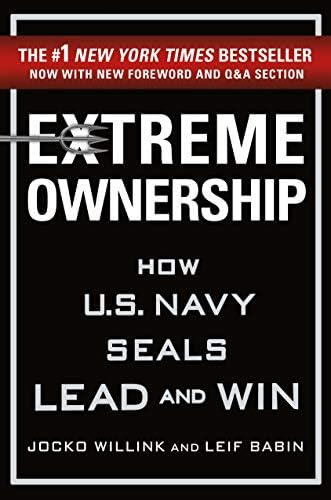
Extreme Ownership teaches that life operates on cause and effect, not random chance - essential for navigating tumultuous times ahead
- 03
The Gulag Archipelago reveals Solzhenitsyn's insight: 'the line between good and evil runs through every human heart' - most would be guards, not heroes
- 04
Mao The Unknown Story demonstrates how equal outcomes require deadly force - Mao was alive during Billieu's lifetime, making this recent history
- 05
The Machiavellians explains the 'iron law of oligarchy' - elite groups always emerge to control societies, regardless of political system
- 06
Regulatory capture benefits corporations, not individuals - companies draft legislation that helps them while appearing to protect workers
- 07
Houston's housing deregulation keeps rents flat while regulated cities price out entire generations through artificial scarcity
- 08
Political compass test placed Billieu as center-right libertarian, far from authoritarian despite supporting strong border enforcement
Get the latest ideas from Tom Bilyeu.
Plus the best new takeaways about economics from other top podcasts — read in minutes, not hours.
By continuing, you agree to podbrain's Terms and Privacy Policy.
These notes may contain occasional inaccuracies. Learn how podbrain notes are made
Tom Billieu takes on a presidential simulation game, implementing policies from budget cuts to immigration reform while tracking real-time approval ratings across different demographic groups. The exercise reveals how Americans respond to various policy proposals, from congressional accountability measures that achieve 83% approval to more divisive issues like Federal Reserve elimination.
The conversation transitions into Billieu's essential reading list for navigating current political upheaval, featuring five books that shaped his worldview from optimistic to realistic about human nature and political systems. He emphasizes how Extreme Ownership, The Gulag Archipelago, Mao The Unknown Story, Red Famine, and The Machiavellians provide crucial frameworks for understanding cause-and-effect thinking, the brutality of communist systems, and the reality of elite control structures.
The episode concludes with Billieu taking the political compass test, revealing his position as a center-right libertarian who strongly opposes authoritarianism while supporting free markets and personal responsibility. The test highlights tensions between his economic conservatism and social liberalism, particularly around issues like drug policy, same-sex adoption, and government surveillance.
Presidential Simulation: Budget Cuts and Economic Growth
Billieu's opening policy focused on balancing the budget through spending cuts and economic growth, achieving broad initial support across demographic groups with potential savings of $500 billion to $1 trillion annually.
Second-month policies included extending retirement age to 69 over 15 years, withholding federal funding from states with unbalanced budgets, and eliminating rent control nationally - all blocked by Congress despite mixed public support.
Congressional accountability measures achieved 83% approval when proposing that members become ineligible for reelection if the budget exceeds 3% of GDP in deficit spending.
"The odds of me being anything other than a one-term president are effectively zero" - Billieu, explaining his focus on cause-and-effect policies over popularity.
Crisis Response: Mass Shooting and Economic Despair
When faced with a simulated Detroit factory mass shooting killing 12 workers, Billieu avoided gun control discussions and focused on economic desperation as the root cause.
"If you make it impossible for people to make ends meet and they have nothing left to lose, then they're going to start doing crazy stuff like this" - Billieu, linking violence to economic hollowing-out from inflation.
His response emphasized deterministic cause-and-effect analysis over emotional reactions, stating "this is a deterministic universe" and demanding investigation into mental illness, SSRIs, and economic factors.
The response split approval ratings geographically, losing support in Northeast and DC while gaining in rural states like South Dakota and Wyoming.
Five Essential Books for Political Upheaval
Extreme Ownership by Jocko Willink and Leif Babin teaches that prosperity isn't a natural force and individuals must take responsibility for their circumstances in a deterministic universe.
The Gulag Archipelago, Mao The Unknown Story, and Red Famine demonstrate how attempts to achieve equal outcomes through force inevitably lead to mass murder and oppression.
"To get equal outcomes, you have to do it by force" - Billieu, explaining why these three books show the deadly consequences of communist economic systems in the 20th century.
The Machiavellians Defenders of Freedom by James Burnham explains the 'iron law of oligarchy' and prepares readers for the deranging effects of increased political transparency in the digital age.
Billieu's transformation from "Pollyanna" optimist to political realist came through understanding that elite groups always emerge to control societies, regardless of the stated political system.
Political Compass Results: Center-Right Libertarian
The political compass test placed Billieu as center-right economically and strongly libertarian socially, positioning him far from authoritarian leaders like Xi Jinping and Kim Jong-un.
Billieu strongly agreed with statements supporting free markets, questioning authority, legalizing marijuana, and same-sex adoption while opposing religious requirements for morality.
"I would like the record to reflect how far away from authoritarian I am" - Billieu, emphasizing his libertarian positioning despite supporting strong border enforcement.
The test revealed tensions in his worldview, particularly around environmental regulation where he acknowledged climate change reality while opposing European-style economic restrictions.
Regulatory Capture and Housing Economics
Billieu argues that regulatory capture always benefits corporations over individuals, with companies drafting legislation that appears protective while actually serving their interests.
Houston's deregulated housing market keeps prices and rents relatively flat, contrasting with regulated cities where housing becomes increasingly unaffordable for new buyers.
"If you ice them out of the economic system, they will eventually turn violent" - Billieu, warning that housing unaffordability creates conditions for social unrest and deaths of despair.
The ideal policy framework asks "how do you make the system work when it doesn't know who's going to be the person in the system" rather than creating advantages for specific circumstances.






These notes may contain occasional inaccuracies. Learn how podbrain notes are made
More in Self-Development

Can the Middle Class Be Saved? Political Division, Economic Doom & The Leadership Problem | Andrew Bustamante Pt. 2
Jun 20, 2026
The Career Trap That Makes Women Miserable - Suzanne Venker - #1113
Jun 20, 2026
How Immigration and War Test the Strength of Values and National Identity
Jun 19, 2026
7 Strategies for Becoming a Better Father | FRIDAY FIELD NOTES
Jun 19, 2026
ELECTROMAGNETISM Is The SECRET To Health: Biofield Tuning Explained | Eileen McKusick
Jun 15, 2026
.svg)