
The Same System That Crashed the Economy in 2008 Is Running Again — And It's Already Inside Your Retirement Account | Tom Bilyeu Deepdive
This analysis examines the growing risks in the $2 trillion private credit market, drawing parallels to the 2008 financial crisis. The speaker traces how regulatory changes after 2008 pushed risky lending from banks into an unregulated shadow banking system that now threatens retirement accounts and pension funds.

Episode


- 01
Private credit market exploded from $500 billion to over $2 trillion in just five years, with pension funds holding 5-15% of assets
- 02
Goldman Sachs data shows 15% of private credit borrowers can't cover interest payments, while IMF reports 40% have negative free cash flow
- 03
Blue Owl Capital permanently locked investors out of quarterly redemption fund after selling $1.4 billion in distressed loans
- 04
U.S. banks have lent $300 billion directly to private credit providers, creating systemic interconnection risk beyond the asset class
- 05
Payment-in-kind (PIK) restructuring hides true default rates - official 2% versus estimated real rate of 5%
- 06
August 2025 executive order opened door for $13 trillion in 401k assets to invest in private credit markets
- 07
Jamie Dimon compared private credit problems to cockroaches: 'When you see one, there are always more hiding in the walls'
- 08
Warren Buffett sits on largest cash reserve in Berkshire history while gold hits record $5,000/ounce amid market uncertainty
Get the latest ideas from Tom Bilyeu.
Plus the best new takeaways from other top podcasts — read in minutes, not hours.
By continuing, you agree to podbrain's Terms and Privacy Policy.
These notes may contain occasional inaccuracies. Learn how podbrain notes are made
This analysis examines the growing risks in the $2 trillion private credit market, drawing parallels to the 2008 financial crisis. The speaker traces how regulatory changes after 2008 pushed risky lending from banks into an unregulated shadow banking system that now threatens retirement accounts and pension funds.
The discussion covers recent warning signs including BlackRock fund losses, Blue Owl Capital's redemption freeze, and rising corporate defaults. Key themes include the 'risk waterfall' concept where sophisticated financial players create risk that flows downstream to retail investors, and the systemic interconnections that could turn private credit stress into broader market contagion.
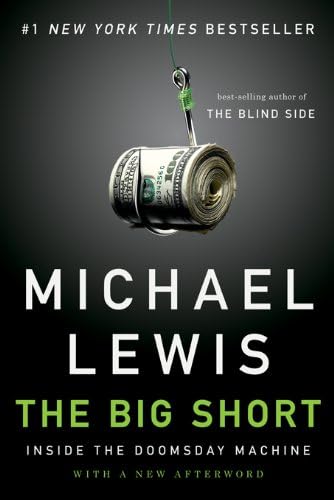
The analysis references lessons from The Big Short, emphasizing how investors like Michael Burry identified the 2008 crisis by tracing causal chains through the financial system rather than relying on insider information.
The $2 Trillion Shadow Banking System Emerges
Private credit market exploded from $500 billion to over $2 trillion in five years, becoming roughly equivalent to the entire high-yield bond market size.
Basel III regulations after 2008 forced banks out of mid-market lending, creating a gap that private credit funds filled by raising money from pension funds, insurance companies, and wealthy individuals.
The market operates with 'no public pricing, no public reporting, and no public oversight' - creating the same opacity that characterized mortgage-backed securities before 2008.
Warning Signs Flash Red Across Private Credit
Goldman Sachs data reveals 15% of private credit borrowers can no longer generate enough cash to cover interest payments, while IMF reports 40% operate with negative free cash flow.
Blue Owl Capital permanently locked investors out of OBDC2 fund after being forced to sell $1.4 billion in loans and halt all redemptions, with stock dropping 9% instantly.
Payment-in-kind (PIK) restructuring allows borrowers to skip cash payments and add interest to loan balance, hiding true distress - official default rate under 2% versus estimated real rate of 5%.
Private credit investors requested $2.77 billion in withdrawals last quarter alone - a 200% increase from prior quarter.
The Risk Waterfall Into Retirement Accounts
August 2025 executive order directed regulators to explore letting 401k plans invest in private markets, targeting the $13 trillion defined contribution retirement market.
Semi-liquid funds promise quarterly withdrawals while holding 5-7 year illiquid loans, creating the same structural mismatch as a bank run without FDIC insurance.
The risk chain flows from private equity buyouts through private credit funds to pension funds, insurance companies, and now directly into 401k accounts of 'people who were never told this is what they owned.'
Systemic Interconnections Threaten Broader Markets
U.S. banks have lent $300 billion directly to private credit providers, meaning 'stress in private credit will not stay limited to private credit.'
Recent bankruptcies include First Brands Group ($2.3 billion unpaid loans) and Tricolor Holdings, with JPMorgan writing off $170 million, Barclays losing $147 million, and Fifth Third Bank losing $178 million.
Jamie Dimon compared private credit problems to cockroaches on JPMorgan's October earnings call: 'When you see one, there are always more hiding in the walls.'
AI Disruption Threatens Loan Collateral
Roughly 12% of Blue Owl's portfolio was invested in software companies, with SaaS businesses being popular borrowers due to 'recurring revenue, high margins, predictable cash flow.'
AI disruption of enterprise software business models means 'the collateral underneath billions of dollars in private credit loans is worth less than the day the loans were made.'
Learning From The Big Short Playbook
Following the example from The Big Short, investors like Michael Burry identified 2008 risks by reading loan documents and tracing chains from homeowners through banks to pension funds.
The key skill is 'learning to trace chains of logic and cause and effect' by asking four questions: 'who created this risk? Who packaged it? Who sold it? And who's left holding it right now?'
Warren Buffett demonstrates smart money positioning by sitting on the largest cash reserve in Berkshire Hathaway's history while gold hits record $5,000 per ounce.
These notes may contain occasional inaccuracies. Learn how podbrain notes are made
More in Self-Development

Can the Middle Class Be Saved? Political Division, Economic Doom & The Leadership Problem | Andrew Bustamante Pt. 2
Jun 20, 2026
The Career Trap That Makes Women Miserable - Suzanne Venker - #1113
Jun 20, 2026
How Immigration and War Test the Strength of Values and National Identity
Jun 19, 2026
7 Strategies for Becoming a Better Father | FRIDAY FIELD NOTES
Jun 19, 2026
ELECTROMAGNETISM Is The SECRET To Health: Biofield Tuning Explained | Eileen McKusick
Jun 15, 2026
.svg)