
Staying Relevant in a Changing World: Bill Gurley on AI, Careers, and Policy | Impact Theory w/ Tom Bilyeu
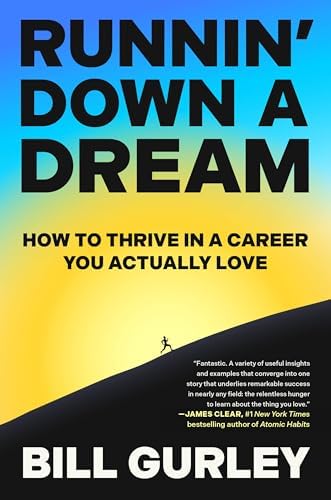
Bill Gurley, legendary venture capitalist at Benchmark Capital and author of Running Down a Dream, discusses his transition from investing to writing about career passion and the current state of AI, regulation, and American competitiveness.

Episode


- 01
70% of Americans worry about AI while only 20% of Chinese do, partly due to 'doomerism' from major AI companies - Gurley
- 02
Every Chinese entrepreneur reads everything about American entrepreneurship, but zero Americans study Chinese business thinking
- 03
COVID test regulation created a 10X price difference: Germany approved 85 vendors at $1 each, US approved only 2 at $12 each
- 04
AI has already increased Gurley's business profitability and revenue substantially, with 70% of doctors now using AI for second opinions
- 05
29% of workers call themselves engaged at work, 59% are 'quiet quitting' - AI is coming after the ambivalent ones
- 06
Venture capital is experiencing the most risk-seeking behavior Gurley has ever seen in his entire career
- 07
Steve Martin's decision to quit comedy at his peak inspired Gurley to retire from VC while still successful
Get the latest ideas from Tom Bilyeu.
Plus the best new takeaways about artificial intelligence from other top podcasts — read in minutes, not hours.
By continuing, you agree to podbrain's Terms and Privacy Policy.
These notes may contain occasional inaccuracies. Learn how podbrain notes are made
Bill Gurley, legendary venture capitalist at Benchmark Capital and author of Running Down a Dream, discusses his transition from investing to writing about career passion and the current state of AI, regulation, and American competitiveness.
The conversation explores the stark differences between American and Chinese attitudes toward AI, with Americans showing 70% worry rates compared to China's 20%, and examines how regulatory capture may be hampering US innovation. Gurley draws insights from The Rational Optimist by Matt Ridley on open source development and references Born Standing Up by Steve Martin as inspiration for his own career transition.
Key topics include AI's transformative impact on business, the venture capital bubble dynamics explained through Technological Revolutions and Financial Capital by Carlotta Perez, education reform challenges, and Gurley's philosophy from Running Down a Dream about finding fascination rather than just following safe career paths.
The AI Optimism Gap Between America and China
70% of Americans are worried about AI while only 20% of Chinese express similar concerns, creating a dangerous sentiment gap
"Every Chinese entrepreneur reads everything they can about American entrepreneurism... there's zero in the other direction" - Gurley, highlighting asymmetric learning
American AI companies' 'doomerism' may be regulatory capture: "I've never seen an entrepreneur say I'm making incredible technology... but it's really scary and it's going to kill us all"
Risk of building a regulatory fence around US AI while China serves the rest of the world, similar to what happened with EVs and solar panels
Regulatory Capture Lessons from COVID Testing
Germany approved 85 COVID test vendors at $1 per test while the US approved only 2 vendors charging $12 each - a 10X price difference for identical 40-year-old technology
The FDA regulator had previously worked at the two companies that received US licenses, creating obvious conflict of interest
PCR tests had marginal costs below $2 but average government reimbursement over $100, with some operators making $15 million and retiring
AI's Current Business Impact and Investment Bubble
AI has already "wildly impacted" Gurley's business, increasing both profitability and top-line revenue substantially
70% of doctors now use AI for second opinions, and lawyers have substantially reduced paralegal staff through AI adoption
Drawing from Technological Revolutions and Financial Capital, "only real waves cause bubbles" - when people get rich quick, it attracts interlopers and charlatans
Current venture capital shows "the most risk-seeking behavior I've ever seen in my entire life" due to prolonged zero interest rates
The Case for Open Source AI Development
Citing The Rational Optimist, "most progress in the world has come from when ideas have sex" - free knowledge transfer increases prosperity
China embraced open source in their 14th five-year plan as a response to 20 years of being called "IP thieves" by the West
Benchmark has had liquidity events on over 10 open source companies, proving business models work through support, security, and add-on services
Open source creates distribution advantages: "You're calling into an account that's already using your technology" rather than hiring salespeople
Education Reform and the Fascination Principle
US spends more per student than almost anywhere else but achieves middle-of-the-pack results, yet the solution is always "spend more money"
KIPP schools in the same buildings as public schools create natural experiments where siblings in different systems show dramatically different outcomes
AI enables personalized learning pacing: "All those kids should be on different pacing because they're all at different spots"
From Running Down a Dream: 29% of workers are engaged, 59% are "quiet quitting" - "AI is coming after the ambivalent" workers
Career Transition Inspired by Steve Martin
Born Standing Up inspired Gurley's retirement decision: Steve Martin quit comedy at his peak when he noticed the upper deck was empty in Vegas
"I didn't want to hang around and start being less good at it" - choosing to exit venture capital while still successful
Venture capital "definitely is a young person's game" - it requires hustle, connects better with young entrepreneurs, and demands fascination with new technology
Running Down a Dream argues that fascination makes work feel free: "If you're fascinated by something, the work's free... they're just having fun"





These notes may contain occasional inaccuracies. Learn how podbrain notes are made
More in Self-Development
Can the Middle Class Be Saved? Political Division, Economic Doom & The Leadership Problem | Andrew Bustamante Pt. 2
Jun 20, 2026
The Career Trap That Makes Women Miserable - Suzanne Venker - #1113
Jun 20, 2026
How Immigration and War Test the Strength of Values and National Identity
Jun 19, 2026
7 Strategies for Becoming a Better Father | FRIDAY FIELD NOTES
Jun 19, 2026
ELECTROMAGNETISM Is The SECRET To Health: Biofield Tuning Explained | Eileen McKusick
Jun 15, 2026
.svg)