
HARSH TRUTH About Wealth, Power & Happiness: Life Lessons Everybody Learns Too Late | Tai Lopez PT 1 (Fan Fave)
Tom Bilyeu hosts entrepreneur and marketer Tai Lopez for an in-depth exploration of wealth, power, and human psychology. Lopez, known for his viral marketing campaigns and mentorship under evolutionary psychologists Dr. David Buss and Dr. Helen Fisher, brings a data-driven approach to understanding human motivation.

Episode


- 01
Wealth follows an 'efficient frontier' curve - happiness peaks around six to seven figures, then declines as you become a target for lawsuits and threats
- 02
Men are primarily driven by mastery and status (will to power), while women are more driven by mating and relationships according to evolutionary psychology
- 03
The Denial of Death explores how the pursuit of power can corrupt, illustrating that 'absolute power corrupts absolutely'
- 04
Your digit ratio (index finger to ring finger) indicates prenatal testosterone exposure and predicts drive for power and ambition
- 05
Titan reveals how Rockefeller, despite $600 billion net worth, lost all his hair from stress and said money didn't compensate for suffering
- 06
The rise of the individual (post-2020) replaced the fallen eras of government reliability and corporate loyalty as paths to success
- 07
Risk tolerance, not personality types, is the most predictive factor in human behavior and business success
- 08
Psychological Types by Jung shows that 'one's judgment of one's own personality is extraordinarily clouded' - listen to enemies' compliments instead
Get the latest ideas from Tom Bilyeu.
Plus the best new takeaways about psychology from other top podcasts — read in minutes, not hours.
By continuing, you agree to podbrain's Terms and Privacy Policy.
These notes may contain occasional inaccuracies. Learn how podbrain notes are made
Tom Bilyeu hosts entrepreneur and marketer Tai Lopez for an in-depth exploration of wealth, power, and human psychology. Lopez, known for his viral marketing campaigns and mentorship under evolutionary psychologists Dr. David Buss and Dr. Helen Fisher, brings a data-driven approach to understanding human motivation.
The conversation examines the true nature of money as a facilitator rather than an end goal, and power as the ability to manifest one's will in the world. Lopez introduces his 'Four M's of Motivation' framework (material, mating, movement, mastery) while drawing from evolutionary psychology and historical examples.
Key themes include the 'efficient frontier' of wealth where happiness peaks then declines, the biological basis of the 'will to power' that drives most men, and practical frameworks for self-knowledge. The discussion references multiple influential works including Titan, The Denial of Death, and Psychological Types to illustrate how power and wealth can both elevate and corrupt.
The Efficient Frontier of Wealth and Its Dark Side
Lopez describes wealth as following a curve where happiness increases from poverty to six-seven figures, then plateaus and eventually declines due to the 'banana peel effect' - becoming a target for lawsuits and threats.
Titan documents how John D. Rockefeller, despite achieving $600 billion net worth, lost all his hair from stress in the 1890s and concluded that 'all the money I have made has not compensated me for the stress I've gone through.'
Mark Zuckerberg spent $32 million on private security last year, indicating credible threats against his children and demonstrating how extreme wealth can reduce happiness below poverty levels.
The Four M's Framework and Sexual Differences in Motivation
Lopez's mentors Dr. David Buss and Dr. Helen Fisher validated his 'Four M's of Motivation' theory: Material things, Mating, Movement/freedom, and Mastery/status, with clear gender patterns emerging from 6,000+ quiz responses across 190 countries.
Men are predominantly driven by mastery and status (the 'will to power'), while women rarely prioritize these motivators, reflecting evolutionary adaptations where 'men care about mastery, status, power' while women focus more on mating and relationships.
Digit ratio analysis (index finger to ring finger length) indicates prenatal testosterone exposure, with higher testosterone correlating to greater drive for power, ambition, and status-seeking behavior.
The Psychology of Self-Knowledge and Genetic Predisposition
Psychological Types by Jung reveals that 'in respect of one's own personality, one's judgment is, as a rule, extraordinarily clouded,' making self-assessment unreliable without external feedback.
Lopez advocates for 'Eulerian destiny' analysis using four overlapping circles: compliments from enemies, ancestral patterns, Saturday night conversations, and past behaviors to understand true motivations.
Frequency-dependent selection explains why nature maintains roughly 25% of people driven by each of the Four M's, ensuring societal balance between leaders, followers, creators, and nurturers.
Risk Tolerance as the Ultimate Predictor
Lopez argues that risk tolerance, not personality types like Myers-Briggs, is the most predictive factor in human behavior, claiming 'you can live your whole life' understanding just liquid money and risk tolerance.
Bilyeu demonstrates high entrepreneurial risk tolerance by betting 'my entire house, every dollar I had in the bank' on business ventures, while maintaining low physical risk tolerance.
The distinction between conscious anxiety (mental racing) and unconscious anxiety (behavioral patterns) explains why someone can feel anxious yet take massive financial risks when aligned with their identity.
Historical Trends and the Rise of Individual Power
Lopez identifies three major trends: the rise and fall of governments (from 1% income tax to current exploitation), the rise and fall of corporations (from lifetime employment to disposability), and the current rise of the individual.
The 'rise of the individual' post-2020 enables entrepreneurs to build websites for zero dollars and run Facebook ads for five dollars, compared to the $200,000-$1 million required for basic business infrastructure in the 1990s.
The History of refref-book-the-history-of-the-decline-and-fall-of-threfref-book-the-history-of-the-decline-and-fall-of-thThe Decline and Fall of the Roman Empire by Gibbon shows how empires fall when they become 'too urban, too many lawsuits, too much corruption of politicians,' paralleling modern society's challenges.
The Paradox of Free Will and Genetic Determinism
Kon-Tiki provides the philosophical framework: 'It may seem at times as if invisible fingers move us about like puppets on a string, but we can reach back and grab the strings ourselves and adjust our course.'
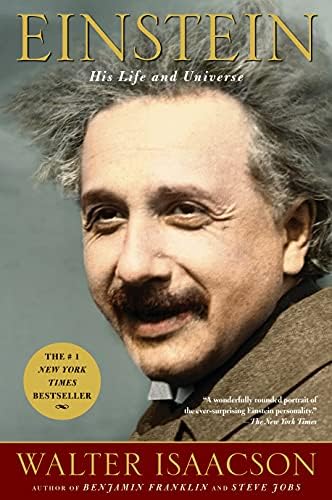
Einstein's belief that free will doesn't exist (classical physics determinism) conflicts with quantum physics suggesting uncertainty and choice, creating the paradox that 'we are both puppets and puppet masters.'
The Denial of Death serves as a warning about power's corrupting influence, showing how even well-intentioned people can justify harmful actions through unconscious genetic predispositions and conscious rationalization.






These notes may contain occasional inaccuracies. Learn how podbrain notes are made
More in Self-Development

Can the Middle Class Be Saved? Political Division, Economic Doom & The Leadership Problem | Andrew Bustamante Pt. 2
Jun 20, 2026
The Career Trap That Makes Women Miserable - Suzanne Venker - #1113
Jun 20, 2026
How Immigration and War Test the Strength of Values and National Identity
Jun 19, 2026
7 Strategies for Becoming a Better Father | FRIDAY FIELD NOTES
Jun 19, 2026
ELECTROMAGNETISM Is The SECRET To Health: Biofield Tuning Explained | Eileen McKusick
Jun 15, 2026
.svg)