
Embracing Curiosity and Competition in the Age of AI with Bill Gurley | Impact Theory W/ Tom Bilyeu
Bill Gurley, legendary venture capital investor and early backer of Uber, Zillow, and OpenTable, discusses navigating technological disruption and policy reform. Having transitioned from venture capital four years ago, Gurley now runs a policy institute focused on effective governance and regulatory capture.

Episode


- 01
The best way to protect yourself against AI is to become the most AI-enabled version of yourself possible - Bill Gurley
- 02
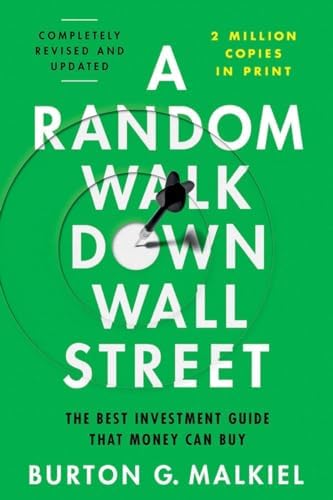
A Random Walk Down Wall Street by Burton Malkiel is essential reading before making any investment decisions
- 03
Bjorn Borg's comeback failure with wooden rackets illustrates how refusing to adopt new tools leads to obsolescence
- 04
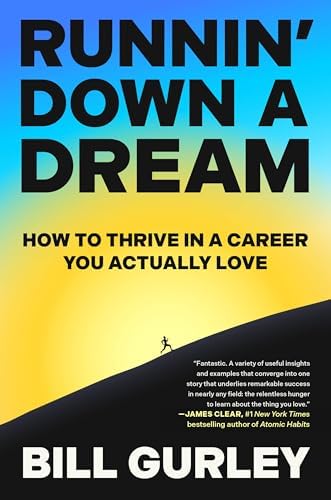
Running Down a Dream studies over 100 people who achieved success through continuous learning and following fascinations
- 05
Austin has solved housing affordability with rents falling for four years through better zoning and building policies
- 06
It costs 400% more to build nuclear plants in the US compared to South Korea or China due to regulatory capture
- 07
Regulatory capture means most regulation is written by the people being regulated, benefiting incumbents over consumers
- 08
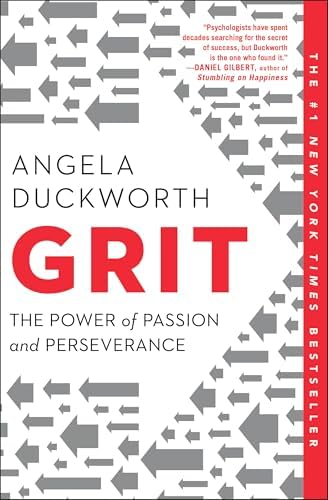
Angela Duckworth from Grit now says she would emphasize passion over perseverance if rewriting her book
Get the latest ideas from Tom Bilyeu.
Plus the best new takeaways about artificial intelligence from other top podcasts — read in minutes, not hours.
By continuing, you agree to podbrain's Terms and Privacy Policy.
These notes may contain occasional inaccuracies. Learn how podbrain notes are made
Bill Gurley, legendary venture capital investor and early backer of Uber, Zillow, and OpenTable, discusses navigating technological disruption and policy reform. Having transitioned from venture capital four years ago, Gurley now runs a policy institute focused on effective governance and regulatory capture.
The conversation explores how individuals can position themselves for AI transformation, drawing parallels between technological adoption and career survival. Gurley references insights from A Random Walk Down Wall Street, his own book Running Down a Dream, and research from Grit and The Coddling of the American Mind.
Key topics include the dangers of AI skepticism, lessons from China's competitive provincial system, regulatory capture in American industries, and successful policy examples like Austin's housing solutions and Houston's homelessness reduction. Gurley emphasizes curiosity and fascination as drivers of career success while advocating for state-versus-state policy competition.
AI Adoption: The Bjorn Borg Warning
"The best way to protect yourself against AI is to be the most AI-enabled version of yourself you could possibly be" - Bill, emphasizing that curiosity-driven people naturally embrace these tools.
Bjorn Borg's failed comeback illustrates technological disruption: he retired early, returned at 36 with wooden rackets while the industry had switched to graphite, and "got obliterated."
"The most dangerous thing you could possibly have about AI is to be skeptical about it and therefore to not be learning about it" - Bill, noting this particularly affects older people and academics.
High-agency, curious people immediately see AI as "jet fuel" and "rocket booster," solving problems they couldn't tackle before, while skeptics fall further behind.
Investment Philosophy and Essential Reading
"If you haven't read A Random Walk Down Wall Street by Burton Malkiel, then I really don't want to give you advice because you need some kind of bedrock" - Bill on investment fundamentals.
Most AI disruption is already reflected in stock prices, making individual insights unlikely to generate alpha unless you believe disruption will be less severe than expected.
Individual investment strategy differs fundamentally from institutional approaches, requiring different frameworks and risk tolerance considerations.
Curiosity and Career Success Patterns
Running Down a Dream studies over 100 people who achieved success from "rung zero" with no economic or networking advantages, finding continuous learning as the common thread.
"You're not able to be a continuous learner unless you're fascinated with something" - Bill, arguing fascination creates a perpetual motion machine for career growth.
People notice fascination: "When you learn new things, your face lights up" and this attracts mentors, opportunities, and free connections in interviews and networking.
Angela Duckworth from Grit now says "if she could write it again, she'd put passion way above perseverance because perseverance without passion is suffering."
Education System Problems and Solutions
College admissions have become an "industrialization phase" with a "resume arms race" starting in sixth grade, creating overscheduled, exhausted students according to Jonathan Haidt's The Coddling of the American Mind.
Students now must apply to specific majors at 17, whereas previously colleges required waiting until sophomore year to choose, allowing exploration of interests.
The Coddling of the American Mind chapter "The Decline of Play" shows lack of free time prevents kids from discovering their true fascinations.
"Learning about something you're fascinated with gives you energy" while "learning about something you're not fascinated with sucks energy" - explaining student burnout.
China's Competitive Advantages and Cultural Insights
"Of all the places I visited around the world, the one place where I find the most cultural affinity between entrepreneurs... China" - Bill on unexpected similarities.
China's 996 work culture (9am-9pm, 6 days/week) succeeds because marginal effort produces massive standard of living improvements, unlike incremental gains in the US.
Provincial competition in China drives innovation and efficiency, with Deng Xiaoping's free enterprise reforms lifting 400-500 million people out of poverty.
Breakneck by Dan Wang illustrates China's building capabilities: nuclear plants cost 400% more in the US than in South Korea or China due to regulatory inefficiencies.
Regulatory Capture and Policy Reform
"Regulation is the friend of the incumbent" - Bill's phrase describing how most regulation is written by those being regulated, raising prices and preventing competition.
The Tropos case study: mesh radio technology for free city Wi-Fi was killed by telecom lobbying, with former Comcast executives embedded throughout Philadelphia government.
Finance and healthcare lead regulatory capture, with crypto and stablecoins representing potential disruption to entrenched financial interests.
Milton Friedman quote guides the policy institute: "One of the great mistakes is to judge policies and programs by their intentions rather than their results."
Successful Policy Examples and State Competition
Austin solved housing affordability with rents falling for four years through zoning and building policy reforms, proving the housing crisis is solvable.
Houston reduced homelessness by two-thirds through specific policy interventions, providing another replicable success model.
James Madison's Federalist Papers envisioned state-versus-state policy experimentation, with migration patterns indicating successful governance approaches.
"People elect politicians based on what they think their intentions are versus what they're actually capable of doing" - explaining why successful policies don't spread.


These notes may contain occasional inaccuracies. Learn how podbrain notes are made
More in Self-Development

Can the Middle Class Be Saved? Political Division, Economic Doom & The Leadership Problem | Andrew Bustamante Pt. 2
Jun 20, 2026
The Career Trap That Makes Women Miserable - Suzanne Venker - #1113
Jun 20, 2026
How Immigration and War Test the Strength of Values and National Identity
Jun 19, 2026
7 Strategies for Becoming a Better Father | FRIDAY FIELD NOTES
Jun 19, 2026
ELECTROMAGNETISM Is The SECRET To Health: Biofield Tuning Explained | Eileen McKusick
Jun 15, 2026
.svg)