
Cathy Lanier, NFL Chief Security Officer — From Food Stamps to the Super Bowl War Room
Kathy Lanier serves as Chief Security Officer of the National Football League, overseeing security across all 32 clubs, stadiums, and major events including the Super Bowl. Previously, she was Chief of Police of Washington, D.C. from 2007 to 2016, becoming the first woman in the role and the longest-serving chief in...

Episode


- 01
Kathy Lanier rose from teenage pregnancy and a ninth-grade education to become DC's longest-serving police chief and NFL Chief Security Officer
- 02
Her grandmother's philosophy shaped her leadership: 'You're going to be damned if you do and damned if you don't. You better be damned for doing.'
- 03
Under her leadership as DC Police Chief, violent crime dropped 21% while the city's population grew 15%
- 04
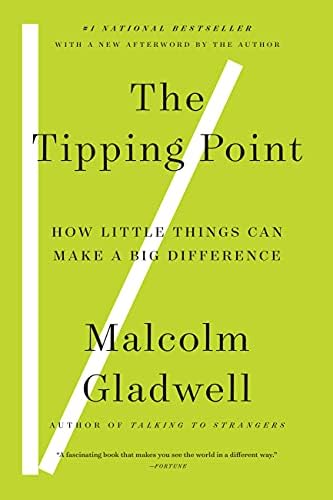
The Tipping Point became mandatory reading for her command staff because 'you can solve any problem if you identify the right tipping point'
- 05
She revolutionized community policing by giving out her cell phone number and showing respect: 'I strongly believe that showing them respect made the difference'
- 06
Post-9/11, she transformed DC's Special Operations Division into a Homeland Security unit with $17 million in CBRE funding
- 07
At the NFL, she manages security for 32 clubs across 170 days of travel annually, calling it 'far more complex and diverse' than presidential inaugurations
- 08
Her decision-making philosophy: 'It's not what happens to you. It's how you handle those things that really matter in life'
Get the latest ideas from Tim Ferriss.
Plus the best new takeaways from other top podcasts — read in minutes, not hours.
By continuing, you agree to podbrain's Terms and Privacy Policy.
These notes may contain occasional inaccuracies. Learn how podbrain notes are made
Kathy Lanier serves as Chief Security Officer of the National Football League, overseeing security across all 32 clubs, stadiums, and major events including the Super Bowl. Previously, she was Chief of Police of Washington, D.C. from 2007 to 2016, becoming the first woman in the role and the longest-serving chief in the force's history.
The conversation traces her remarkable journey from teenage pregnancy and a ninth-grade education to the highest levels of law enforcement and corporate security. Her path began in Tuxedo, Maryland, where her father abandoned the family when she was two, leaving her mother to raise three children on $350 a month.
After marrying at 15 and becoming a single mother, Lanier joined the Metropolitan Police Department in 1990 during the crack cocaine wars when DC was known as the murder capital of the world. Her first day was the Mount Pleasant riots, where she spent five days managing civil unrest.
The discussion covers her innovative approaches to community policing, including the creation of anonymous text tip lines and her philosophy of treating every crime with equal importance regardless of neighborhood. She also details her post-9/11 transformation of DC's Special Operations Division and her current role managing NFL security across international venues.
From Teenage Mother to Police Academy: The Early Years
Lanier's father abandoned the family when she was two, leaving her mother with three children and no income, forcing them to live on $350 a month in child support with help from church food baskets.
At 14, she became pregnant and married a 26-year-old man the day after her 15th birthday, with her father signing over legal guardianship to avoid child support payments.
A pivotal moment came three weeks after her son's birth: 'I'm looking at this poor little innocent baby, and I'm thinking his whole life depends on me. And what am I going to be able to provide with a ninth grade education?'
She passed her GED by one point (256 out of 255 required) and worked two jobs as a secretary and waitress while taking one college class per semester for tuition reimbursement.
Mount Pleasant Riots: Trial by Fire on Day One
Lanier joined the Metropolitan Police Department in 1990 when DC had 500 murders annually and was known as the murder capital of the world during the crack cocaine wars.
Her first day out of the academy was the Mount Pleasant riots, where she didn't come home for five days: 'They threw me a gas mask and told me to go out and get in the van.'
The riots started when officers shot a Latino man during an arrest, but language barriers prevented effective communication with the predominantly Latino community who only saw 'a handcuffed person who'd been shot.'
Even as a rookie, she recognized systemic problems: 'We're not going about this the right way. This should be done differently. There's a better way to do these things.'
Rapid Promotion Through Problem-Solving Excellence
Her first mentor, Lieutenant Donnie Exhum, pushed her to take the sergeant's exam at three years, arguing she could 'influence the things' she wanted to change and make more money.
She scored 13th out of 890 candidates on the sergeant's exam, then ranked number one on the lieutenant's test and number three on the captain's test, getting promoted every two years.
Her grandmother's lessons shaped her leadership philosophy: 'You never make excuses. You get yourself in, you get yourself out' and 'You're going to be damned if you do and damned if you don't. You better be damned for doing.'
Tim Ferriss noted parallels to Extreme Ownership by Jocko Willink, with Lanier agreeing: 'My grandma was saying there's two types of people in the world: used people and people who are accountable.'
Sexual Harassment and Standing Up for Justice
As a sergeant, Lanier faced intense sexual harassment from a lieutenant who physically assaulted her and other women, calling her on the radio to force her to drive him around.
A fellow male sergeant encouraged her to act: 'How long are you going to let this keep going on before you do something about it? Either you're going to allow this to keep happening or you do something about it.'
Despite the investigation being compromised (her harasser was notified within 20 minutes of her filing the complaint), all 17 male witnesses told the truth and supported her case.
The case was ultimately dismissed on a technicality after 91 days, with a mentor warning her: 'You did the right thing, but just know you'll never make it past the rank of captain.'
Post-9/11 Transformation of Special Operations
Chuck Ramsey became chief after Marion Barry's arrest, bringing in an outsider perspective with 'no click, no boys' and promoting Lanier to inspector at age 29 with less than eight years on the job.
After 9/11, Ramsey assigned her to Special Operations Division despite her reluctance, giving her 'a blank check to create a brand new police philosophy' for homeland security capabilities.
She secured $17 million in funding and trained in live Sarin and VX gas at Anniston, Alabama, plus radiological environments in Nevada, transforming the department's counterterrorism capabilities.
The Thomas Maslin case highlighted the need for digital forensics capabilities when detectives couldn't identify his stolen phone among evidence from other robberies, leading to hiring civilian specialists.
Revolutionary Community Policing Strategies
As police chief, Lanier promised to attend every homicide scene regardless of neighborhood, ensuring 'every crime should be equally important to us' whether in Georgetown or public housing.
She created the anonymous text tip line '50411' (Give the 5-0 the 4-1-1), which grew from 292 tips in 2008 to 2,800 by 2011.
Her philosophy centered on respect and results: After giving her cell number to two women drinking in public housing, she received a 1 AM tip that led to recovering a gun used in a shooting.
Instead of just posting wanted posters for homicides, she implemented 'reverse canvassing' - putting up posters when cases were closed to show the community that their tips led to arrests.
NFL Security: Managing Complexity Across Global Venues
As NFL Chief Security Officer, Lanier oversees security for all 32 clubs, setting standards for physical and cybersecurity at stadiums, plus executive protection and game integrity investigations.
She traveled 170 days last year managing nine international games, each requiring 2-3 advance trips, plus Super Bowl planning 18 months ahead across 26 venues over 10 days.
The complexity exceeds her previous experience: 'I thought this Super Bowl thing was going to be nothing. The diversity here is so much more complex than presidential inaugurations.'
International operations require constant adaptation: '20% of what we do is going to have to be adapted to the local environment' due to different laws and regulations in each country.
Leadership Philosophy and Decision-Making Under Pressure
Lanier made The Tipping Point by Malcolm Gladwell mandatory reading for her command staff, believing 'you can solve any problem if you identify the right tipping point through careful attention to details.'
She also recommends Blink by Malcolm Gladwell 'for people in high-paced professions' to understand how to 'rely on your instinct and experience' in decision-making.
Her approach to incomplete information: 'Do the best you can based on what you know at the time, but if you make the wrong decision, undo it, change it, fix it.'
Her core philosophy: 'Bad things happen to everybody. It's not what happens to you. It's how you handle those things that really matter in life.'


These notes may contain occasional inaccuracies. Learn how podbrain notes are made
More in Self-Development

Can the Middle Class Be Saved? Political Division, Economic Doom & The Leadership Problem | Andrew Bustamante Pt. 2
Jun 20, 2026
The Career Trap That Makes Women Miserable - Suzanne Venker - #1113
Jun 20, 2026
How Immigration and War Test the Strength of Values and National Identity
Jun 19, 2026
7 Strategies for Becoming a Better Father | FRIDAY FIELD NOTES
Jun 19, 2026
ELECTROMAGNETISM Is The SECRET To Health: Biofield Tuning Explained | Eileen McKusick
Jun 15, 2026
.svg)