
Daredevil Michelle Khare — How to Become a YouTube Superstar, Open Impossible Doors (FBI, Secret Service, etc.), Craft Jedi-Level Cold Emails, and Use Fear-Setting to Change Your Life
Michelle Khare is the creator and host of Challenge Accepted, a YouTube channel with over 6 million followers and more than a billion views. She attempts the world's toughest stunts and professions, from recreating Harry Houdini's water torture cell to hanging off military aircraft like Tom Cruise in Mission...

Episode


- 01
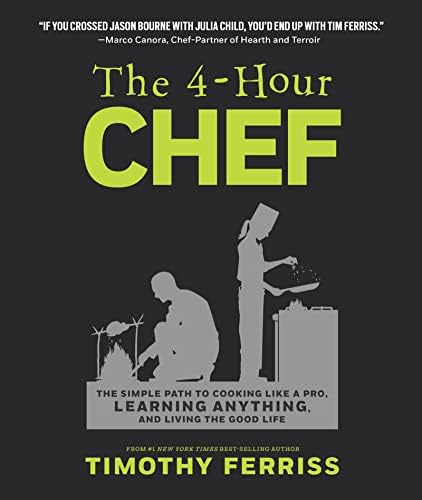
Michelle Khare's The 4-Hour Workweek fear-setting exercise in 2016 directly led to quitting her job and launching Challenge Accepted
- 02
Challenge Accepted releases only 8-10 episodes per year with 12-15 month production timelines, creating premium scarcity for advertisers
- 03
Cold emails need three components: credibility in subject line, clear ask in body, and explicit phone number invitation
- 04
Radical Candor helped Michelle transition from 'ruinous empathy' to direct feedback as an untrained 23-year-old manager
- 05
Michelle's Formula One team concept requires just three people: a coach, a mentor, and a cheerleader for each challenge
- 06
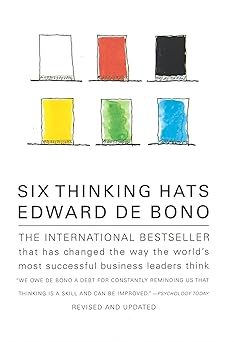
Six Thinking Hats taught Michelle to escape default 'black hat' negative thinking by systematically examining problems from six perspectives
- 07
The hardest thing becomes the easier thing long-term - Michelle's defensible moat comes from challenges too crazy for competitors to attempt
- 08
BuzzFeed experience was essential - learning every production role from ideation to upload before starting her own channel
Get the latest ideas from Tim Ferriss.
Plus the best new takeaways from other top podcasts — read in minutes, not hours.
By continuing, you agree to podbrain's Terms and Privacy Policy.
These notes may contain occasional inaccuracies. Learn how podbrain notes are made
Michelle Khare is the creator and host of Challenge Accepted, a YouTube channel with over 6 million followers and more than a billion views. She attempts the world's toughest stunts and professions, from recreating Harry Houdini's water torture cell to hanging off military aircraft like Tom Cruise in Mission Impossible. Her work has earned multiple Streamy Awards and made history by successfully petitioning to join the primetime Emmy ballot.
The conversation explores Michelle's journey from Shreveport, Louisiana to YouTube success, heavily influenced by The 4-Hour Workweek fear-setting exercise that led her to quit her BuzzFeed job in 2016. Tim Ferriss shares parallel experiences from his own content creation challenges, including injuries from The Tim Ferriss Experiment and distribution battles that drove him to podcasting.
They discuss the economics and strategy behind premium content creation, the importance of cold email mastery, and how books like Radical Candor and Six Thinking Hats shaped Michelle's approach to building her production company. The conversation reveals the tactical details behind creating defensible content in an oversaturated digital landscape.
From Shreveport to BuzzFeed: The Foundation Years
Michelle's father taught her filmmaking by watching every movie in Shreveport, checking off the AFI top 100 list, and discussing each film at pizza shops afterward.
Louisiana tax incentives brought film production to Shreveport, giving Michelle her first industry exposure through an internship on 'Snitch' starring The Rock in 2013.
Getting rejected from Google after her internship forced Michelle to take her first creative risk, leading to a producer role at BuzzFeed where she learned every aspect of video production.
"Unlike when I interned on a traditional film set, it's very specialized. There are unions. You don't even touch equipment from a department that's not yours" - Michelle on BuzzFeed's cross-training advantage.
The Fear-Setting Exercise That Changed Everything
Michelle brought her original 2016 copy of The 4-Hour Workweek to the interview, revealing a detailed fear-setting email sent exactly 10 years prior to their conversation.
Her nightmare scenario included "going broke, never figuring out what I'm best at, since I find the most joy in trying everything rather than specializing, people not thinking I'm funny."
"I'm waiting for a false sense of security to inspire me to take a leap... but I'm actually being challenged and invited to create my own security for the first time" - Michelle's 2016 fear-setting conclusion.
She immediately moved to a studio apartment with a roommate, canceled memberships, and practiced living on minimal resources for a full year before quitting her job.
Building Challenge Accepted: Quality Over Quantity Strategy
Challenge Accepted evolved from Michelle doing three studio videos per month plus one passion project, until the passion projects consistently outperformed everything else.
"We release eight to 10 episodes per year. That's my upload cadence. And so every opportunity is a big bet" - Michelle on their premium content strategy.
The 12-15 month production timeline from idea to upload creates scarcity for advertisers: "The train's going. Are you getting on? Are you getting off? Because we only have so much inventory to sell."
Their defensive strategy involves challenges so extreme that competitors won't attempt them: "No one would be crazy enough to run seven marathons on all seven continents in one single week."
The Art and Science of Cold Emailing
Michelle's successful FBI collaboration started with calling their 1-800 crime tip line and asking to speak with someone about film and television partnerships.
Effective cold emails require three paragraphs: credibility and ask (first), project vision showing homework done (second), clear call to action with phone number (third).
"Here's my phone number. Text me anytime" removes barriers to response and exhibits trust, making it easier for busy recipients to engage.
Tim emphasizes including phone numbers explicitly in email body, not buried in signatures: "I am shocked by how many emails I get that are actually somewhat interesting... that do not have a phone number."
Management Lessons from Radical Candor and Six Thinking Hats
Radical Candor helped Michelle overcome 'ruinous empathy' - being so nice that critical feedback gets lost in compliment sandwiches and unclear messaging.
"Communication exists on two wavelengths... the tactical information, but there's another wavelength that's equally as important, which is the emotional component" - Michelle on Kim Scott's teaching.
Six Thinking Hats provided a framework for escaping default negative thinking by systematically examining problems through six different perspectives.
"Prior to understanding this, I would immediately go to black hat... That doesn't inspire creativity. That does not inspire entrepreneurship" - Michelle on her thinking transformation.
The Formula One Team Approach to Extreme Challenges
Every Challenge Accepted episode requires three key people: a coach (expert instructor), a mentor (recent achiever of the goal), and a cheerleader (emotionally supportive friend).
"Coaching is a different skill set and art form from mentoring... it's harder for the coach to put themselves in your shoes because so much of what they do is second nature."
The core team of seven full-time staff operates as a 'slinky operation' that balloons to 50 people for major productions, then contracts back down.
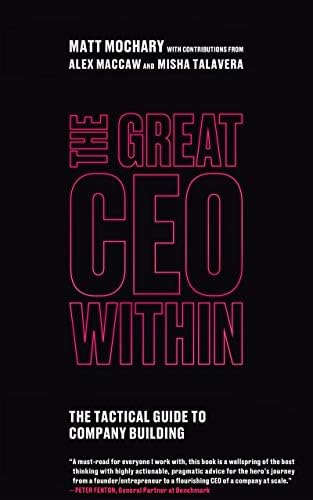
Michelle learned Areas of Responsibility Charts from The Great CEO Within, creating spreadsheets that define every company action from "decides if brand deal is worth taking" to "takes out the trash."





These notes may contain occasional inaccuracies. Learn how podbrain notes are made
More in Self-Development
Can the Middle Class Be Saved? Political Division, Economic Doom & The Leadership Problem | Andrew Bustamante Pt. 2
Jun 20, 2026
The Career Trap That Makes Women Miserable - Suzanne Venker - #1113
Jun 20, 2026
How Immigration and War Test the Strength of Values and National Identity
Jun 19, 2026
7 Strategies for Becoming a Better Father | FRIDAY FIELD NOTES
Jun 19, 2026
ELECTROMAGNETISM Is The SECRET To Health: Biofield Tuning Explained | Eileen McKusick
Jun 15, 2026
.svg)