
Q&A with Tim — The Upcoming AI Tsunami and Building Offline Advantage, Book Recommendations, Spotting Psychedelic Red Flags, Courage as a Learnable Skill, and More
Tim Ferriss hosts an experimental Q&A format episode, answering questions from test readers of his upcoming book (working title: 'the no book'). The session covers a wide range of topics with close to half the questions focusing on artificial intelligence.

Episode


- 01
Leopold Aschenbrenner's Situational Awareness The Decade Ahead has made staggeringly accurate AI predictions, making him 'the closest thing to an AI Nostradamus'
- 02
Google/Alphabet is positioned to 'own the full stack' with distribution, TPUs, DeepMind, and unparalleled information access in the AI race
- 03
Never use AI for skills you want to preserve in your head - once lost, cognitive abilities are 'a hell of a lot harder to reclaim'
- 04
In an AI-dominated world, 'the relational, the tactile, anything IRL in real life' becomes increasingly valuable as competitive advantage
- 05
Zero tolerance policies are essential for community building - 'if you allow minor infractions, you're going to get moderate infractions'
- 06
Physical courage is learned through progressive exposure: 'you have to prove to yourself that you have it' through uncomfortable action
- 07
Wealth accumulation scores zero on Ferriss's success scale: 'Nobody's going to remember you. Nobody's going to remember me. It's totally fine.'
Get the latest ideas from Tim Ferriss.
Plus the best new takeaways about artificial intelligence from other top podcasts — read in minutes, not hours.
By continuing, you agree to podbrain's Terms and Privacy Policy.
These notes may contain occasional inaccuracies. Learn how podbrain notes are made
Tim Ferriss hosts an experimental Q&A format episode, answering questions from test readers of his upcoming book (working title: 'the no book'). The session covers a wide range of topics with close to half the questions focusing on artificial intelligence.
Ferriss begins with important caveats about AI expertise, recommending Leopold Aschenbrenner and his publication Situational Awareness The Decade Ahead as the most prescient AI analysis available. The discussion spans career pivots, networking strategies, psychedelic practitioner vetting, community building, book recommendations from his personal library, and thoughts on parenting.
Throughout the session, Ferriss emphasizes the growing importance of offline advantages and real-world relationships as AI transforms the information landscape. He shares practical insights from his experience launching The 4-Hour Work Week at South by Southwest 2007 and discusses various tools and strategies for navigating an AI-dominated future.
AI Investment Strategy and Market Positioning
Ferriss views Google/Alphabet as uniquely positioned in AI with 'distribution, hardware in terms of TPUs, incredible unparalleled access to information, Demis Hassabis and DeepMind internally'
The bull and bear cases for Google are both compelling - unclear how they'll transition ad revenue from traditional search to AI-generated responses
AI markets can 'remain irrational longer than you can remain solvent' with billions in market cap lost when ChatGPT announces oblique industry connections
Preserving Human Cognitive Abilities in the AI Era
Any skill you want to preserve in your head should not be delegated to AI - 'if you lose it, it's a hell of a lot harder to reclaim it'
AI editing tools create a slippery slope where models offer to 'incorporate all these changes and draft a version' - the danger lies in accepting this convenience
Scientists are already researching negative cognitive impacts of AI dependence, similar to how navigation abilities deteriorated with Google Maps usage
Rising Above AI-Generated Content Noise
A successful photographer's advice applies to writers: 'put more interesting stuff in front of the camera' - do interesting things in real life and write about them
Travels with Charley by John Steinbeck exemplifies this approach - 'road trip in a makeshift RV with his dog Charlie' creates content AI cannot replicate
Analysis-based content is 'relegated to the machines' because 'AI, broadly speaking, LLMs being one manifestation of that, are just too good'
Practical AI Tools and Workflows
OpenClaw offers powerful automation but requires security precautions - 'don't give it access to things like email, credit cards' until confident
Claude's desktop app now includes features that 'do a lot of what OpenClaw can do in a more user-friendly' way with scheduling and remote access
API keys enable Claude to 'figure out how to connect to a given service like Gmail' and 'write itself a script' for data integration
Career Pivoting in an AI-Disrupted World
Career transition questions are becoming 'a huge, huge mega, mega, meta problem' with increasing frequency due to AI job displacement
Two startups Ferriss invested in address this: APT (tryapt.ai, code TIM50 for 50% off) for strengths discovery and Oboe (oboe.com) for accelerated skill acquisition
Dynamic times require 'something that is more dynamic and personalized from the get-go' rather than fixed-format career guides like What Color Is Your Parachute?
Building Communities with Zero Tolerance Policies
Treat closed communities 'like I would a dinner party at my house' - if someone tracks mud and calls people names, 'that person's going to get dragged by their hair out'
Zero tolerance prevents the Overton window from shifting: 'if you allow minor infractions, you're going to get moderate infractions'
Even nominal fees like '$5 a quarter, $5 a year' filter for people who 'generally want to contribute and be in an environment of positivity'
Essential Books for Entrepreneurs and Life Design
The Effective Executive by Peter Drucker provides frameworks for 'better discerning yourself what to do and not do' when scaling companies
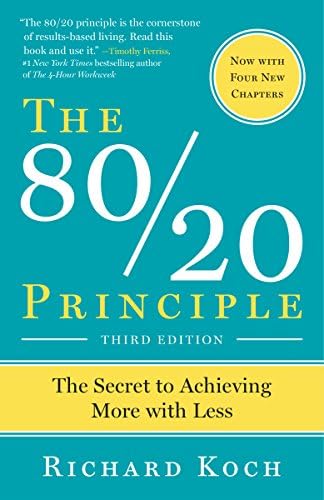
The 80/20 Principle by Richard Koch 'just never gets old' - Koch is also 'one of the best investors I've ever met' making him both theorist and practitioner
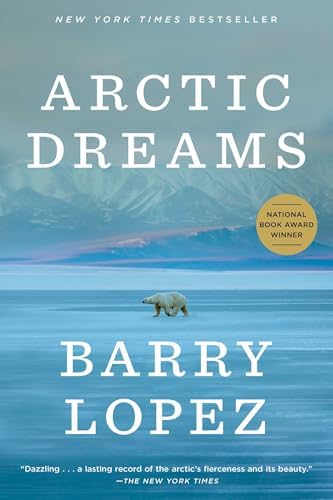
Of Wolves and Men by Barry Lopez 'really shattered the mold' and 'redefined what nonfiction nature writing could be'
Vetting Psychedelic Practitioners and Red Flags
Ask practitioners about adverse events: 'What are the most concerning adverse events they've seen? How do you handle freakouts?'
If their answer is 'people don't lose their shit, there aren't any adverse events, they're either lying, delusional, or very inexperienced'
Bias toward practitioners working since before How to Change Your Mind by Michael Pollan made psychedelics trendy - 'it's become too goddamn trendy'
Parenting Philosophy and Courage Development
Three core values for children: 'optimism, resourcefulness, and like lots of physical activity' - optimism is 'the mother quality that enables all else'
Courage is learned through progressive exposure: 'you have to prove to yourself that you have it' and 'your subconscious will believe it' only through uncomfortable action
Physical activity helps children prove to themselves 'that they can do things' - building confidence through concrete achievements rather than abstract concepts
![Travels with Charley in Search of America[TRAVELS W/CHARLEY-50TH ANNIV/E]](https://m.media-amazon.com/images/I/81YkpH5kDjL._SY342_.jpg)




These notes may contain occasional inaccuracies. Learn how podbrain notes are made
More in Self-Development
Can the Middle Class Be Saved? Political Division, Economic Doom & The Leadership Problem | Andrew Bustamante Pt. 2
Jun 20, 2026
The Career Trap That Makes Women Miserable - Suzanne Venker - #1113
Jun 20, 2026
How Immigration and War Test the Strength of Values and National Identity
Jun 19, 2026
7 Strategies for Becoming a Better Father | FRIDAY FIELD NOTES
Jun 19, 2026
ELECTROMAGNETISM Is The SECRET To Health: Biofield Tuning Explained | Eileen McKusick
Jun 15, 2026
.svg)