
How to Simplify Your Life in 2026 — New Tips from Maria Popova, Morgan Housel, Cal Newport, Craig Mod, and Debbie Millman
Tim Ferriss hosts five listener favorites to explore simplification strategies for 2026: Maria Popova (writer), Morgan Housel (author of The Psychology of Money, Same as Ever, and...

Episode


- 01
Maria Popova's 'cherish quotient' rule: only give time to people whose company you absolutely cherish, not just like or appreciate
- 02
Morgan Housel's entire net worth consists of just four assets: house, cash, Vanguard index funds, and Markel shares for maximum simplicity
- 03
Cal Newport makes 'no' his default answer to opportunities because any triage rule he creates lets too many things through
- 04
Craig Mod found that cutting alcohol was the 'lowest energy in, biggest impact out' simplification of his life
- 05
Debbie Millman's CEO insight: 'anything that takes you four months to decide might mean you really don't want to do it'
- 06
Reading more history and fewer forecasts creates a healthier, simpler relationship with news and current events
- 07
Cal Newport unified his academic and writing careers around technology ethics, eliminating the complexity of managing two separate professional identities
Get the latest ideas from Tim Ferriss.
Plus the best new takeaways from other top podcasts — read in minutes, not hours.
By continuing, you agree to podbrain's Terms and Privacy Policy.
These notes may contain occasional inaccuracies. Learn how podbrain notes are made
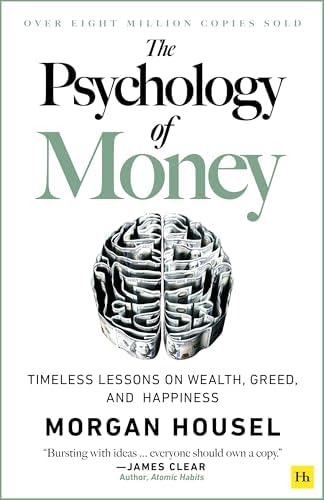
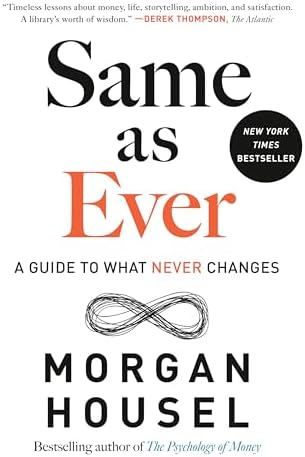
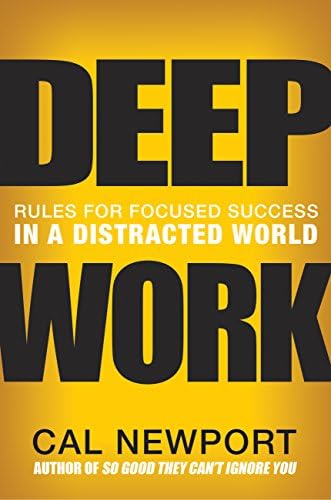
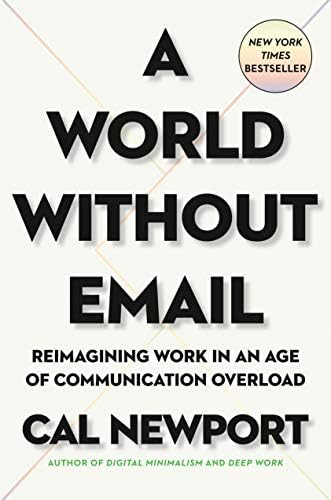
Tim Ferriss hosts five listener favorites to explore simplification strategies for 2026: Maria Popova (writer), Morgan Housel (author of The Psychology of Money, Same as Ever, and The Art of Spending Money), Cal Newport (computer science professor and author of Deep Work, Digital Minimalism, and A World Without Email), Craig Mod (writer and photographer, author of Things Become Other Things and Kissa by Kissa), and Debbie Millman (designer and podcast host).
Each contributor shares concrete decisions they've made to dramatically simplify their lives, covering everything from relationship boundaries and investment strategies to career focus and personal habits. The discussion reveals how simplification often requires saying no to good opportunities to create space for what truly matters, whether that's Maria's 'cherish quotient' for relationships or Cal's unified approach to his academic and writing careers around technology ethics.
The Cherish Quotient and Time Accountability
Maria Popova adopted the 'cherish quotient' - only giving time to people whose company she doesn't just like or appreciate, but absolutely cherishes, because 'how we spend our days is, of course, how we spend our lives' and 'every middling hour is a step toward a middling life.'
She stopped using autoresponders and apologizing for response times after realizing that 'the moment you begin apologizing for how you manage your time, you are essentially apologizing for your priorities, which means apologizing for your life.'
The insight came from observing highly intelligent, accomplished people who felt accountable to others for their time management, leading her to advocate for 'basic faith that everyone is doing the best with the equation between the resources they have and the demands their life places upon them.'
Radical Investment Simplification
Morgan Housel's entire net worth consists of only four assets: 'a house, cash, Vanguard index funds, and shares of Markel where I'm on the board of directors' - deliberately choosing the simplest possible allocation.
His philosophy centers on minimizing decisions: 'the fewer decisions you have to make as an investor, the better you're going to do over the course of your life' because most investment predictions reflect what we want to happen rather than objective analysis.
He argues that being 'an average investor for an above average period of time' through passive investing for 50 years will likely place you in the top 1-3% of investors 'just by doing nothing, for just sitting back and passively owning a slice of capitalism.'
Drawing from 11/22/63 by Stephen King, he illustrates how difficult prediction is: the protagonist prevents JFK's assassination but returns to find the present world 'completely fell to pieces' in a 'Mad Max scenario.'
History Over Forecasts Information Diet
Housel's news consumption rule: 'read more history and fewer forecasts' because most social media timelines are 'forward-looking predictions' that are 'very, very difficult' to get right given world complexity.
Immersing in history provides 'big, broad trends' of human psychology that repeat, helping you 'filter the news' and quickly identify which headlines 'I'm not going to care about six months from now or a year from now.'
He quotes Kelly Hayes: 'when you haven't engaged with history, everything feels unprecedented' - explaining why people without historical context get stuck in news 'wormholes' where 'every headline seems like it's a disaster.'
Default No and Career Unification
Cal Newport makes 'no' his default answer to opportunities because 'whatever rule I came up with, too many things actually satisfied that rule' leading to cycles of overload, anxiety, and resentful rejection of everything.
His breakthrough came with Deep Work in 2016, which 'did really well' - '2 million copies, 45 languages type of well' - creating a 'schizophrenic' dual career managing both academic computer science and popular writing.
He unified his careers by realizing both focused on technology: 'I'm a computer scientist and I'm writing about the impacts of the type of technologies that computer scientists create' - putting distributed algorithm theory 'on pause' to focus entirely on technology ethics.
His books Digital Minimalism and A World Without Email continued the technology theme, along with his New Yorker writing and university work at the Center for Digital Ethics, creating a coherent professional identity.
Cutting Alcohol and Finding Purpose
Craig Mod describes cutting alcohol as 'easily, the lowest energy in, biggest impact out simplification' after struggling with abuse in his 20s, where 'almost nothing was made better by alcohol.'
The key was finding 'deep meaning in my work' as a 'higher power experience' - once he could see 'every drink I took as taking away from that work,' saying no became 'easy, consistently' over the 18-year period since quitting.
His work focus centers on writing about long walks across Japan, documented in Things Become Other Things and Kissa by Kissa, exploring 'how the country is changing' through extensive routes like Tokyo to Kyoto.
Therapy and Craft Commitment
Craig started therapy 'in earnest almost nine years ago' finding it 'cuts to the bone in a really clarifying way' by calling out 'bullshit addled voices' that respond to situations that 'hasn't been a part of your life in 30 years.'
He believes 'it's very difficult to achieve simplicity in life and to feel purpose strongly and clearly with a muddled mind' - therapy 'cleans the waters' allowing you to stop 'swimming in circles like an idiot.'
His third simplification was committing to craft: 'I'm a writer. The end.' Instead of being 'a jack of 50 trades,' he channels all interests through writing, creating 'compounding dividends' and connections to 'inspiring people.'
The Four-Month Decision Rule
Debbie Millman spent four months vacillating over a CEO offer at her company of 20 years, making 'spreadsheets and pro-con lists' and seeking advice, but 'every time I tried to land on a yes, something in me resisted.'
Her CEO's insight changed everything: 'Debbie, anything that takes you four months to decide might mean you really don't want to do it' - reframing her indecision as 'clarity trying to surface.'
Turning down the position brought 'immediate, unmistakable relief' and she has 'never once regretted it' in the 10 years since, allowing her to focus on writing, podcasting, teaching, and illustration work aligned with her values.
She distinguishes between validation and fulfillment: 'validation is not the same thing as fulfillment, and power is not the same thing as purpose' - her simplification came from 'removing the parts that no longer fit so that the parts that did could expand.'



These notes may contain occasional inaccuracies. Learn how podbrain notes are made
More in Self-Development

Can the Middle Class Be Saved? Political Division, Economic Doom & The Leadership Problem | Andrew Bustamante Pt. 2
Jun 20, 2026
The Career Trap That Makes Women Miserable - Suzanne Venker - #1113
Jun 20, 2026
How Immigration and War Test the Strength of Values and National Identity
Jun 19, 2026
7 Strategies for Becoming a Better Father | FRIDAY FIELD NOTES
Jun 19, 2026
ELECTROMAGNETISM Is The SECRET To Health: Biofield Tuning Explained | Eileen McKusick
Jun 15, 2026
.svg)