
Jim Collins — What to Make of a Life and How to Maximize Your Return on Luck
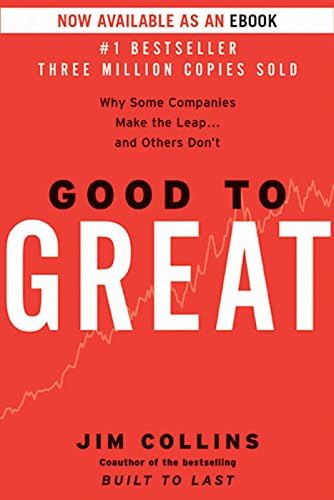
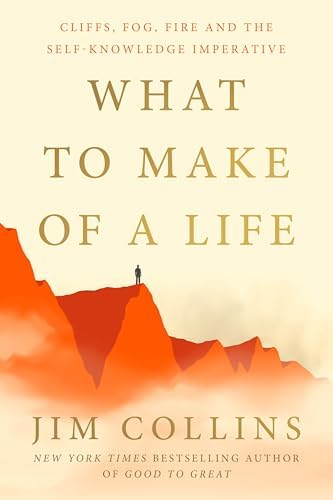
Tim Ferriss interviews Jim Collins, author of mega-bestsellers including Good to Great (11+ million copies sold) and the brand new What to Make of a Life Cliffs, Fog, Fire, and the Self-Knowledge Imperative. Collins, now 68, is known for his...

Episode


- 01
Collins has more energy at 68 than at 37, attributing it to shifting from 'red molten lava' fire to 'green and yellow warming glow' - less insecurity-driven, more intrinsically motivated
- 02
What to Make of a Life reveals that people don't need to 'radically reinvent' themselves - they extend outward into new areas while circling back to previous foundations
- 03
Encodings are durable capacities within us awaiting discovery through life experiences - most people die with vast swaths of encodings never discovered
- 04
Return on luck matters more than luck itself: matched pairs receive similar amounts of good/bad luck, but winners make dramatically more from luck events
- 05
The 50-30-20 rule from Stanford faculty: 50% new intellectual creative work, 30% teaching, 20% committees - Collins maintains 1,000+ creative hours annually without exception
- 06
Collins uses a 'punch card' system for commitments, treating each engagement as irreversible points that subtract from annual allocation to protect creative time
- 07
Life operates as the 'ultimate punch card' - at 68, Collins recognizes he has fewer five-year project cycles remaining than younger people
- 08
Success is defined as 'my spouse likes and respects me ever more as the years go by' - the deepest measure of authentic living
Get the latest ideas from Tim Ferriss.
Plus the best new takeaways from other top podcasts — read in minutes, not hours.
By continuing, you agree to podbrain's Terms and Privacy Policy.
These notes may contain occasional inaccuracies. Learn how podbrain notes are made
Tim Ferriss interviews Jim Collins, author of mega-bestsellers including Good to Great (11+ million copies sold) and the brand new What to Make of a Life Cliffs, Fog, Fire, and the Self-Knowledge Imperative. Collins, now 68, is known for his reclusive nature and methodical research approach using matched pairs to study big questions of leadership and life.
The conversation explores Collins' 12-year journey researching how people navigate major life transitions ('cliffs') and discover their core 'encodings' - the durable capacities within us that await discovery. Originally framed as a study of Self-Renewal inspired by mentor John W. Gardner's book Self-Renewal, the research evolved into examining the fundamental question of 'what to make of a life.'
Collins discusses his personal transformation from burning 'red molten lava' motivation in his younger years to a sustained 'green and yellow warming glow' that actually increases his energy and creativity. The discussion covers practical frameworks including his punch card system for managing commitments, the 50-30-20 time allocation principle, and concepts of luck and return on luck developed in Great by Choice.
The Energy Paradox: More Fire at 68 Than 37
Collins reports having more energy at 68 than at 37, needing less sleep and experiencing 'childlike anticipation' to wake up at 4 AM every day to begin creative work.
The key shift was moving from 'red molten lava' fire driven by insecurity and proving himself to a 'green and yellow warming glow' - sustained, generative energy without the painful burning.
Collins attributes this transformation partly to studying the lives in What to Make of a Life over 12 years: 'somehow just being so close to their lives while I walked through them had this effect on me.'
He gets 'two mornings a day' through strategic napping, allowing him to reset and gain a second burst of peak creative hours after his afternoon rest.
Encodings vs. Strengths: Finding Your True Capacities
Encodings are 'durable capacities that reside within and are awaiting discovery through the experiences of life' - different from strengths because they're innate rather than developed.
Collins uses the metaphor of a constellation of encodings viewed through a 'window frame' - when the frame captures bright encodings, you're 'in frame'; when it shifts away, you're 'out of frame.'
John Glenn exemplifies this: out of frame as a young man studying chemistry and physics, instantly in frame when he first flew an aircraft - 'it was like click.'
The key insight from What to Make of a Life: 'I'm going to put 70 points on trust because I think we're getting clues all the time' - recognizing encodings matters less than trusting them when discovered.
The Punch Card System: Protecting Creative Time
Collins maintains exactly 1,000+ creative hours annually for 50 years without exception, inspired by the 50-30-20 rule from Stanford faculty (50% new intellectual work, 30% teaching, 20% committees).
He uses Warren Buffett-inspired 'punch cards' for commitments: each engagement costs points based on travel, intensity, and time - airplane trips cost more points than local virtual presentations.
'Life is the ultimate punch card' - at 68, Collins recognizes he has fewer five-year project cycles remaining than younger people, making each commitment decision more crucial.
His team sets expectations upfront that 'the odds that Jim will be able to do this are very, very low' and uses relationship-building to ensure people 'walk away feeling better about us' even when declined.
Return on Luck: Making More from Life's Random Events
Great by Choice research with Morton Hansen revealed that successful companies don't get more good luck or less bad luck - they achieve dramatically higher 'return on luck' when events occur.
Luck events must meet three criteria: 'you didn't cause it, it has potentially significant consequence, and it came as a surprise' - this definition applies to both good and bad events.
Collins identifies three types of luck: 'what luck' (good/bad events), 'who luck' (meeting key people like Joanne), and 'Zeit luck' (being born at the right time for your encodings).
The key is recognizing 'Natalie moments' - 'not all time in life is equal' situations requiring unequal responses, like Collins getting one chance to teach at Stanford after a professor's family tragedy.
Cliffs, Fog, and Life Transitions from What to Make of a Life
What to Make of a Life studies people through 'cliff events' - major life changes where 'there's a before and an after, and your life is so changed that you have to really reorient and reconsider.'
The research originated from Joanne's forced retirement from world-class triathlon competition due to injury: 'I feel like I'm dying' - a certain identity was indeed dying.
Fog phases follow cliffs almost inevitably - periods of being 'lost, confused, befuddled, disoriented, uncertain' that can last years but are normal parts of remarkable lives.
The study reveals people don't 'radically reinvent' themselves but rather 'extend outward' into new areas while 'circling back' to previous foundations - like Robert Plant doing bluegrass versions of Led Zeppelin songs.
The Arrow of Money and Sustainable Success
Collins distinguishes between doing work to make money versus needing money to do your work - successful people 'flip the arrow of money' so money becomes fuel for their encodings.
When money is fuel rather than the goal, 'you have a very different relationship to success when it comes' - you never run out of steam because the work itself is intrinsically rewarding.
Great company builders like Sam Walton, Walt Disney, and Steve Jobs exemplify this - 'it was never about the money, it was what they were building, and that's why they never ran out of steam.'
Collins warns founders to consider whether they're 'encoded to build companies until they're out of breath' or if company-building is 'one frame of life' before another very different frame begins.
These notes may contain occasional inaccuracies. Learn how podbrain notes are made
More in Self-Development

Can the Middle Class Be Saved? Political Division, Economic Doom & The Leadership Problem | Andrew Bustamante Pt. 2
Jun 20, 2026
The Career Trap That Makes Women Miserable - Suzanne Venker - #1113
Jun 20, 2026
How Immigration and War Test the Strength of Values and National Identity
Jun 19, 2026
7 Strategies for Becoming a Better Father | FRIDAY FIELD NOTES
Jun 19, 2026
ELECTROMAGNETISM Is The SECRET To Health: Biofield Tuning Explained | Eileen McKusick
Jun 15, 2026
.svg)