
464: Palmer Luckey—The Department of War Has a Mullet
Palmer Lucky, 33, is the founder of Oculus (sold to Facebook for $2.2 billion) and defense contractor Anduril, worth billions. He was fired from Facebook for donating to a Trump PAC but has since become a major player in the military-industrial complex, developing autonomous weapons and AI-powered defense systems.

Episode

- 01
Palmer Lucky sold Oculus to Facebook for $2.2 billion at age 22, was later fired for donating $9,000 to a Trump PAC, then founded Anduril, now worth billions
- 02
The 1970s 'Last Supper' dinner forced defense industry consolidation from 50 companies to 5-7, creating 'too big to fail' problems that stifle innovation
- 03
Lucky advocates renaming the Department of Defense back to 'Department of War' for honesty: 'Their job is to win wars and maintain a posture that will allow them to win wars'
- 04
America lacks political will for major wars: 'I don't think America could work itself up enough to go fight the Nazis again' - Lucky
- 05
U.S. should become 'the world's gun store' rather than world police, giving allies tools to defend themselves instead of sending American troops
- 06
Climate engineering is technologically feasible: 'If you want the Earth to get warmer or colder, that's not hard. One country with a geoengineering program could just do it unilaterally'
- 07
Energy costs determine manufacturing competitiveness: if U.S. achieves near-zero energy costs through nuclear power, other countries 'won't be able to compete with American automobiles'
- 08
Population collapse threatens national security: South Korea's 0.67 birth rate means North Korea could have 16-20 times more military-age males within four generations
Get the latest ideas from The Way I Heard It with Mike Rowe.
Plus the best new takeaways about military & strategy from other top podcasts — read in minutes, not hours.
By continuing, you agree to podbrain's Terms and Privacy Policy.
These notes may contain occasional inaccuracies. Learn how podbrain notes are made
Palmer Lucky, 33, is the founder of Oculus (sold to Facebook for $2.2 billion) and defense contractor Anduril, worth billions. He was fired from Facebook for donating to a Trump PAC but has since become a major player in the military-industrial complex, developing autonomous weapons and AI-powered defense systems.
The conversation explores Lucky's philosophy on defense, energy policy, and national security through the lens of Tolkien's works, particularly The Lord of the Rings. Lucky draws parallels between the Shire's protected isolation and America's current disconnect from global threats, referencing C.S. Lewis's analysis of Tolkien's themes about 'local and temporary accidents' of peace.
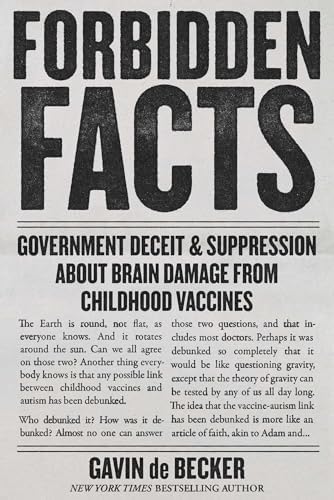
Topics range from forbidden facts and regulatory capture to climate engineering and population collapse, with Lucky advocating for radical honesty in government naming (Department of War vs Defense) and policy-making. The discussion also touches on security expert Gavin de Becker's works The Gift of Fear and Forbidden Facts, examining how certain truths become unspeakable in modern discourse.
Forbidden Facts and the Power of Unspeakable Truths
Security expert Gavin de Becker wrote The Gift of Fear 25 years ago and recently Forbidden Facts about childhood vaccines, which is 'making people's heads explode' with controversial information.
Lucky identifies numerous 'forbidden facts' - true statements that are illegal to say, like marketing electrical stimulation devices as calorie-burning tools, despite scientific evidence they work.
Age-based hiring decisions illustrate the problem: everyone knows older workers have different capabilities than younger ones, but employers must perform 'the ritual' of denying obvious realities to avoid legal trouble.
This mirrors Soviet propaganda tactics where 'the point wasn't really to trick people into believing' but to force acknowledgment of obviously false statements as a demonstration of state power.
Defense Industry Consolidation and Innovation Stagnation
The 1970s 'Last Supper' dinner consolidated 50 defense companies into 5-7 major contractors after the Joint Chiefs told executives: 'consolidate or die.'
This created 'too big to fail' scenarios where the U.S. has only one company building fighter jets or submarines, forcing government bailouts regardless of performance.
Lucky founded Anduril with 4,000-5,000 employees to compete against these giants through automation and efficiency rather than headcount.
Modern conflicts like Ukraine reveal that '$50 million bombers' get 'blown up by $500 drones,' showing traditional defense spending assumptions are obsolete.
The Department of War Philosophy and American Military Readiness
Lucky advocates renaming the Department of Defense to Department of War for honesty: 'Your goal is to win wars, not necessarily to start wars... Their job is to win wars and to maintain a posture that will allow them to win wars.'
'Department of Defense' enables mission creep where spending expands to include 'defending our country from climate change' and 'defending ourselves from misinformation.'
America lacks political will for major conflicts: 'I don't think that America could work itself up enough to go fight the Nazis again' due to burned credibility from Vietnam and Middle East wars.
The solution is becoming 'the world's gun store' instead of world police, giving allies defensive tools rather than sending American troops to die for other countries' interests.
Tolkien's Lessons on Isolated Peace and Real Threats
Lucky named his company Anduril after the reforged sword in The Lord of the Rings, though he accepts the mispronunciation 'Anderil' rather than fighting the 'elven way' pronunciation battle.
C.S. Lewis analyzed The Lord of the Rings as showing 'the contrast between the hobbits or the shire and the appalling destiny to which some of them are called' - their peaceful existence is 'a sort of local and temporary accident.'
The Shire represents America's protected isolation, while Gondor's men 'holding the line, fighting every day' represent those who 'don't have the luxury of wondering if these things are real.'
Tolkien understood that people far from Mordor 'literally don't believe in this invasion' while those on front lines 'don't have the luxury of thinking that maybe evil doesn't exist.'
Population Collapse as Existential National Security Threat
South Korea's 0.67 birth rate (versus 2.1 replacement rate) means North Korea could have '16, maybe 20 times as many North Koreans as South Koreans' within four generations.
Countries become irrelevant through demographic decline, not military defeat: 'Nobody destroyed the Dutch Navy. They just made it not something you have to think about anymore.'
Military-age males serve as 'a reasonable proxy for economic productivity' - they're 'starting businesses, running factories' beyond just military service.
America cannot compete long-term with China's population: 'How can a country of 500 million people' compete unless 'each American is six times as productive' as each Chinese person?
Climate Engineering and Energy Independence Strategy
Lucky advocates active climate control: 'We should actively be changing the climate to be exactly what we want it to be' rather than pretending we can't control it.
Technologies like cloud brightening using 'salt water shot up into the air' could allow 'a handful of nuclear-powered ships' to lower global temperatures by creating reflective cloud cover.
Geoengineering research is 'prohibited at many universities' despite being scientifically feasible, representing another category of forbidden knowledge.
Energy costs determine manufacturing competitiveness: if America achieves near-zero energy costs through nuclear power, other countries 'won't be able to compete with American automobiles.'






These notes may contain occasional inaccuracies. Learn how podbrain notes are made
More in History

679. Germany: The Song Hitler Stole (Part 3)
Jun 14, 2026
Tom Holland Meets Paul McCartney
May 14, 2026Greece vs. Persia: The Battle of Marathon (Part 2)
May 13, 2026
Adolf Hitler (Part 3)
May 13, 2026Greece vs Persia: The Rise of the First Superpower (Part 1)
May 10, 2026

.svg)