
The Fall of the Incas: Massacre in the Andes (Part 2)
Tom Holland and Dominic Sandbrook continue their series on the Spanish conquest of Peru, focusing on the dramatic confrontation between Francisco Pizarro's conquistadors and Inca Emperor Atahualpa at Cajamarca in November 1532. The episode opens with a reading from...

Episode


- 01
Francisco Pizarro's 168 conquistadors faced 80,000 Inca warriors at Cajamarca on November 16, 1532, in one of history's most audacious military gambles
- 02
Atahualpa controlled 12 million subjects across the Inca Empire but was distracted by civil war with his brother Huascar when the Spanish arrived
- 03
The Spanish used 'theatrical terror' - surprise cavalry charges, gunpowder, and steel swords - to massacre 2,000-8,000 Incas in two hours without losing a single man
- 04
Atahualpa rejected Christianity and Spanish vassalage after Dominican friar Valverde read the 'requirement' demanding submission to Charles V and Christ
- 05
The massacre began when Atahualpa allegedly threw or dropped Valverde's prayer book, giving Spanish the pretext they needed for attack
- 06
Pizarro captured Atahualpa alive and bizarrely invited the emperor to sleep beside him after the bloodbath, beginning an extraordinary captivity
- 07
Most conquistadors were young artisans and craftsmen from rural Spain, not professional soldiers, seeking fortune rather than glory
- 08
The Incas likely viewed the Spanish as potential mercenaries or divine messengers rather than existential threats to their empire
Get the latest ideas from The Rest Is History.
Plus the best new takeaways about history from other top podcasts — read in minutes, not hours.
By continuing, you agree to podbrain's Terms and Privacy Policy.
These notes may contain occasional inaccuracies. Learn how podbrain notes are made
Tom Holland and Dominic Sandbrook continue their series on the Spanish conquest of Peru, focusing on the dramatic confrontation between Francisco Pizarro's conquistadors and Inca Emperor Atahualpa at Cajamarca in November 1532. The episode opens with a reading from The Royal Hunt of the Sun, Peter Schaffer's 1964 play depicting the Spanish ascent through the Andes toward their fateful meeting with the Inca ruler.
The hosts detail how Pizarro's tiny force of 168 men - mostly young artisans and craftsmen from rural Spain rather than trained soldiers, as revealed in The Men of Cajamarca by James Lockhart - advanced deep into the Inca Empire. Atahualpa commanded 80,000 warriors and ruled 12 million subjects, but was preoccupied with a civil war against his brother Huascar and viewed the Spanish as potential mercenaries rather than conquerors.
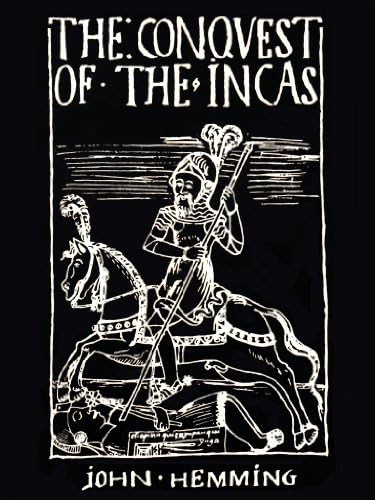
The episode chronicles the tense negotiations between Spanish emissaries Hernando de Soto and Hernando Pizarro with Atahualpa at the hot springs near Cajamarca, followed by the emperor's fateful decision to enter the town square with 6,000 unarmed followers. The climax details the massacre of November 16, 1532, when Spanish cavalry and gunpowder decimated thousands of Incas in what The Conquest of the Incas by John Hemming describes as methodical slaughter lasting two hours.
Pizarro's Gamble: 168 Men Against an Empire
Pizarro established the town of San Miguel de Tangarará to create legal foundations for his governorship, following his cousin Cortés' Mexican playbook, before advancing with just 167 remaining men toward the Inca heartland.
The Men of Cajamarca reveals most conquistadors were young artisans - accountants, tailors, merchants, craftsmen - from rural western and southern Spain, not professional soldiers, seeking fortune rather than military glory.
The Spanish legal framework required reading the 'requirement' - explaining world history, Jesus, and Charles V's papal license - before attacking, with refusal justifying violence against indigenous peoples.
Atahualpa's Strategic Miscalculation
Atahualpa controlled the Inca Empire of 12 million people but was focused on civil war with brother Huascar, viewing the Spanish as potential mercenaries rather than existential threats to his rule.
The emperor's spy 'Apu' reported the Spanish were 'indigents and robbers' but recommended keeping three: the blacksmith for swords, the horse tamer for beasts, and 'the barber because he makes men look young again.'
Atahualpa executed soldiers who showed fear of Spanish horses, ordering their wives and children killed too, declaring 'we can't show fear at the strangest animals.'
The Tense Confrontation at the Hot Springs
Hernando de Soto and Hernando Pizarro met Atahualpa at Pultamarca hot springs with 35 horsemen, advancing through 80,000 silent Inca warriors in 'a terrible sight' of campfires 'like a brilliantly star-studded sky.'
Atahualpa sat motionless on a low stool 'with all the majesty in the world,' refusing to meet Spanish eyes until Hernando Pizarro shouted at him, then raising eyes that were 'blazing with fury' and 'implacable.'
The emperor complained Spanish had 'treated the chiefs badly and threw them into chains,' while Hernando boasted 'one horse was enough to conquer the whole land' and offered ten horsemen to defeat any enemies.
The Trap is Set at Cajamarca Square
Pizarro positioned his men in barracks surrounding three sides of Cajamarca's main square, planning to use 'theatrical terror' - surprise cavalry charges with bells and rattles on horses' bridles for maximum noise.
Spanish chronicler Pedro Pizarro described the night before: 'I saw many Spaniards urinate without noticing it out of pure terror' as they watched Inca campfires covering the hillside.
Atahualpa delayed his arrival all day, finally entering the square at sunset with 6,000 men on 'a very fine litter, lined with feathers of many colours and embellished with plates of gold and silver.'
The Massacre Begins with a Fallen Prayer Book
Dominican friar Vicente de Valverde confronted Atahualpa with a cross and prayer book, reciting the requirement demanding submission to Christ and Charles V, threatening destruction 'just as the Pharaoh of old and all his hosts perished in the Red Sea.'
Atahualpa, who had never seen writing, struggled to open the book's buckle or clasp, and when it fell to the ground, Valverde shouted 'The dogs have rejected the word of God' - the signal for attack.
Pedro de Candilla fired his guns from the central platform while Spanish cavalry burst from barracks screaming 'Santiago!' in what one witness called slaughter 'like slaughter men with cattle, just killing them grimly, methodically, without any pity.'
Two Hours of Methodical Slaughter
The Conquest of the Incas estimates 2,000-8,000 Incas died in two hours without a single Spanish casualty, with each conquistador killing 10-15 people as cavalry 'rode them down one by one, without mercy.'
Spanish sources admitted 'no Indian even raised a weapon against a Spaniard' during the massacre, as Incas were trapped in the square by Spanish infantry blocking escape routes.
Pizarro personally grabbed Atahualpa's left arm while Spanish hacked at Incas clinging to the imperial litter, with Miguel de Estete slashing at the emperor until Pizarro shouted 'No, don't kill him!' and cut his own hand blocking the blade.
The Bizarre Aftermath: Dinner and Bedtime
After the bloodbath, Pizarro set up a table and chairs for dinner with the captured, traumatized Atahualpa - 'what a weird scene' with 'Spaniards caked in blood and sweat' dining with their prisoner.
In the most surreal moment, Pizarro told servants 'make up a mattress for the emperor. He will sleep with me' - the most powerful man in South America bedding down beside his illiterate Spanish captor.
One Spanish chronicler claimed divine intervention: 'Truly, it was not accomplished by our own forces, for there were so few of us. It was by the grace of God' - though it was actually 'recklessness, ingenuity, daring and brutality.'


These notes may contain occasional inaccuracies. Learn how podbrain notes are made
More in History

679. Germany: The Song Hitler Stole (Part 3)
Jun 14, 2026
Tom Holland Meets Paul McCartney
May 14, 2026Greece vs. Persia: The Battle of Marathon (Part 2)
May 13, 2026
Adolf Hitler (Part 3)
May 13, 2026Greece vs Persia: The Rise of the First Superpower (Part 1)
May 10, 2026.svg)