
Wine and the Birth of Civilisation
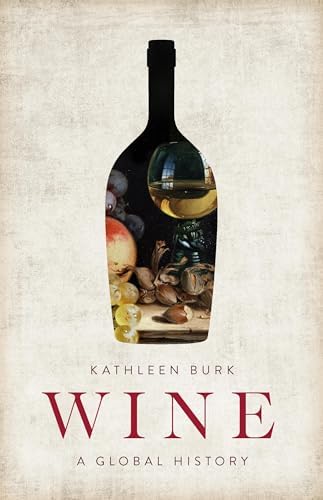
Tom Holland and Dominic Sandbrook explore 8,000 years of wine history, tracing its evolution from ancient Georgian vineyards to modern global industry worth $500 billion. The conversation draws extensively from Wine A Global History by Kathleen Burke and references classical...

Episode


- 01
Archaeological evidence from Georgia dates wine production to 6000 BC, making it humanity's oldest alcoholic beverage
- 02
Romans used wine as a tool of imperial expansion, creating alcoholic dependency among Gauls to facilitate conquest
- 03
English glassmakers in the 1620s invented the modern wine bottle using coal-fired furnaces and wind tunnels
- 04
The 1976 Judgment of Paris shocked the wine world when Californian wines defeated French in blind tastings
- 05
Islamic law prescribes 80 lashes for free persons caught drinking wine, though legal loopholes existed
- 06
French terroir concept became untranslatable marketing tool to defend against New World wine competition
- 07
Phoenicians invented the amphora around 6th millennium BC, enabling wine trade across the Mediterranean for millennia
Get the latest ideas from The Rest Is History.
Plus the best new takeaways from other top podcasts — read in minutes, not hours.
By continuing, you agree to podbrain's Terms and Privacy Policy.
These notes may contain occasional inaccuracies. Learn how podbrain notes are made
Tom Holland and Dominic Sandbrook explore 8,000 years of wine history, tracing its evolution from ancient Georgian vineyards to modern global industry worth $500 billion. The conversation draws extensively from Wine A Global History by Kathleen Burke and references classical sources including Natural History by Pliny the Elder.
The discussion covers seven pivotal moments: wine's prehistoric origins in the Caucasus region, Phoenician trade networks, Roman imperial expansion, Islamic prohibition, English technological innovations, French cultural dominance, and the revolutionary 1976 Judgment of Paris that elevated New World wines to international prominence.
Ancient Origins: From Noah's Vineyard to Georgian Innovation
The Book of Genesis describes Noah as 'the first tiller of the soil' who 'planted a vineyard and drank of the wine and became drunk' on Mount Ararat, establishing wine's biblical origins.
Archaeological evidence from Georgia near Tbilisi shows wine production dating to 6000 BC, with pottery shards containing chemical traces of wine found just 100 miles from biblical Mount Ararat.
Wine A Global History explains that domestication required creating 'hermaphroditic vines' through cross-breeding wild male and female grapevines, enabling self-pollinating Vinifera grapes.
Armenia's Arani village contains the world's oldest known winery from 4000 BC, featuring a large wine press in a cave with preserved grapevine remains and seeds.
Phoenician Trade Networks and Mediterranean Expansion
Canaanites and later Phoenicians became the first mass wine traders, centered in Lebanon's Bekaa Valley from the 6th millennium BC.
The invention of the amphora with two handles and pointed base enabled wine transportation across vast distances, remaining the standard container until Islam's 7th-century arrival.
A 1997 discovery of two Phoenician ships off Gaza contained 781 amphorae equivalent to 20,000 wine bottles, demonstrating massive commercial scale.
By 800 BC, Phoenician wine amphorae reached Cadiz in Spain, representing the oldest known wine containers in Iberia.
Roman Wine Culture and Imperial Strategy
The Odyssey illustrates Greek wine culture through Odysseus carrying precious Thracian wine, with Greeks diluting wine 19:1 while barbarian Polyphemus drinks it undiluted.
Romans weaponized wine addiction among Gauls, with merchants inflating prices to one amphora equaling one slave by Julius Caesar's time.
The Senate banned selling vines to Gauls to maintain Roman monopoly, creating cycles where Gauls fought for slaves to trade for wine, preventing unified resistance.
Natural History by Pliny the Elder catalogued wines by region with scientific detail, establishing the template for wine criticism and regional classification.
Islamic Prohibition and Cultural Tensions
The Quran declares wine 'an abomination' invented by Satan 'to encourage people to brawl and fight and to distract the faithful from the remembrance of God.'
Islamic law prescribes 80 lashes for free persons drinking wine and 40 for slaves, with some schools specifying palm branches and slipper beatings.
Heaven on Earth by Sadakat Qadri explains Hanafi legal loopholes allowing wine consumption 'until they became incapable of telling a slave girl from a beardless boy.'
Sufi mystic Rumi used wine metaphorically for divine love, writing 'Before God and vine and grape were in the world, our soul was drunk with immortal wine.'
English Innovation: Bottles, Corks, and Corkscrews
English glassmakers in the 1620s developed coal-fired furnaces and wind tunnels, creating stronger bottles by 'raising the ratio of sand to potash and lime.'
Kenelm Digby, son of a Gunpowder Plot conspirator, received parliamentary credit in 1662 for inventing unbreakable 'English bottles' used across Europe.
Dark glass from coal fumes became a quality marker, explaining why wine bottles remain dark today as 'a legacy of its origins in the 17th century.'
The 1703 Methuen Treaty with Portugal provided cork access and reduced import duties, establishing England's port wine tradition and cork monopoly.
French Cultural Dominance and Terroir Marketing
Samuel Pepys recorded drinking 'Hau Brian' (Haut-Brion) in 1663, the first Bordeaux wine sold by estate name rather than merchant, priced at seven shillings versus two for ordinary wine.
Arnaud de Pontac's marketing genius created the 'Grand Cru' classification system, establishing Haut-Brion, Lafite, Latour, and Margaux as premier estates.
The 1855 Napoleon III classification ranked 60 best wines based on English consumer prices, with only Chateau Mouton Rothschild added to the top tier in 1973.
The untranslatable concept of 'terroir' became France's spiritual and marketing defense against industrialization and New World competition.
The 1976 Judgment of Paris Revolution
Stephen Spurrier's blind tasting shocked nine French wine experts when Californian Chardonnay and Stag's Leap Cabernet defeated premier French wines.
Warren Winiarski's 1970 Stag's Leap vineyard beat 1970 Chateau Mouton Rothschild, with Time magazine declaring 'California defeated all Gaul.'
The judges included France's top wine authorities: heads of the Enological Institute, Wine Academy, and Appellation d'Origine Contrôlée Board.
The victory legitimized New World wines globally while ironically reinforcing French prestige, as Californian wineries adopted French names like 'Clos du Val.'





These notes may contain occasional inaccuracies. Learn how podbrain notes are made
More in History

679. Germany: The Song Hitler Stole (Part 3)
Jun 14, 2026
Tom Holland Meets Paul McCartney
May 14, 2026Greece vs. Persia: The Battle of Marathon (Part 2)
May 13, 2026
Adolf Hitler (Part 3)
May 13, 2026Greece vs Persia: The Rise of the First Superpower (Part 1)
May 10, 2026.svg)