
Dawn of the Samurai: Bloodbath at the Bridge (Part 2)
Tom Holland and Dominic Sandbrook explore the rise of Taira no Kiyomori, the first samurai to seize control of Japan's imperial court in 1159. Drawing extensively from The Tale of the Heike, described as the Iliad of medieval Japan, they...

Episode


- 01
Kiyomori becomes the first samurai to control Japan's imperial court, trampling centuries of aristocratic tradition through strategic violence and political maneuvering
- 02
The battle of Uji Bridge establishes the template for seppuku when Yorimasa composes poetry before slicing open his abdomen and being beheaded
- 03
Bantori (head-taking) involves the brutal 'kubinaiji kuru' - literally 'head twisting off and cutting' - with rewards based on the victim's rank
- 04
Kiyomori's mercy toward 13-year-old Yoritomo proves catastrophic when the boy grows up to lead the Minamoto rebellion against Taira rule
- 05
The Taira control Japan's western inland sea shipping lanes while the Minamoto dominate the eastern provinces of Shinano and Kanto plain
- 06
Kiyomori dies burning with 'the hottest temperature in world history,' demanding Yoritomo's severed head as his only memorial wish
Get the latest ideas from The Rest Is History.
Plus the best new takeaways from other top podcasts — read in minutes, not hours.
By continuing, you agree to podbrain's Terms and Privacy Policy.
These notes may contain occasional inaccuracies. Learn how podbrain notes are made
Tom Holland and Dominic Sandbrook explore the rise of Taira no Kiyomori, the first samurai to seize control of Japan's imperial court in 1159. Drawing extensively from The Tale of the Heike, described as the Iliad of medieval Japan, they chronicle how this warrior dynasty descended from surplus imperial princes transformed from frontier fighters into the masters of Kyoto.
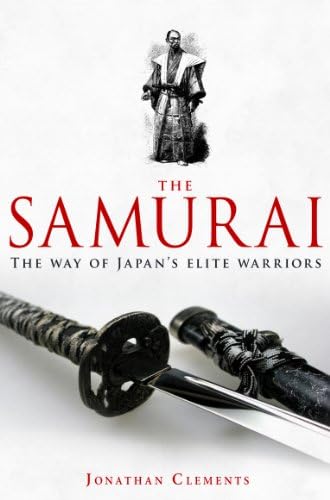
The episode details the brutal realities of samurai warfare, including the practice of bantori (head-taking) as described in Jonathan Clements' A Brief History of the Samurai, and the complex political maneuvering that allowed warrior clans to infiltrate the refined court culture. The discussion covers Kiyomori's strategic use of violence, his control of Japan's crucial shipping lanes, and his fatal decision to spare the young Minamoto heir Yoritomo.
The narrative culminates with the legendary battle of Uji Bridge in 1180, where the warrior monk Yorimasa establishes the archetypal model for seppuku, and Kiyomori's death from supernatural fever, setting the stage for the epic Genpei War between the Taira and Minamoto clans.
The Brutal Reality of Samurai Head-Taking Culture
Bantori (head-taking) involved the gritty 'kubinaiji kuru' - literally 'head twisting off and cutting' - rather than clean ritual execution, as detailed in A Brief History of the Samurai.
Severed heads were collected, piled up, identified and tagged with labels, with rewards determined by the victim's rank and status.
Samurai culture's darkness influenced 1930s Japanese militarism, with soldiers conducting beheading competitions during the Nanjing massacre echoing these historical practices.
A petition from 988 complained: 'For the sake of their own honour and reputations, these samurai willfully pluck out people's eyes' and tear down homes while mounted.
Kiyomori's Rise Through Strategic Violence and Political Marriage
The 1156 succession crisis erupted when rival Taira-Minamoto factions backed different imperial candidates, ending three centuries without public executions in Kyoto.
Yoshitomo's 1159 coup failed when the 13-year-old emperor escaped during a palace fire, disguised as a woman in heavy makeup and kimono.
Kiyomori systematically infiltrated the imperial system: first samurai with court position (1160), chief minister (1167), imperial father-in-law (1171).
By 1180, Kiyomori's two-year-old grandson Emperor Antoku sat on the throne, achieving the ultimate samurai triumph over aristocratic tradition.
The Fatal Decision to Spare Yoritomo
Kiyomori spared 13-year-old Yoritomo because the boy's mother was also Kiyomori's stepmother, demonstrating the complex intermarriage between rival clans.
Yoritomo was banished to Izu peninsula, the same coastal backwater where Dutch ships would later wreck in Shogun, expected to 'rot there until he dies.'
Tokiwa, mother of Yoshitomo's younger sons, fled through a snowstorm carrying baby Yoshitsune before becoming Kiyomori's concubine to save her children's lives.
Yoritomo grew into 'a hard, ruthless, brilliantly calculating man' who married female samurai Hojo Masako, becoming 'the Augustus and Livia of medieval Japan.'
The Legendary Battle of Uji Bridge and Birth of Seppuku
Prince Mochihito's 1180 rebellion began when he 'dressed himself up as a woman' to escape arrest, though his feminine disguise was blown when he 'leaped a ditch lightly.'
Warrior monk Jomyo killed 25 Taira with arrows, five with his naginata, eight with his sword, then crawled back 'and counted 63 arrow hits' in his armor.
Yorimasa established the seppuku template by composing poetry - 'This forgotten tree never through the fleeting years burst into flower' - before slicing open his abdomen.
The battle became 'a Japanese equivalent of the Battle of Thermopylae' - a defeat that gained 'the sheen of something approaching almost a victory.'
Kiyomori's Supernatural Death and the Fox's Prophecy
A fox Kiyomori spared as a young hunter promised to grant his desires but warned 'when the moment of Kiyomori's death approached, everything would crumble away to dust.'
Kiyomori experienced supernatural visions including 'an enormous face, a full bay wide, peering into the room' and his garden 'piled high with skulls.'
He died burning with 'the hottest temperature in world history' - icy springs 'boiled and turned to steam' when he tried to cool himself.
His final wish rejected Buddhist tradition: 'Never mind building me temples... I want Yoritomo's head off and hung before my grave.'


These notes may contain occasional inaccuracies. Learn how podbrain notes are made
More in History

679. Germany: The Song Hitler Stole (Part 3)
Jun 14, 2026
Tom Holland Meets Paul McCartney
May 14, 2026Greece vs. Persia: The Battle of Marathon (Part 2)
May 13, 2026
Adolf Hitler (Part 3)
May 13, 2026Greece vs Persia: The Rise of the First Superpower (Part 1)
May 10, 2026.svg)