
The Ku Klux Klan: Birth of a Nation (Part 3)
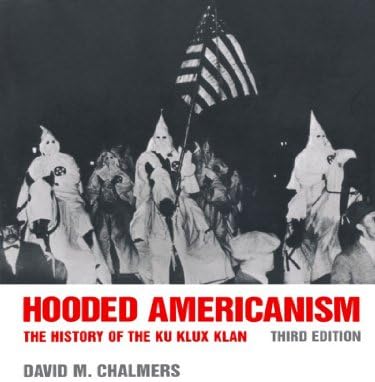
This episode examines the second incarnation of the Ku Klux Klan, born in Georgia in 1915 and fundamentally different from its Reconstruction-era predecessor. Rather than a secretive paramilitary group, this was a massive fraternal organization with between two and five million members at its peak.

Episode


- 01
The second Ku Klux Klan (1915-1920s) was fundamentally different from the first - a fraternal organization with 2-5 million members focused on marketing and mass entertainment rather than secretive paramilitary action
- 02
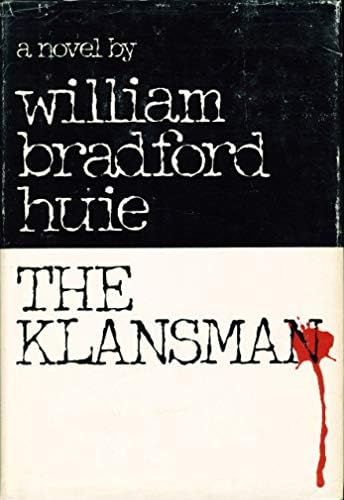
Thomas Dixon's novels The Leopard's Spots and The Klansman directly inspired D.W. Griffith's groundbreaking film The Birth of a Nation, which became the first movie shown in the White House
- 03
The second Klan's primary targets were white Catholics and Jews rather than African Americans, with anti-Catholicism deeply rooted in American Protestant culture since the 17th century
- 04
Prohibition enforcement became the Klan's central organizing principle, with Methodist ministers comprising 40,000 members who saw the organization as enforcing moral austerity
- 05
The Klan operated as a sophisticated pyramid scheme, charging $10 'Kleck tokens' for membership while costumes cost an additional $6.50, generating $25 million annually by 1921
- 06
By 1922, the Klan controlled governorships in Indiana, Oklahoma, Oregon, Colorado, and Texas, with Oregon banning Catholic schools through Klan-backed referendum
- 07
Despite charitable activities like funding Dallas's Hope Cottage nursery, the Klan conducted systematic vigilante violence including the 'Whipping Meadow' in Dallas and reign of terror in Goose Creek, Texas
Get the latest ideas from The Rest Is History.
Plus the best new takeaways about marketing from other top podcasts — read in minutes, not hours.
By continuing, you agree to podbrain's Terms and Privacy Policy.
These notes may contain occasional inaccuracies. Learn how podbrain notes are made
This episode examines the second incarnation of the Ku Klux Klan, born in Georgia in 1915 and fundamentally different from its Reconstruction-era predecessor. Rather than a secretive paramilitary group, this was a massive fraternal organization with between two and five million members at its peak.
The conversation traces how novelist Thomas Dixon's works The Leopard's Spots and The Klansman inspired D.W. Griffith's revolutionary film The Birth of a Nation, which in turn motivated William Joseph Simmons to relaunch the Klan as a marketing-driven organization. The discussion reveals how advertising executives Edward Young Clark and Elizabeth Tyler transformed the Klan into a sophisticated business operation that exploited Protestant anxieties about Catholics, Jews, and prohibition enforcement.
Unlike the first Klan's focus on the South and African Americans, this second iteration found its greatest success in the industrial Midwest and targeted white Catholics and Jewish Americans. The episode explores how the organization operated simultaneously as a respectable fraternal group funding charitable causes and a violent vigilante force conducting systematic moral policing across American communities.
From Novel to National Movement: Dixon's Literary Foundation
Thomas Dixon, a North Carolina novelist and former classmate of Woodrow Wilson, wrote The Leopard's Spots (1902) and The Klansman (1905), both intensely racist novels portraying Reconstruction as a period when evil Republicans plotted to hand the South over to 'a massive mob of African-American rapists.'
D.W. Griffith's film adaptation of The Klansman became The Birth of a Nation (1915), the first feature-length narrative film costing a record $100,000 and establishing the template for epic cinema with its groundbreaking use of Wagner's Ride of the Valkyries during Klan scenes.
President Wilson arranged the first-ever White House film screening for The Birth of a Nation, with the film quoting his book A History of the American People: 'The white men were roused by a mere instinct of self-preservation until at last there had sprung into existence a great Ku Klux Klan, a veritable empire of the South.'
Simmons and the Business of Brotherhood
William Joseph Simmons, a failed Methodist preacher and garter salesman from Alabama, founded the second Klan in 1915 after seeing The Birth of a Nation, conducting the inaugural ceremony on Stone Mountain with a burning cross - a ritual invented by Dixon, not the original Klan.
Simmons belonged to 15 fraternal organizations including the Woodmen of the World, where he earned the title 'Colonel' - not from military service but from this made-up fraternal rank that he allowed people to assume came from the Spanish-American War.
The Klan remained small with fewer than 100 members until 1920, when Simmons hired PR experts Edward Young Clark and Elizabeth Tyler, who transformed it into a sophisticated marketing operation taking 80 cents of every membership dollar.
The Marketing Machine: Pyramid Schemes and Protestant Piety
Clark and Tyler created an elaborate hierarchy with nine 'domains' led by 'Grand Goblins,' subdivided into 'realms' run by 'King Kliegels,' with local 'Kliegels' as salesmen - a pyramid scheme where recruiters kept 40% of the $10 'Kleck token' membership fee.
The organization targeted Masons first, often holding initial meetings in Masonic halls, with as many as three out of four Klan members already being Masons in some locations, creating overlap between the fraternal organizations.
An estimated 40,000 Methodist ministers joined the Klan, with recruiters offering them free lifetime membership and the title of 'Klud' (local chaplain), followed by orchestrated Sunday service donations that generated community support.
Members paid an additional $6.50 for mandatory costumes that cost only $2 to manufacture, featuring white robes with Prussian cross insignia, cone helmets with red tassels, and face masks - all copyrighted by Simmons for profit.
Targets of Terror: Catholics, Jews, and Prohibition
Unlike the first Klan, the second organization primarily targeted white Catholics and Jews rather than African Americans, with future Imperial Wizard Hiram Evans stating 'the Negro is not the menace to Americanism in the same sense that the Jew or the Roman Catholic is a menace.'
Anti-Catholic sentiment drew on centuries of American Protestant tradition, with Klan publications calling the Pope 'the Dago Priest on the Tiber' and claiming Catholics swore oaths to 'burn, waste, boil, flay, strangle, and bury alive Protestants.'
Prohibition enforcement became the Klan's central organizing principle, with members viewing Catholic opposition to the Volstead Act as proof of disloyalty to American law and Protestant values.
The cultural anxieties reflected in The Great Gatsby through Tom Buchanan's reading of The Rising Tide of Colour Against White World Supremacy by Lothrop Stoddard demonstrated widespread fears about white Anglo-Saxon Protestant dominance being threatened.
Political Power and Violent Vigilantism
By 1922, the Klan controlled governorships in Indiana, Oklahoma, Oregon, Colorado, and Texas, with Oregon electing a governor who boasted 'every one of my ancestors has been a Protestant for 300 years' and banning Catholic schools statewide.
In Texas, the Klan elected Earl Mayfield as the first avowed Klansman to the U.S. Senate while simultaneously operating the 'Whipping Meadow' in Dallas where they conducted mass floggings of alleged moral violators.
The organization's dual nature included charitable work like raising $85,000 to restore Dallas's Hope Cottage nursery (still operating today) alongside systematic violence including branding victims with 'K.K.K.' in acid and organizing 'whipping bees.'
In Goose Creek, Texas, Klansmen conducted an 18-month reign of terror, culminating in January 1923 when they burst into Mrs. Harrison's home disguised as clowns, flogged her and a male visitor, hacked off her hair, and poured crude oil over their wounds.




These notes may contain occasional inaccuracies. Learn how podbrain notes are made
More in History
679. Germany: The Song Hitler Stole (Part 3)
Jun 14, 2026
Tom Holland Meets Paul McCartney
May 14, 2026Greece vs. Persia: The Battle of Marathon (Part 2)
May 13, 2026
Adolf Hitler (Part 3)
May 13, 2026Greece vs Persia: The Rise of the First Superpower (Part 1)
May 10, 2026.svg)