
London’s Golden Age: The Shadow of the Madhouse (Part 4)
This episode explores the complex triangular relationship between Samuel Johnson, Mrs. Hester Thrale (later Mrs. Piazzi), and James Boswell during Johnson's final decades. Johnson, the great literary lion of 18th-century London, found refuge from his...

Episode


- 01
Samuel Johnson wrote submissive letters to Mrs. Thrale, requesting she lock him in his room and serve as his 'mistress' - revealing a hidden psychological dynamic
- 02
Johnson's mental breakdown in 1766 led him to buy 'fetters and padlocks' fearing he might go mad, as described in Walter Jackson Bate's biography
- 03
Mrs. Thrale's marriage to Italian music teacher Gabrielle Piazzi in 1784 ended her 15-year friendship with Johnson, leaving him devastated and alone
- 04
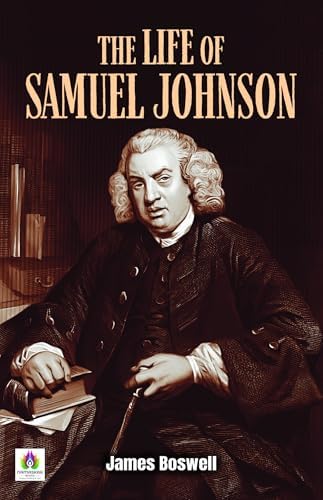
Boswell took seven years to write his Life of Johnson, establishing the modern biographical template through complete psychological portraiture
- 05
Johnson's adoptive son Francis Barber, a former slave from Jamaica, inherited most of Johnson's estate and used it to open a draper shop in Lichfield
- 06
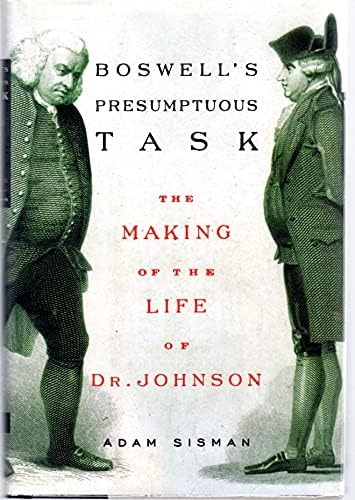
Boswell's Presumptuous Task by Adam Sisman reveals how Boswell framed Johnson's conversations as theatrical scenes, creating documentary-like immediacy
Get the latest ideas from The Rest Is History.
Plus the best new takeaways about mental health from other top podcasts — read in minutes, not hours.
By continuing, you agree to podbrain's Terms and Privacy Policy.
These notes may contain occasional inaccuracies. Learn how podbrain notes are made
This episode explores the complex triangular relationship between Samuel Johnson, Mrs. Hester Thrale (later Mrs. Piazzi), and James Boswell during Johnson's final decades. Johnson, the great literary lion of 18th-century London, found refuge from his depression and mental health struggles at the Thrale family's luxurious estate in Streatham, where he lived almost as family for 15 years.
The conversation examines Johnson's psychological dependence on Mrs. Thrale, a brilliant Welsh woman over 30 years his junior who provided him with domestic stability, intellectual companionship, and emotional support. Meanwhile, Boswell struggled with jealousy over his hero's devotion to the Thrales, feeling displaced as Johnson's primary confidant and biographer.
The episode culminates with Mrs. Thrale's scandalous marriage to an Italian music teacher in 1784, which destroyed her friendship with Johnson and left him isolated in his final months. It then traces Boswell's seven-year struggle to complete his groundbreaking Life of Johnson, published in 1791, which established the modern template for biography through its unprecedented psychological depth and preservation of Johnson's actual conversations.
Johnson's Secret Letters and Mental Health Crisis
Johnson wrote submissive letters to Mrs. Thrale requesting she 'take steps yourself to make sure that I cannot leave my room' and hold him in 'that slavery which you know so well how to make a happy one.'
In 1766, the Thrales discovered Johnson kneeling before a clergyman in the grip of a complete breakdown, 'babbling and sobbing and almost on the verge of insanity.'
Samuel Johnson by Walter Jackson Bate describes how 'in exhausted despair, Johnson bought fetters and padlocks lest the enemy that seemed to be winning against him pass beyond control.'
Life at Streatham: Johnson's Surrogate Family
Mrs. Thrale was Hester Lynch Salisbury, from an illustrious Welsh family claiming descent from Henry VII, married to wealthy brewer Henry Thrale for financial security.
At Streatham Place, Johnson enjoyed unprecedented luxury with 100 acres, spreading lawns, greenhouses growing melons and peaches, and servants who would hold his wig when it caught fire from reading candles.
Johnson became like a 'combination of friend and toy elephant' to the Thrale children, crawling on hands and knees and sharing birthday parties with his favorite, 'Queen Esther' (Queenie).
The Thrale dining table became 'one of the most celebrated in England' hosting Burke, Garrick, and Joshua Reynolds, elevating Mr. Thrale's social status.
Boswell's Jealousy and the Scottish Tour
Boswell discovered Johnson had chosen swimming in Brighton with the Thrales over attending Garrick's Shakespeare festival in Stratford, shocking him with this departure from character.
Mrs. Thrale magnanimously encouraged Johnson's 1773 Hebrides tour with Boswell, writing 'I believe Mr. Boswell will be your best physician.'
Despite rivalry, Mrs. Thrale told Boswell at breakfast: 'There are many who admire and respect Mr. Johnson, but you and I love him.'
The Piazzi Scandal and Johnson's Final Years
After Henry Thrale's death in 1781, Mrs. Thrale fell in love with Italian music teacher Gabrielle Piazzi, causing family uproar and press condemnation.
Johnson wrote devastatingly to Mrs. Thrale before her 1784 marriage: 'If you have abandoned your children and your religion, God forgive your wickedness.'
Mrs. Thrale's daughters, led by 18-year-old Queenie, opposed the marriage so strongly that their mother nicknamed them 'Regan and Goneril' after the monstrous daughters in King Lear.
Johnson died alone on December 13, 1784, leaving most of his estate to Francis Barber, his adoptive black son and former slave from Jamaica.
Boswell's Seven-Year Struggle with the Biography
Publishers demanded immediate Johnson biographies after his death, with one requesting '400 pages by February,' but Boswell's London debauchery delayed his work for years.
Competing biographies appeared first: Mrs. Piazzi's 'waspish and embittered' 1786 account and Sir John Hawkins's 'pompous formal biography' in 1787.
Boswell's ambition was 'to portray Johnson more completely than any man who has ever yet lived,' establishing the template that 'every detail matters' for modern biography.
Boswell's Presumptuous Task by Adam Sisman reveals how Boswell 'framed these scenes of Johnson having conversations with his friends as scenes in a play.'
The Life of Johnson, published in 1791, created 'the oldest complete portrait of a person that we have' through its psychological depth and preservation of actual conversation.


These notes may contain occasional inaccuracies. Learn how podbrain notes are made
More in History
679. Germany: The Song Hitler Stole (Part 3)
Jun 14, 2026
Tom Holland Meets Paul McCartney
May 14, 2026Greece vs. Persia: The Battle of Marathon (Part 2)
May 13, 2026
Adolf Hitler (Part 3)
May 13, 2026Greece vs Persia: The Rise of the First Superpower (Part 1)
May 10, 2026.svg)