
London’s Golden Age: The Ghosts of Culloden (Part 3)
This episode follows the legendary 1773 journey of Samuel Johnson, England's foremost literary figure, and his companion James Boswell through Scotland's Western Islands. Johnson, age 64 and described as 'approaching to the gigantic,' had never ventured beyond England's borders until this expedition to what seemed...

Episode


- 01
Johnson carried pistols and bullets on his Scottish journey 'from an erroneous apprehension of violence' - expecting Highland bandits and ruffians
- 02
At Boyd's Inn in Edinburgh, Johnson complained 'I smell you in the dark' about the city's evening drainage stench
- 03
Johnson performed the first recorded kangaroo impersonation, gathering his coat tails to resemble a pouch and making 'vigorous bounds across the room'
- 04
Flora MacDonald told them Bonnie Prince Charlie 'didn't make a very convincing Irish maid' when disguised as Betty Burke during his escape
- 05
Johnson slept in the exact bed where Bonnie Prince Charlie had stayed at Flora MacDonald's house on Skye
- 06
Johnson declared the Hebrides trip 'the pleasantest part of my life' despite initial fears about Scottish hospitality
- 07
At Culloden's aftermath, Johnson observed Highlanders now walk 'unarmed and defenceless with the peaceable submission of a French peasant'
- 08
Johnson's famous line: 'that man is little to be envied whose piety would not grow warmer among the ruins of Iona'
Get the latest ideas from The Rest Is History.
Plus the best new takeaways about history from other top podcasts — read in minutes, not hours.
By continuing, you agree to podbrain's Terms and Privacy Policy.
These notes may contain occasional inaccuracies. Learn how podbrain notes are made
This episode follows the legendary 1773 journey of Samuel Johnson, England's foremost literary figure, and his companion James Boswell through Scotland's Western Islands. Johnson, age 64 and described as 'approaching to the gigantic,' had never ventured beyond England's borders until this expedition to what seemed like 'the very ends of the earth' to most Englishmen.
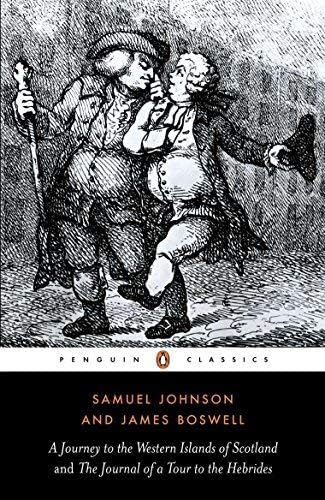
The journey, documented in Johnson's A Journey to the Western Islands of Scotland and Boswell's Journal of a Tour to the Hebrides, takes them from Edinburgh through the Highlands to the remote Hebrides. Their route deliberately follows the path of Bonnie Prince Charlie's 1745 escape, visiting locations steeped in Jacobite history including Flora MacDonald's house where Johnson sleeps in the Prince's former bed.
Beyond the romantic adventure, Johnson uses the trip to examine profound historical changes sweeping Scotland. He observes how commercialization and British state repression following Culloden have transformed Highland society, with clan chiefs educated at Eton and clansmen emigrating to America, leaving behind a world of 'antiquated life' that Johnson feels they arrived 'too late to see.'
Johnson's Arrival in Edinburgh: Anti-Scottish Prejudice Meets Reality
Johnson arrived at Boyd's Inn off the Royal Mile as a literary celebrity, 'the great cham' of British letters, wearing his habitual brown suit with enormous pockets that could fit his own dictionary.
Walking up the Royal Mile, Johnson complained about Edinburgh's stench: 'I smell you in the dark' - mortifying Boswell who worried about Johnson's notorious anti-Scottish prejudices embarrassing him.
At Parliament House viewing the 1707 Act of Union document, Johnson demolished Scottish independence arguments: 'Sir, never talk of your independency. Who could let your queen remain 20 years in captivity and then be put to death without even a pretense of justice?' - referencing Mary Queen of Scots.
The Jacobite Trail: Following Bonnie Prince Charlie's Path
Rather than taking the direct western route to the Hebrides, Johnson and Boswell chose the roundabout northern path through Inverness - deliberately following Bonnie Prince Charlie's 1745 escape route.
Both men harbored romantic Jacobite sympathies despite the Hanoverians' victory at Culloden in 1746, with Johnson admitting 'all his youth he had felt a tenderness for that unfortunate house' of Stuart.
Traveling across the heath where Macbeth met the witches, Boswell worked himself into terror seeing a rotting highwayman's corpse in a gibbet, while Johnson entertained him with ghost stories that night.
At an Inverness inn, Johnson performed the first recorded kangaroo impersonation, rising to his feet and 'gathering up the tails of his huge brown coat so as to resemble the pouch of the animal, made two or three vigorous bounds across the room.'
Highland Hospitality: From Disaster to Triumph
Sir Alexander MacDonald of Sleat proved a catastrophic host despite arriving in illegal tartan - serving undercooked dinner with watered-down punch while his wife seemed 'cut out of a cabbage' according to Johnson.
The island of Raasay provided everything they'd hoped for from Highland hospitality: 'fiddling, dancing' and Johnson declaring 'This is truly the patriarchal life. This is what we came to find.'
Meeting Flora MacDonald, who had saved Bonnie Prince Charlie by disguising him as her Irish maid Betty Burke, provided the ultimate Jacobite encounter - though she noted he 'didn't make a very convincing Irish maid.'
Johnson slept in the exact bed where Bonnie Prince Charlie had stayed at Flora MacDonald's house, creating what Boswell called 'a wonderful romantic scene' for any Jacobite sympathizer.
Johnson's Highland Elegy: A Civilization in Decline
Johnson concluded they had arrived 'too late to see what we expected, a people of peculiar appearance and a system of antiquated life' - the traditional Highland world was already disappearing.
He observed that clan chiefs had 'degenerated from patriarchal rulers to rapacious landlords,' many educated at Eton and migrating to Edinburgh, Glasgow, or London rather than remaining with their clansmen.
The Highlanders now walked 'unarmed and defenceless with the peaceable submission of a French peasant or English cottager' - their weapons confiscated and tartan banned following Culloden.
Johnson attributed this transformation not just to political repression but to inexorable economic forces: 'Misery is caused for the most part not by a heavy crush of disaster, but by the corrosion of less visible evils.'
At the holy island of Iona, Johnson experienced profound religious emotion, writing his famous line: 'that man is little to be envied whose piety would not grow warmer among the ruins of Iona.'
Literary Legacy: Two Books from One Journey
Despite initial fears, Johnson declared the Hebrides expedition 'the pleasantest part of my life' and decided during the trip to write A Journey to the Western Islands of Scotland, which became a classic of travel literature.
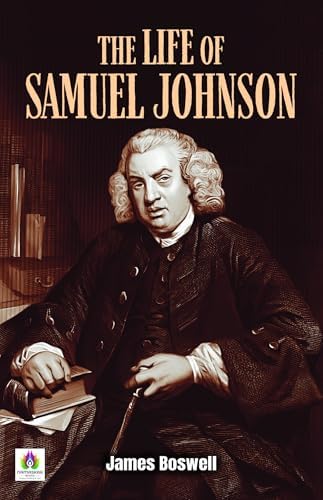
Boswell simultaneously documented everything for his Journal of a Tour to the Hebrides while plotting his ultimate ambition: writing Johnson's biography in what would become the famous Life of Johnson.
The journey's climax at Boswell's family seat Auchinleck ended in disaster when Lord Auchinleck and Johnson had a blazing row over Charles I's execution - a confrontation so intense Boswell refused to record the details.


These notes may contain occasional inaccuracies. Learn how podbrain notes are made
More in History

679. Germany: The Song Hitler Stole (Part 3)
Jun 14, 2026
Tom Holland Meets Paul McCartney
May 14, 2026Greece vs. Persia: The Battle of Marathon (Part 2)
May 13, 2026
Adolf Hitler (Part 3)
May 13, 2026Greece vs Persia: The Rise of the First Superpower (Part 1)
May 10, 2026.svg)