
Michael Ovitz: The Business of Relationships
Michael Ovitz, legendary Hollywood agent and co-founder of Creative Artists Agency (CAA), shares insights from his decades building one of entertainment's most powerful agencies and his current work as a tech investor. The conversation covers his transition from the William Morris mailroom to creating CAA's...

Episode


- 01
"I didn't go into business to win a popularity contest. I went into business to win" - Michael Ovitz on his competitive philosophy
- 02
CAA never lost a client during Ovitz's tenure by implementing teamwork where all clients had multiple agents staying informed
- 03
"Knowledge is power. It works for you if you embrace it, use it, read, and try to index it in your head for context"
- 04
Ovitz maintained a 200-magazine monthly reading list at CAA to stay conversant across multiple disciplines and industries
- 05
"There's always another rodeo" - Michael Crichton's advice to Ovitz about bouncing back from failures and setbacks
- 06
CAA kept a list of 400 people who helped them early on, ensuring all got jobs or financial support when needed
- 07
"Failure in American society is a badge of honor. We all fail. You just get back up on your horse and keep riding"
- 08
Ovitz believes business leaders should have five years of running any business before holding elected office as mayor, governor, or president
Get the latest ideas from The Knowledge Project Podcast.
Plus the best new takeaways from other top podcasts — read in minutes, not hours.
By continuing, you agree to podbrain's Terms and Privacy Policy.
These notes may contain occasional inaccuracies. Learn how podbrain notes are made
Michael Ovitz, legendary Hollywood agent and co-founder of Creative Artists Agency (CAA), shares insights from his decades building one of entertainment's most powerful agencies and his current work as a tech investor. The conversation covers his transition from the William Morris mailroom to creating CAA's revolutionary teamwork model, his relationships with figures like Michael Crichton and Mark Andreessen, and his philosophy on business, competition, and success.
Ovitz discusses key principles that drove CAA's dominance, including radical honesty with clients, comprehensive knowledge across disciplines, and eliminating traditional agency ego structures. He reflects on lessons from Jurassic Park author Michael Crichton, his alignment with Peter Thiel's monopoly theory from Zero to One, and his study of communist theory through The Communist Manifesto and Lenin's works to understand why socialist systems fail.
The discussion explores his current tech investing approach, the importance of momentum in business, his views on Hollywood's current challenges with woke culture, and his belief that American entrepreneurship remains superior to global competition. Ovitz emphasizes the critical role of trust, the inevitability of failure as a learning tool, and his multifaceted definition of success encompassing family, continuous learning, and building something meaningful from scratch.
The CAA Revolution: Teamwork Over Individual Ego
CAA implemented revolutionary rules that shocked the entertainment industry: don't lie, embrace teamwork, and tell clients the truth even when it's uncomfortable.
"We never lost a client" during Ovitz's tenure because all clients had multiple agents who stayed current on their careers, with inner office rule requiring agents to answer associates first before clients or buyers.
The agency maintained a 200-item monthly bibliography of magazines and books across disciplines, enabling agents to connect with clients on diverse interests from automobiles to medicine.
CAA kept a list of 400 people who helped them in early years, ensuring all received job placement or financial support when they fell on hard times - "That wasn't our choice, that was our duty."
Packaging Genius: From Jurassic Park to Tech Startups
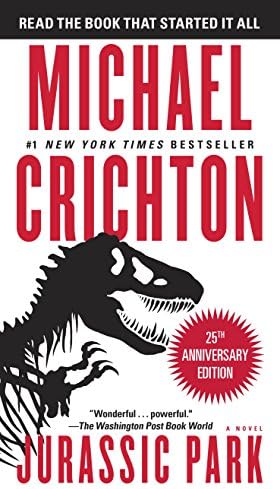
When Michael Crichton gave Ovitz Jurassic Park, "I put the right director with it, Steven Spielberg. There was no second choice" - demonstrating the art of perfect packaging.
The Natural baseball movie package combined unknown script by Roger Towne with director Barry Levinson and star Robert Redford, requiring Ovitz to convince Redford to work with a second-time director.
"Packaging is a sine qua non of life. I package everything in my life. I put elements together constantly" - the same skills apply to Hollywood films and tech company formation.
Recent example: Converting an NFT company into intellectual property protection business by combining Stanford AI professor's neural fingerprinting technology with music industry needs, securing Universal and Warner as clients.
Learning Philosophy: Knowledge as Competitive Advantage
"Knowledge is power. It works for you if you embrace it, use it, read, and try to index it in your head for context. Works against you if you don't."
Ovitz subscribed to over 200 magazines monthly, tearing out articles for in-depth reading, focusing on long-form content across multiple disciplines from Scientific American to Car and Driver.
Modern tech founders seek failure lessons rather than success stories: "They don't want to know what you've done that's great. They want to know what you failed at and how to avoid it."
Daily information routine includes New York Post, TechCrunch, Financial Times, Wall Street Journal, and three news sources (CNN, Fox, Sky News) to avoid single-source bias.
Power, Competition, and the American Advantage
"I thought these power lists that they developed in the entertainment business were just sheer nonsense because there's no such thing as power. It's an ephemeral thing and it's fleeting."
"I'm a monopolist. I believe in Peter Thiel's theory on monopoly" from Zero to One - "I don't believe that you should have competition. They have to be eliminated."
"Failure in American society is a badge of honor. We all fail. You just get back up on your horse and keep riding" - contrasting American resilience with European shame around business failure.
Ovitz studied communist theory through The Communist Manifesto and Lenin's works, concluding "I've read Marx, I've read Lenin. It all sounds great in theory, but it doesn't work" - no socialist system has succeeded in 2000 years.
Trust, Betrayal, and Building Relationships
"Trust to me is the most important thing between human beings. I don't handle betrayal well. I don't think that there's any justification for it under any condition."
Ovitz takes meetings based on proxy trust: "If people I respect say to me, meet the guy, even if I don't want to or the gal, I will do it."
"I basically collect art and people. Those are the two things I collect. Art is easy because it's static. People is more fascinating, but takes a lot of time."
When betrayed in business, "you got to go back and you got to kind of suck it up and get dressed and go out to the playing field in your uniform and get the ball and run with it again."
Success as a Pointillist Painting
"Success is a great Seurat painting. Our lives are made up of a lot of little dots. And when they tell the right picture, you hit it."
Success encompasses "having an amazing family because at the end of the day, that's your legacy, nothing else, unless you're Jonas Salk."
"What's the most fun time of your life? Building" - Ovitz continues working at his age because he loves creating businesses from scratch with young partners.
Thanksgiving represents his ideal success: "It's all about your family. It's not about giving forced gift-giving. You sit at the table and you're just happy to be there and there's no pressure."


These notes may contain occasional inaccuracies. Learn how podbrain notes are made
More in Self-Development

Can the Middle Class Be Saved? Political Division, Economic Doom & The Leadership Problem | Andrew Bustamante Pt. 2
Jun 20, 2026
The Career Trap That Makes Women Miserable - Suzanne Venker - #1113
Jun 20, 2026
How Immigration and War Test the Strength of Values and National Identity
Jun 19, 2026
7 Strategies for Becoming a Better Father | FRIDAY FIELD NOTES
Jun 19, 2026
ELECTROMAGNETISM Is The SECRET To Health: Biofield Tuning Explained | Eileen McKusick
Jun 15, 2026

.svg)