
Inside the Mind of Robinhood Co-Founder Vlad Tenev
Vlad Tenev, CEO and co-founder of Robinhood, discusses the GameStop crisis, company evolution, and his AI mathematics company Harmonic. Born in Bulgaria during communist rule, Tenev immigrated to the US at age five and later founded Robinhood to democratize financial markets.

Episode


- 01
GameStop trading restrictions lasted only one day but created lasting narrative damage - 'a juicy falsehood is more powerful than a boring truth' - Vlad
- 02
Robinhood lost 80% of market value in 2022, trading at $6 from $32 billion IPO valuation due to economic headwinds reversing COVID tailwinds
- 03
AI deflection rate in customer service and percentage of AI-generated code commits are key metrics for measuring internal AI adoption effectiveness
- 04
Bulgaria's 1800% inflation rate in 1996-1997 made copper cookware a better store of value than currency - Vlad's grandfather hoarded pots and pans
- 05
Robinhood's 3% cashback credit card works because customers must deposit rewards into brokerage accounts, creating a product flywheel effect
- 06
Phase three AI customer support can perform non-read-only actions like refunds, requiring deep backend integration that most companies haven't achieved
- 07
Harmonic's Aristotle AI achieved gold medal performance at International Mathematical Olympiad, solving 5 out of 6 problems using machine-checkable proofs
Get the latest ideas from The Knowledge Project Podcast.
Plus the best new takeaways about artificial intelligence from other top podcasts — read in minutes, not hours.
By continuing, you agree to podbrain's Terms and Privacy Policy.
These notes may contain occasional inaccuracies. Learn how podbrain notes are made
Vlad Tenev, CEO and co-founder of Robinhood, discusses the GameStop crisis, company evolution, and his AI mathematics company Harmonic. Born in Bulgaria during communist rule, Tenev immigrated to the US at age five and later founded Robinhood to democratize financial markets.
The conversation covers Robinhood's transformation from a simple trading app to an 11-business-line financial super app, including credit cards, retirement accounts, and AI-powered customer service. Tenev also chairs Harmonic, which builds mathematical superintelligence and recently solved unsolved problems in mathematics.
Key topics include the real story behind GameStop trading restrictions, lessons from 2022's market downturn, internal AI adoption strategies, and Robinhood's mission to expand retail access to private markets through tokenization and new fund structures.
GameStop Crisis: The Real Story Behind Trading Restrictions
Robinhood received automated files with large, changing collateral requirements in the middle of the night, forcing position-closing restrictions on GameStop for approximately one day due to unprecedented risk management needs.
The narrative that Robinhood colluded with hedge funds was false - 'we don't really have any business with hedge funds' and the company had actually given GameStop shares to new users in 2020 - Vlad
Vlad's phone became unusable during the crisis due to constant calls from angry users, comparing it to 'those videos you see of what happens if a Kardashian turns off do not disturb'
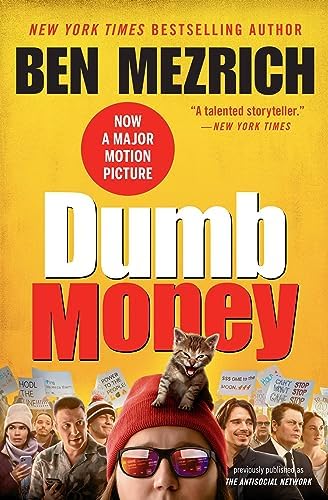
The movie adaptation Dumb Money featured Sebastian Stan playing Vlad shirtless in every scene, which Vlad found amusing: 'Just the idea of me being shirtless, dealing with all these complicated business situations just made me laugh'
2022: Harder Than GameStop But Different Pain
2022 was more challenging than GameStop because it involved gradual economic headwinds - COVID stimulus ended, inflation rose, and interest rates hit 30-year highs of 4-5%
Robinhood's market value dropped from $32 billion IPO valuation to trading at $6, losing over 80% of value as the entire fintech sector got hit hard
Instead of 'battening down the hatches,' Robinhood diversified into high-yield products like Robinhood Gold and launched Robinhood Retirement with 1.5 million accounts and 3% matching
The company grew from 700 people and $200+ million revenue in 2019 to thousands of people and nearly $1 billion revenue by end of 2020, requiring massive restructuring
High-Performance Culture and Operating Principles
Robinhood's core values are high performance, safety always, lean and disciplined, and 'one Robinhood' - emphasizing impact over empire building in compensation structures
The company eliminated COVID-era 'wellness days' where entire teams took simultaneous time off, with Vlad noting 'there was complaining for one day, and then we never heard about it again'
Weekly leadership meetings use a simple green/yellow/red goal tracking system with a ceremonial gavel for red goals requiring scrutiny and team problem-solving
Hiring emphasizes early career talent from top universities, with Vlad spending significant time with interns working on production-ready projects rather than 'fetching coffee'
AI Implementation: Customer Service and Engineering
Robinhood's AI customer service operates in three phases: Phase 1 (help center chatbot), Phase 2 (database access), and Phase 3 (non-read-only actions like refunds)
Key AI metrics include deflection rate for customer service and percentage of AI-generated code commits combined with total engineering velocity increases
'By and large, if you interact with customer service on Robinhood, you're interacting with our AI agents' - most companies are still in Phase 1 while Robinhood operates in Phase 3 - Vlad
Robinhood Cortex powers real-time stock and crypto digests that update every minute with new information, compared to competitors' once-daily updates
Harmonic: Mathematical Superintelligence Breakthrough
Harmonic's Aristotle AI achieved gold medal performance at the International Mathematical Olympiad, solving 5 out of 6 problems and surpassing Google's AlphaProof capabilities
The model uses machine-checkable proofs and synthetic data generation rather than internet training data, creating a feedback loop where correct solutions improve future performance
Aristotle recently solved at least one unsolved Erdős problem from the collection of ~1,100 mathematical conjectures, with about half remaining open
The technology generalizes beyond math to software verification, achieving 97% state-of-the-art performance on verification benchmarks and learning to write computer code
Democratizing Private Markets and Tokenization
Robinhood Ventures aims to solve the 'biggest inequity in capital markets' by giving retail investors access to private companies like SpaceX and OpenAI through closed-end funds
Tokenization works outside the US but faces regulatory constraints domestically, requiring traditional 40-act fund structures for portfolio-based private market access
The goal is creating 'an explosion of entrepreneurial activity' by making fundraising easier for entrepreneurs and providing secondary liquidity for employees and early investors
Robinhood's IPO Access program evolved from skeptical company reception in 2021 to companies actively seeking retail participation and larger allocations in 2024
Credit Card Success and Financial Super App Strategy
The 3% cashback credit card succeeds because it eliminates decision fatigue - 'this is just my default card' rather than optimizing different cards for different categories - Vlad
The card creates a flywheel effect by requiring cashback deposits into Robinhood brokerage accounts, increasing customer engagement across multiple product lines
Robinhood now operates 11 business lines generating over $100 million annually each, transforming from simple trading app to comprehensive financial super app
Legacy credit card companies face structural cost problems with 'tens of thousands of people manually servicing accounts' compared to Robinhood's automated approach
These notes may contain occasional inaccuracies. Learn how podbrain notes are made
More in Self-Development
Can the Middle Class Be Saved? Political Division, Economic Doom & The Leadership Problem | Andrew Bustamante Pt. 2
Jun 20, 2026
The Career Trap That Makes Women Miserable - Suzanne Venker - #1113
Jun 20, 2026
How Immigration and War Test the Strength of Values and National Identity
Jun 19, 2026
7 Strategies for Becoming a Better Father | FRIDAY FIELD NOTES
Jun 19, 2026
ELECTROMAGNETISM Is The SECRET To Health: Biofield Tuning Explained | Eileen McKusick
Jun 15, 2026


.svg)