
SIDNEY ANDERSON | Make Yourself Antifragile
Ryan Mickler hosts Sidney Anderson, a men's development author and business professor specializing in anti-fragile masculinity. Anderson, author of Anti-Fragile Man and Anti-Fragile Emotions, brings a unique...

Episode


- 01
Drawing from Antifragile by Nassim Nicholas Taleb, Anderson argues men should use stress to become stronger, not just resilient
- 02
Anderson's Anti-Fragile Man challenges the cultural conditioning that rewards niceness over strength in modern masculinity
- 03
"Stronger men are harder to kill" - Mark Rippetoe's seven-word encapsulation of what it means to be a man
- 04
Women often say they want sensitive men but get "the ick" when men actually display vulnerability and emotion
- 05
Anderson advocates for controlled engagement with anger: "Does it have to be said, does it have to be said right now, and does it have to be said by me?"
- 06
Men raised primarily by women without steady male influence face significant challenges in developing authentic masculinity
- 07
Anti-Fragile Emotions provides frameworks for building emotional capacity rather than suppressing or constantly expressing feelings
- 08
The distinction between being "nice" versus "kind" - referencing No More Mr. Nice Guy - is crucial for masculine development
Get the latest ideas from Order of Man.
Plus the best new takeaways from other top podcasts — read in minutes, not hours.
By continuing, you agree to podbrain's Terms and Privacy Policy.
These notes may contain occasional inaccuracies. Learn how podbrain notes are made
Ryan Mickler hosts Sidney Anderson, a men's development author and business professor specializing in anti-fragile masculinity. Anderson, author of Anti-Fragile Man and Anti-Fragile Emotions, brings a unique perspective having been largely raised by women while studying the cultural forces shaping modern men.
The conversation explores how men can use life's stressors to become stronger rather than just resilient, drawing heavily from Nassim Nicholas Taleb's concept in Antifragile. Anderson argues that modern culture conditions men toward fragility through emphasis on niceness over strength, creating widespread relationship and societal problems.
They discuss the challenges of men raised without strong male influence, the disconnect between what women say they want versus what actually attracts them, and practical frameworks for developing authentic masculinity. The discussion covers emotional regulation, the importance of complementary gender roles, and why being anti-fragile is essential in a world actively working to weaken men.
The Cultural Conditioning Problem Facing Modern Men
Anderson identifies widespread cultural conditioning that rewards "niceness over strength, validation over being resilient, and comfort over genuine growth" in men.
The prevalence of broken families and female-dominated education creates men who receive guidance "from a woman's perspective, not understanding that they're creating a man that a lot of women aren't going to respect."
Statistics show upwards of 70% of K-12 educators are women, reinforcing feminine perspectives on masculinity throughout men's formative years.
Women often request men who are "in touch with their feminine side" but then experience "the ick" when men actually display those qualities - "Of course you did. Because he's acting like a woman."
Anti-Fragility as the Foundation for Masculine Development
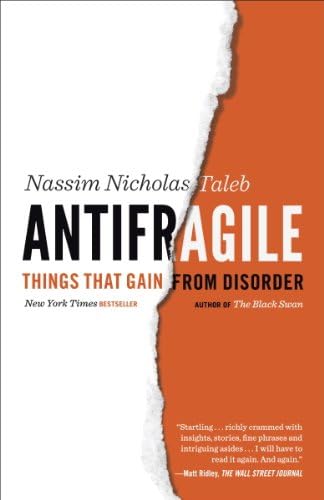
Building on Antifragile by Nassim Nicholas Taleb from 2012, Anderson explains that fragile things break under stress, robust things resist stress, but anti-fragile things "actually grow from the pressure of life."
Anti-Fragile Man applies this concept using three biological models: "Our bones require stress to remain strong. Our immune systems also require stresses... And the third one is our muscles."
The goal is building capacity to handle more stress rather than avoiding it: "It's not enough that we just withstand the pressure of life, that we actually need to grow from the pressure of life."
Anderson's framework helps men become "harder to break" by using stressors effectively rather than seeking comfort and validation.
Complementary Gender Roles and Relationship Dynamics
Men and women provide different but essential caregiving styles - men offer "rough and tumble" guidance while women provide softening and nurturing.
Anderson learned firsthand when his ex-wife left him with three children: "I could not even approach the level of care and quality of upbringing that my wife, that their mother provided."
The bike-riding analogy illustrates complementary parenting: fathers push kids to get back up after crashes while mothers provide comfort and care afterward.
Drawing from Men Are from Mars, Women Are from Venus, Anderson emphasizes celebrating differences rather than trying to fully understand or change each other.
Men should filter conversations with wives similar to filtering with children: "Our job as men is to also be protectors. It's to buffer and shield from the realities of the world."
Emotional Regulation and Controlled Engagement
Anti-Fragile Emotions provides frameworks for appropriate emotional engagement rather than constant suppression or expression.
Anderson's three-question filter for engagement: "Does it have to be said, does it have to be said right now, and does it have to be said by me?"
Proper anger regulation makes men safer: "The man who never engages with his anger is not building capacity... The man who's always getting angry is not a nice person to be around."
Building on No More Mr. Nice Guy, Anderson distinguishes between being "nice" (doormat behavior) and being "kind" (respectful but with boundaries).
Time under tension principle applies to emotional development: controlled stress builds capacity while overload prevents recovery.
The Buffer Role and Masculine Purpose
Mickler defines masculine purpose: "The real man gains renown by standing between his family and destruction, absorbing the blows of fate with equanimity."
Men should filter "radiation from the world" - hostility, violence, financial stress - so "what gets passed through is pure and good and clean and safe for the people that we love."
Anderson's definition of manhood centers on being "that buffer for your family, for your children, to buffer them from the outside world, not just financially, but emotionally."
Capability without chest-beating: "The more capable a man is, the more that he doesn't need run around and beat his chest... they have nothing to prove."



These notes may contain occasional inaccuracies. Learn how podbrain notes are made
More in Self-Development

Can the Middle Class Be Saved? Political Division, Economic Doom & The Leadership Problem | Andrew Bustamante Pt. 2
Jun 20, 2026
The Career Trap That Makes Women Miserable - Suzanne Venker - #1113
Jun 20, 2026
How Immigration and War Test the Strength of Values and National Identity
Jun 19, 2026
7 Strategies for Becoming a Better Father | FRIDAY FIELD NOTES
Jun 19, 2026
ELECTROMAGNETISM Is The SECRET To Health: Biofield Tuning Explained | Eileen McKusick
Jun 15, 2026
.svg)