
Parenting Expert Emily Oster: The #1 Parenting Mistake That Causes Unnecessary Stress (Use THIS Data-Backed Framework to Debunk the Biggest Parenting Myths!)
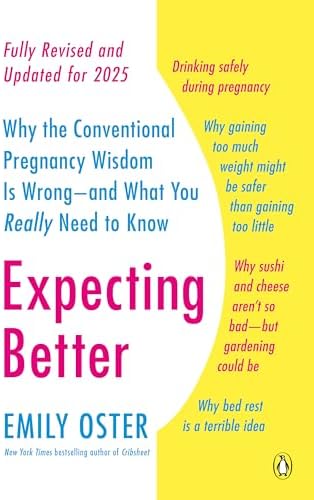
Emily Oster, bestselling author and economist, joins the show to discuss data-driven parenting approaches. Her books Expecting Better and Crib Sheet have sparked global conversations about what research actually reveals versus popular parenting advice.

Episode


- 01
Bed rest during pregnancy shows no evidence of helping most conditions and can actually be harmful - "there's almost no condition for which bed rest is helpful" - Emily
- 02
The most effective fertility advice is simple: track ovulation, have sex at the right time, get sperm tested, don't binge drink, and quit smoking
- 03
Most pregnancy food restrictions don't make sense - occasional wine, coffee, and sushi are supported by data as safe during pregnancy
- 04
Breastfeeding benefits are much smaller than claimed - "breast milk makes your kids smarter, thinner, like can fly or whatever. That stuff is all correlation, not causation" - Emily
- 05
Sleep training doesn't cause attachment problems according to randomized data, but consistency and parental readiness are crucial for success
- 06
Screen time research is mostly correlation not causation - households with 4+ hours daily versus zero screen time differ in many ways beyond just screens
- 07
Vaccine hesitancy is causing measles outbreaks - "there were more measles cases in a single week in January 2026 than in most full years over the past two decades" - Emily
Get the latest ideas from On Purpose with Jay Shetty.
Plus the best new takeaways from other top podcasts — read in minutes, not hours.
By continuing, you agree to podbrain's Terms and Privacy Policy.
These notes may contain occasional inaccuracies. Learn how podbrain notes are made
Emily Oster, bestselling author and economist, joins the show to discuss data-driven parenting approaches. Her books Expecting Better and Crib Sheet have sparked global conversations about what research actually reveals versus popular parenting advice.
The conversation covers the full parenting journey from conception through toddlerhood, examining evidence on fertility, pregnancy restrictions, breastfeeding, sleep training, and childhood development. Oster emphasizes distinguishing between correlation and causation in parenting research.
Key topics include debunking pregnancy myths, understanding the limited control parents have over outcomes, and preparing for parenting as a complex "group project" that requires planning and realistic expectations about what data can and cannot tell us.
Getting Pregnant: What You Can Actually Control
Fertility control is more limited than people think, with expensive prenatal vitamins and fertility supplements often being marketing that preys on anxiety about "getting it right"
The controllable factors for conception are straightforward: track ovulation for proper timing, ensure sperm quality through testing, avoid smoking and heavy drinking, and reduce heat exposure to testicles
Even with perfect execution, there's only about a 30% chance of pregnancy each month, making the process "just a dice roll" after addressing the controllable factors
Pregnancy Myths Debunked by Data
Expecting Better revealed that bed rest, commonly prescribed for pregnancy complications, shows "almost no condition for which bed rest is helpful and many conditions for which it's actually harmful" - Emily
Most food restrictions during pregnancy lack evidence: occasional wine (especially later trimesters), moderate coffee consumption (1-2 cups daily), and sushi are all supported by data as safe
Pregnant women worry excessively about minimal exposures like touching pesticide-treated lawns, when "there is no mechanism whereby touching a lawn, even recently treated with pesticides and then washing your hands would actually impact your pregnancy" - Emily
The focus should shift from obsessing over food choices to preparing marriages and home life for "introducing a new person, somebody who requires all of your time and money" in a challenging group project environment
Breastfeeding vs Formula: What the Evidence Shows
Crib Sheet addresses the breastfeeding pressure that was "really harming" families, with fathers writing concerned emails about wives being depressed over breastfeeding struggles
Breastfeeding shows small short-term benefits like lower gastro-intestinal illness risk, but long-term claims about intelligence and health are "all correlation, not causation" - Emily
When comparing siblings where one was breastfed and one wasn't, "you see no effect" on IQ, indicating initial differences reflect maternal characteristics rather than breast milk benefits
Both options are expensive: "people will tell you breastfeeding is free. I'm sorry, does my time have no value?" - Emily, emphasizing that formula costs money while breastfeeding costs time
Sleep Training: Safety and Effectiveness
Sleep training involving some crying doesn't cause attachment problems according to "a lot of data including randomized data" and "community based data" showing it's not damaging to children
The attachment theory concerns stem from observations of severely neglected children in Romanian orphanages, which differs drastically from "crying for even a pretty long period of time for a few nights in the context of an otherwise loving and stable household"
Sleep training effectiveness requires parental commitment - "it doesn't work well if you are not ready to do it" because consistency is crucial and ambivalent parents won't maintain the approach
Two sustainable approaches exist: sleep training for independent sleep or co-sleeping, but the unsustainable middle ground of "waking up every ninety minutes and I have to go put them back to sleep" doesn't work for most families
Screen Time and Social Media: Correlation vs Causation
Screen time research represents "perhaps the best example of correlation is not causation in parenting" with studies comparing vastly different households that differ in many ways beyond screen exposure
The American Academy of Pediatrics has "recently dialed back their screen time restrictions to a set of guidelines that more or less say just kind of think about it a bit more"
Social media for children requires scaffolding like learning to drive: "you don't just hand them the keys and say enjoy. You like teach them" and maintain willingness to remove access when needed
The key question isn't whether screens are good or bad, but what activities they're displacing - if replacing sleep that's problematic, but if enabling family dinner preparation, that could be beneficial
Vaccines and Medical Decisions
Childhood vaccines on the standard schedule "have been really safe and effective" for decades, with measles cases spiking dramatically due to vaccine hesitancy - "more measles cases in a single week in January 2026 than all but a small handful of years over the past two decades"
The current vaccine conversation conflates reasonable COVID vaccine discussions with essential childhood vaccines: "kids are going to die of measles who didn't need to die of measles"
ADHD medication may represent over-medication, particularly for younger kindergarten students who struggle with sitting still due to "age appropriate behavior" being medicalized in school settings


These notes may contain occasional inaccuracies. Learn how podbrain notes are made
More in Self-Development

Can the Middle Class Be Saved? Political Division, Economic Doom & The Leadership Problem | Andrew Bustamante Pt. 2
Jun 20, 2026
The Career Trap That Makes Women Miserable - Suzanne Venker - #1113
Jun 20, 2026
How Immigration and War Test the Strength of Values and National Identity
Jun 19, 2026
7 Strategies for Becoming a Better Father | FRIDAY FIELD NOTES
Jun 19, 2026
ELECTROMAGNETISM Is The SECRET To Health: Biofield Tuning Explained | Eileen McKusick
Jun 15, 2026
.svg)