
Nischa Shah: #1 Financial Mistake People Make in Their 20s & 30s (Fix It With This Simple System)
Jay Shetty sits down with Niche Shah, a former investment banker and accountant who left the traditional corporate path to help millions rethink money, success, and freedom. Niche spent nine years in banking before transitioning to financial education and content creation.

Episode


- 01
"You cannot save your way to retirement in this day and age" - investing is essential for long-term wealth building
- 02
Financial happiness differs from financial success - it's about aligning money decisions with personal values and life goals
- 03
The easiest path to long-term wealth is investing in diversified index funds like the S&P 500
- 04
Emergency fund priority: save $2,000 first (increases financial wellbeing by 21%), then 3-6 months of expenses
- 05
"Every pound or dollar that comes into your life" should have a defined purpose or it will define yours
- 06
Earning potential is unlimited while saving is capped - focus on increasing value creation over cutting expenses
- 07
Pay off high-interest debt (above 8%) before investing, but invest rather than pay low-interest debt
- 08
The 60/25/10 rule: allocate 65% to fundamentals, 25% to fun, 10% to future savings from take-home pay
Get the latest ideas from On Purpose with Jay Shetty.
Plus the best new takeaways about investing from other top podcasts — read in minutes, not hours.
By continuing, you agree to podbrain's Terms and Privacy Policy.
These notes may contain occasional inaccuracies. Learn how podbrain notes are made
Jay Shetty sits down with Niche Shah, a former investment banker and accountant who left the traditional corporate path to help millions rethink money, success, and freedom. Niche spent nine years in banking before transitioning to financial education and content creation.
The conversation explores the psychology behind money decisions, from overcoming the fear of checking bank statements to understanding why earning more doesn't automatically make you better with money. They discuss practical frameworks for budgeting, the importance of emergency funds, and why investing in index funds beats trying to pick individual stocks.
Niche shares her personal journey of leaving a high-paying banking career, the identity crisis that followed, and how she built financial cushions to enable creative risk-taking. The discussion covers everything from micro-habits that build wealth to the difference between financial success and financial happiness, referencing insights from The Top Five Regrets of the Dying about living authentically.
Breaking Free from the Golden Handcuffs of Corporate Success
"Would I still be happy if I was living the same life in five years or ten years time as I am today?" - this question gave Niche the confidence to leave banking after nine years
The biggest sacrifice in career transitions is the identity built around external validation: "All of what I thought defined my work had to vanish"
Build financial cushions of 3-9 months expenses before making major life changes, and use evenings/weekends for creative experiments while maintaining salary security
The Psychology Behind Money Avoidance and Spending Habits
The Ostrich Effect explains why people avoid checking bank statements - we actively avoid information that makes us uncomfortable, hoping problems disappear
Modern spending has removed friction: from counting cash to card taps to one-click online purchases, making impulse buying effortless
Create friction with three questions before any purchase: "Do I need it? Can I live with less of it? Can I get the same thing for cheaper?"
Spend 20 minutes monthly reviewing finances to identify patterns and ensure purchases align with values and bring genuine happiness
The Emergency Fund Foundation and Debt Strategy
Start with $2,000 emergency savings - research shows this increases financial wellbeing by 21%, with 3-6 months providing an additional 13% boost
Pay off debt above 8% interest before investing, since historical stock market returns average 8-10% annually
For debt below 8%, the mathematically optimal choice is investing, but "peace of mind has value too" - choose what helps you sleep at night
Index Fund Investing Beats Stock Picking Every Time
"Even experts get it wrong" - Lehman Brothers received buy ratings from major investment banks months before collapsing in 2008
Index funds like the S&P 500 provide instant diversification across hundreds of companies, eliminating single-stock risk
Warren Buffett instructed 90% of his wife's inheritance to go toward low-cost diversified funds rather than individual stock picking
Only invest money you won't need for 5+ years due to market volatility - you can start with as little as $1 using modern apps
Earning Unlimited vs Saving Limited: The Income Equation
"You can only cut so many coupon codes" but earning potential is infinite - focus on creating more value rather than just cutting expenses
Increase value at work by taking unwanted projects, increasing team revenue, or reducing boss stress to warrant promotions and raises
Set an hourly rate for yourself - outsource anything below that rate and spend saved time on higher-value income generation
"Money is just an exchange of value" - ask friends and family what they need that matches your skills to create side income
Financial Happiness vs Financial Success: Living Authentically
Financial success follows society's definition while financial happiness aligns with your intrinsic values and life goals
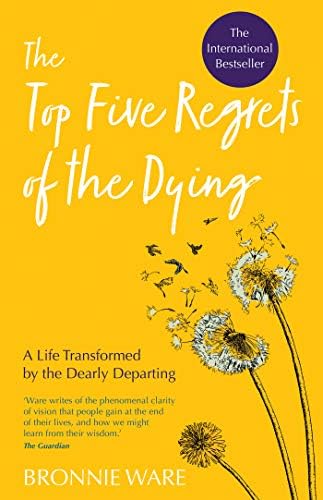
The Top Five Regrets of the Dying reveals the main regret is "not having the courage to live a life true to them" - not earning more money
Stop buying things to showcase value to others - ask "Am I buying this for me or to show other people that I have it?"
Avoid upgrades with diminishing returns - spending on experiences and memories provides greater happiness than marginal product improvements
These notes may contain occasional inaccuracies. Learn how podbrain notes are made
More in Self-Development

Can the Middle Class Be Saved? Political Division, Economic Doom & The Leadership Problem | Andrew Bustamante Pt. 2
Jun 20, 2026
The Career Trap That Makes Women Miserable - Suzanne Venker - #1113
Jun 20, 2026
How Immigration and War Test the Strength of Values and National Identity
Jun 19, 2026
7 Strategies for Becoming a Better Father | FRIDAY FIELD NOTES
Jun 19, 2026
ELECTROMAGNETISM Is The SECRET To Health: Biofield Tuning Explained | Eileen McKusick
Jun 15, 2026
.svg)