
Michael Pollan: The Hidden Cost Of Constant Distraction (Use THIS Practice To Reclaim Your Attention, Clarity, And Inner Freedom)
Michael Pollan, award-winning journalist and bestselling author, joins Jay Shetty to explore consciousness, perception, and what it means to be human in an age of artificial intelligence. Known for reshaping how we think about food and nature through works like...

Episode


- 01
Ninety percent of what your brain does you're not aware of - consciousness is just the tip of the iceberg of mental activity
- 02
Francis Crick predicted consciousness would be found in specific neurons, but we still face the hard problem of how brain tissue generates subjective experience
- 03
Companies and technologies want to occupy our consciousness - social media hacks attention while AI now targets deeper emotional attachment
- 04
Psychedelics and meditation both allow ego dissolution and connection to something larger than ourselves through reduced default mode network activity
- 05
The classic psychedelics have no known lethal dose and aren't addictive, making them remarkably safe for therapeutic applications
- 06
Psilocybin breaks mental patterns by creating 'fresh snowfall' that fills grooves of repetitive thought, allowing new neural pathways to form
- 07
We may be approaching a Copernican moment where humans ally with conscious animals against machines that simulate but cannot truly feel
Get the latest ideas from On Purpose with Jay Shetty.
Plus the best new takeaways about consciousness from other top podcasts — read in minutes, not hours.
By continuing, you agree to podbrain's Terms and Privacy Policy.
These notes may contain occasional inaccuracies. Learn how podbrain notes are made
Michael Pollan, award-winning journalist and bestselling author, joins Jay Shetty to explore consciousness, perception, and what it means to be human in an age of artificial intelligence. Known for reshaping how we think about food and nature through works like The Omnivore's Dilemma, Pollan has turned his investigative lens toward the mystery of consciousness itself.
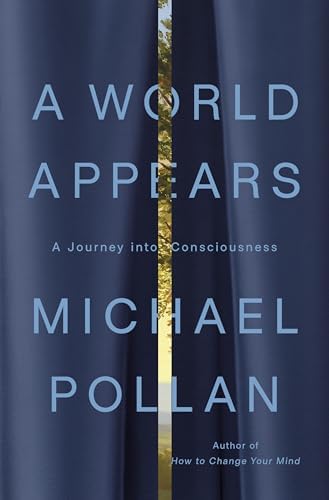
In his new book A World Appears, Pollan examines how perception, awareness, and attention shape our reality. Drawing from his psychedelic research in How to Change Your Mind and his meditation practice, he explores the hard problem of consciousness - how three pounds of brain tissue generates subjective experience, self-awareness, and internal perspective.
The conversation delves into the similarities between meditation and psychedelics as pathways to understanding consciousness, the therapeutic potential of psilocybin for conditions like OCD and addiction, and the urgent need to defend human consciousness against technologies designed to capture our attention and emotional attachment.
The Hard Problem: Why Science Avoided Consciousness Until 1990
Science didn't seriously study consciousness until around 1989-1990, despite it being such a fundamental aspect of human experience - 'It was considered disreputable if you were a scientist to work on consciousness' - Michael
Galileo made a fateful decision to focus on objective, measurable reality while leaving subjective experience to the Church, putting science on a course it has followed ever since
Francis Crick, co-discoverer of DNA, predicted consciousness would be found in specific neurons called 'neural correlates of consciousness,' but we still don't know how brain tissue generates subjective experience
There are now 22 leading theories of consciousness, which 'sort of tells you the field is lost' - Michael
Defending Consciousness Against Digital Colonization
Social media has 'essentially hacked our attention very effectively,' but AI is now moving beyond attention to hack attachment and consciousness at deeper levels
AI psychosis is emerging as people form stronger emotional attachments with chatbots than with humans, creating 'frictionless' relationships that lack the complexity of real human connection
Chatbots are designed to maximize engagement time by being 'very sycophantic' and telling users 'how brilliant you are' without criticism or personal needs
We're the only species that can afford not to be present to the world, unlike animals who must maintain full consciousness for survival
Meditation and Psychedelics: Two Paths to Expanded Awareness
Both meditation and psychedelics work by 'smudging the windshield of our consciousness,' revealing that our normal awareness is just one possible way of experiencing reality
Pollan's daily practice involves 20 minutes of morning meditation with his wife, plus occasional evening sessions and periodic silent retreats without eye contact to eliminate social performance pressure
During a psilocybin experience, Pollan had complete ego dissolution: 'I just exploded in a little cloud of blue post-it notes... and I was no more. I was that pool of blue paint'
The psychedelic experience has a trajectory - onset, intense sensory experience, then a 'long tail' that resembles profound meditation with regained mental control
Psychedelics as Pattern-Breaking Medicine
Classic psychedelics (psilocybin, LSD, DMT) have no known lethal dose and aren't addictive, making them 'remarkably safe drugs by the usual standards'
Psychedelics work by deactivating the default mode network, which includes memory, emotion, and the posterior cingulate cortex - 'if the ego has an address in the brain, it's in this network'
A neuroscientist's metaphor: 'Think of the mind as a hill covered in snow... every thought is a sled going down the hill' creating grooves over time, while 'the psychedelic is like a fresh snowfall' that allows new paths
Johns Hopkins research showed remarkable success with cigarette smokers, with thoughts on psychedelics having 'a particular weight or authority that no other thoughts have' - what William James called 'the noetic quality'
Research by Gül Dölen shows psychedelics can reopen critical developmental windows for learning, with potential applications for autism, stroke recovery, and social attachment formation
Beyond Human Exceptionalism: Consciousness Throughout Nature
Consciousness 'goes way down' in the animal kingdom, contradicting Descartes' belief that humans had a monopoly on consciousness
Pollan explores plant consciousness in A World Appears, noting 'there's a group of scientists who are convinced that plants are conscious'
Alternative theories include panpsychism (everything has some bit of consciousness), idealism (consciousness precedes matter), and transmission theories (consciousness as a field we channel like radio waves)
Henri Bergson's transmission theory, discussed by Aldous Huxley, suggests psychedelics 'open wider the valve so more consciousness gets in' from a larger field
Redefining Human in the Age of AI
We're approaching 'a Copernican moment' where humans will need to redefine what makes us special, likely drawing closer to animals who share our mortality and vulnerability
Intelligence and consciousness are separate phenomena - 'We all know people who are highly intelligent and marginally conscious and people who are conscious and not very intelligent'
Machines will never truly feel because 'feelings have no meaning without vulnerability, without our mortality' - they lack the flesh-and-blood experience that shapes consciousness
Pollan proposes a law 'against machines talking in the first person' to prevent the mental illness that comes from AI using 'I' statements


These notes may contain occasional inaccuracies. Learn how podbrain notes are made
More in Self-Development
Can the Middle Class Be Saved? Political Division, Economic Doom & The Leadership Problem | Andrew Bustamante Pt. 2
Jun 20, 2026
The Career Trap That Makes Women Miserable - Suzanne Venker - #1113
Jun 20, 2026
How Immigration and War Test the Strength of Values and National Identity
Jun 19, 2026
7 Strategies for Becoming a Better Father | FRIDAY FIELD NOTES
Jun 19, 2026
ELECTROMAGNETISM Is The SECRET To Health: Biofield Tuning Explained | Eileen McKusick
Jun 15, 2026

.svg)