
Jessie Inchauspé: 90% of Pregnant People Are Missing THIS Nutrient (Follow THIS Simple Diet To Reduce Glucose Spikes & Protect Your Baby’s Brain & Metabolism)
Jay Shetty welcomes back biochemist and bestselling author Jessie Inchauspé, known as the 'Glucose Goddess,' to discuss her new book Nine Months That Count Forever How Your Pregnancy Diet Shapes Your Baby's Future, releasing March 17th.

Episode


- 01
90% of mothers today are eating a diet that doesn't provide the right nutrients for optimal baby development during pregnancy
- 02
Four key nutrients have outsized effects on baby's long-term health: glucose, choline, protein, and omega-3 fatty acids
- 03
Your diet during pregnancy is 'calibrating things in your child' - setting metabolism, brain cell count, and disease resilience for life
- 04
High glucose levels during pregnancy can program a baby's DNA to be more vulnerable to Type 2 diabetes later in life
- 05
Babies born to mothers with gestational diabetes have 21% chance of developing diabetes by age 22 versus 4% for other babies
- 06
Four eggs daily provide all the choline needed for optimal brain development - 90% of mothers don't get enough choline
- 07
Animal studies show babies from mothers who exercised solved mazes twice as fast and had 80% fewer anxiety symptoms
- 08
UK sugar rationing study showed babies had 15% lower diabetes risk when mothers ate 40g vs 80g sugar daily during pregnancy
Get the latest ideas from On Purpose with Jay Shetty.
Plus the best new takeaways about nutrition from other top podcasts — read in minutes, not hours.
By continuing, you agree to podbrain's Terms and Privacy Policy.
These notes may contain occasional inaccuracies. Learn how podbrain notes are made
Jay Shetty welcomes back biochemist and bestselling author Jessie Inchauspé, known as the 'Glucose Goddess,' to discuss her new book Nine Months That Count Forever How Your Pregnancy Diet Shapes Your Baby's Future, releasing March 17th.
The conversation explores how pregnancy diet doesn't just affect the mother but can shape a child's health for their entire lifetime. Jessie shares personal experiences from her own pregnancy journey, including a miscarriage, while breaking down the science behind four crucial nutrients that have outsized effects on baby development.
Drawing from her established expertise in glucose management from her previous work, Jessie reveals how 90% of mothers today are missing key nutrients, and explains the concept of epigenetics - how diet during pregnancy programs a baby's DNA switches that can influence their vulnerability to diseases like diabetes, autism, and other conditions throughout their lives.
The Four Critical Nutrients That Shape Your Baby's Future
Glucose levels during pregnancy program your baby's DNA for Type 2 diabetes vulnerability - babies take whatever glucose is in your bloodstream, not just what they need
Choline, found in eggs, builds your baby's brain - insufficient choline results in fewer neurons being formed during critical brain development
Protein needs are 50% higher than previously thought - about 1.5-1.6 grams per kilo of body weight daily, roughly 100 grams total
Omega-3 fatty acids from fish or algae also build brain tissue - studies show adequate omega-3s can result in measurably higher IQ at age 4
Why 'Eating for Two' Is a Dangerous Myth
The 'bun in the oven' metaphor is fundamentally wrong - mothers aren't passive ovens but active co-creators shaping their baby's development
At the very end of pregnancy, babies only need about 70 grams of extra glucose daily - equivalent to 1.5 cups of rice
Most mothers today eat three times the WHO recommended 25 grams of sugar daily during pregnancy, creating inflammation and programming fat storage
Your baby doesn't 'just take what he needs' - if there's excess glucose in your bloodstream, the baby will also have high glucose levels
The Science of Epigenetics and Lifelong Programming
Epigenetics are microscopic switches on your baby's DNA that get programmed by the environment you provide during pregnancy
High glucose during pregnancy activates diabetes-vulnerability genes at birth - gestational diabetes increases child's diabetes risk by 4x compared to siblings
Low protein sends a message to keep muscle mass small for life - babies adapt their organ development based on perceived future environment
All 100 billion neurons in your brain were created during pregnancy and never get replaced - choline and omega-3 deficiency results in fewer brain cells
Managing Pregnancy Challenges and Glucose Spikes
First trimester nausea makes optimal nutrition difficult - protein helps balance blood sugar and reduce nausea, keep almonds bedside
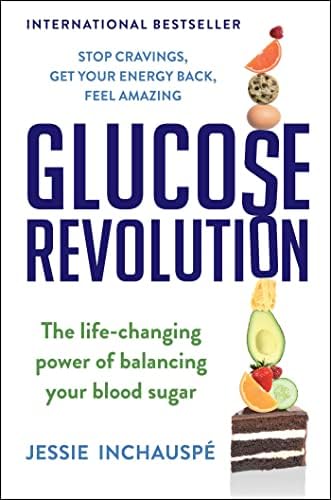
Use glucose hacks from Glucose Revolution during pregnancy: eat vegetables first, never sugar on empty stomach, walk after meals
The vinegar hack (1 tablespoon in water before carbs) can reduce glucose spikes by 30%, but must use pasteurized vinegar during pregnancy
Exercise during pregnancy shows remarkable benefits - animal studies show 30 minutes daily resulted in babies with 80% less anxiety and twice the maze-solving speed
The Hidden Impact of Modern Food Systems
90% of mothers are deficient in choline, 70% lack adequate protein, 75% don't get enough omega-3s during pregnancy
Only 6% of healthcare practitioners in the US discuss choline with pregnant mothers despite its critical importance for brain development
The UK sugar rationing study (1940-1953) proved lifelong impact - babies born when mothers ate 40g vs 80g sugar daily had 15% lower diabetes risk
High glucose creates overactive microglia in baby's brain that prune healthy neurons, potentially linked to 25% higher autism risk in gestational diabetes
Personal Journey Through Pregnancy Loss and Recovery
Jessie experienced a silent miscarriage at 3 months despite following optimal nutrition - no symptoms while carrying a deceased embryo for a month
Miscarriage grief is uniquely challenging because 'it's not just losing a pregnancy, you lost the entire narrative' and projected future life
Most helpful response to pregnancy loss: 'I'm so sorry, this must be so hard. Can I bring you chocolate cake?' rather than toxic positivity
Second pregnancy brought extreme anxiety - got 10 ultrasounds in first 4 months and waited 6 months to tell family due to fear

These notes may contain occasional inaccuracies. Learn how podbrain notes are made
More in Self-Development

Can the Middle Class Be Saved? Political Division, Economic Doom & The Leadership Problem | Andrew Bustamante Pt. 2
Jun 20, 2026
The Career Trap That Makes Women Miserable - Suzanne Venker - #1113
Jun 20, 2026
How Immigration and War Test the Strength of Values and National Identity
Jun 19, 2026
7 Strategies for Becoming a Better Father | FRIDAY FIELD NOTES
Jun 19, 2026
ELECTROMAGNETISM Is The SECRET To Health: Biofield Tuning Explained | Eileen McKusick
Jun 15, 2026
.svg)