
Esther Perel: The REAL Reason You’re Struggling to Find Love (Fix THIS to Build Chemistry in Real Life)
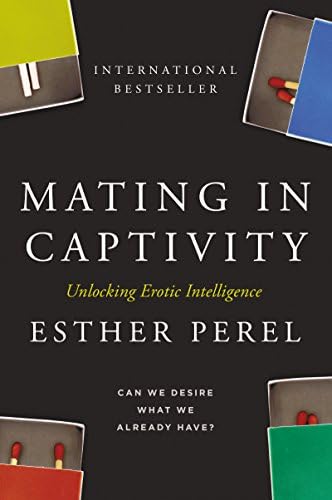
Jay Shetty hosts renowned psychotherapist Esther Perel, author of the groundbreaking Mating in Captivity, as the book celebrates its twentieth anniversary. Perel is one of the most influential voices on love and relationships globally, known for her direct, no-nonsense approach to...

Episode


- 01
45% of men aged 16-25 have never approached a woman in public, reflecting massive social skill atrophy from digital-first interactions
- 02
Gen Z starts dating around 24-26 versus previous generations at 15-16, missing crucial relationship practice years
- 03
Modern loneliness masks itself as hyperconnectivity - we think we're connecting but lack true depth and presence
- 04
Attraction plus obstacle equals excitement and love - frictionless relationships kill desire and romantic intensity
- 05
Trust is 'confident engagement with the unknown' built through small increments and sliding door moments
- 06
Relationships require power 'with' someone rather than power 'over' - generative collaboration versus oppressive control
- 07
Love is a verb requiring action and agency, not a permanent state of enthusiasm or feeling
- 08
Mating in Captivity reveals desire must be cultivated through intentionality, creativity, and playfulness rather than spontaneous occurrence
Get the latest ideas from On Purpose with Jay Shetty.
Plus the best new takeaways about relationships from other top podcasts — read in minutes, not hours.
By continuing, you agree to podbrain's Terms and Privacy Policy.
These notes may contain occasional inaccuracies. Learn how podbrain notes are made
Jay Shetty hosts renowned psychotherapist Esther Perel, author of the groundbreaking Mating in Captivity, as the book celebrates its twentieth anniversary. Perel is one of the most influential voices on love and relationships globally, known for her direct, no-nonsense approach to breaking down modern relationship challenges.
The conversation explores why Gen Z is dating significantly less than previous generations, examining how digital-first socialization has created massive social skill deficits. They discuss the paradox of hyperconnectivity alongside unprecedented loneliness, and how the removal of friction from daily life has inadvertently killed romantic desire.
Perel addresses current relationship trends like 'intentional dating' and 'decentering men,' while examining toxic therapy speak that oversimplifies complex human experiences. The discussion covers the difference between love stories and life stories, the cultivation of desire in long-term relationships, and why Mating in Captivity's insights remain profoundly relevant twenty years later.
The Social Skills Crisis Behind Gen Z's Dating Decline
Gen Z missed crucial social development by not playing freely on streets, losing practice in negotiation, alliance-building, and approaching strangers that precedes dating skills.
45% of heterosexual men aged 16-25 have never approached a woman in public, compared to previous generations who started practicing at 15-16 - Esther
Digital communication lacks oxytocin-producing voice contact and mirror neuron activation from true eye contact, creating exhausting pseudo-connections.
Gen Z now starts first romantic experiences around 24-26 instead of 15-16, missing ten years of gradual relationship skill development.
Modern Loneliness and the Hyperconnectivity Paradox
Modern loneliness is 'ambiguous loss' - physically present but emotionally absent interactions where you constantly wonder 'are you here or not?' - Esther
We've accepted 'distracted attention as if it is enough, and it's not' - creating exhaustion from putting out effort without receiving genuine connection back.
Everything is documented today, creating surveillance anxiety where people fear their private moments will be shared and judged by entire social circles.
The irony of constantly discussing boundaries while simultaneously acting without any - sharing private information and exposing others without consent.
Why Friction and Obstacles Are Essential for Love
'There is no love story that isn't organized around overcoming obstacles. Attraction plus obstacle equals excitement, love, desire' - Esther
The contactless world removes all friction - delivery without thanking drivers, working from home, shopping online - but 'coming up to talk to a girl is friction.'
AI companions provide frictionless agreeableness that 'breeds narcissism' and leaves people unprepared for real human disagreement and complexity.
Comfort and efficiency are 'desire killers' because desire requires unpredictability, ambiguity, and the unknown rather than algorithmic perfection.
The Seven Essential Relationship Verbs
Asking: 'How good are you at asking for what you want and need?' - involves expectations, worthiness, and clear communication.
Giving and Receiving: Giving should be generous rather than transactional; receiving requires vulnerability and self-worth to accept closeness and pleasure.
Sharing: Integrating differences rather than compromising - 'how do you share that difference?' when partners want different things.
Imagination, Refusing, and Curiosity: Ability to dream futures together, say no comfortably, and maintain discovery-oriented exploration of the other person.
Trust, Power, and Healthy Interdependence
Trust is 'confident engagement with the unknown' - built through small increments where you learn someone has your back and thinks of you when absent.
Trust should be specific: 'I trust you for what' rather than totalistic thinking - you might trust someone as a lover but not with money or secrets.
Healthy interdependence means 'I need you because you are something different from me' - complementary rather than codependent fusion where differences create conflict.
Power 'with' someone creates generative collaboration versus power 'over' someone which requires submission and oppression.
Mating in Captivity's Enduring Wisdom After Twenty Years
Mating in Captivity addressed sustaining desire in long-term relationships, but today's challenge is 'how do you get it started?' due to social skill deficits.
'Desire should be spontaneous' is a myth - instead 'you create it, preserve it, nurture it, value it, tend to it' through ritual and intentionality - Esther
The book's core insight remains true: 'pleasure is cultivated' rather than something that spontaneously appears during exhausted evening routines.
Modern dating has become transactional 'job interviews' rather than curiosity-driven exploration, missing the mystery and discovery that fuel attraction.
These notes may contain occasional inaccuracies. Learn how podbrain notes are made
More in Self-Development

Can the Middle Class Be Saved? Political Division, Economic Doom & The Leadership Problem | Andrew Bustamante Pt. 2
Jun 20, 2026
The Career Trap That Makes Women Miserable - Suzanne Venker - #1113
Jun 20, 2026
How Immigration and War Test the Strength of Values and National Identity
Jun 19, 2026
7 Strategies for Becoming a Better Father | FRIDAY FIELD NOTES
Jun 19, 2026
ELECTROMAGNETISM Is The SECRET To Health: Biofield Tuning Explained | Eileen McKusick
Jun 15, 2026
.svg)