
Dr. Gabor Maté: Constantly Worrying What People Think of You? (THIS Simple Shift Will Help You Trust Yourself and Stop Seeking Approval)
Dr. Gabor Maté, renowned trauma expert and author, joins host Jay Shetty for an intimate live conversation at Vancouver's Orpheum Theatre. Maté, at 81, continues his lifelong exploration of trauma, addiction, and authentic living, sharing insights from decades of medical practice and personal growth work.

Episode


- 01
"We live in other people's minds" - Thomas Merton's insight explains why we obsess over others' perceptions instead of living authentically
- 02
The stress response, coined in Canada by Hans Selye, becomes toxic long-term: causing high blood pressure, immune suppression, and cancer gene activation
- 03
"Where am I not saying no?" - Maté's first diagnostic question for identifying sources of chronic stress in relationships and work
- 04
Children naturally say "no" at 18 months to develop selfhood, but society conditions us to suppress this essential boundary-setting ability
- 05
"Have I done enough? Yes. Am I enough? I still don't know" - Peter Levine's distinction between doing and being reveals our cultural programming
- 06
All perceived character flaws began as adaptive survival mechanisms - what we judge as weakness was once protective wisdom
- 07
Compassionate inquiry assumes nothing is wrong with people; truth emerges naturally through the right questions and self-compassion
Get the latest ideas from On Purpose with Jay Shetty.
Plus the best new takeaways from other top podcasts — read in minutes, not hours.
By continuing, you agree to podbrain's Terms and Privacy Policy.
These notes may contain occasional inaccuracies. Learn how podbrain notes are made
Dr. Gabor Maté, renowned trauma expert and author, joins host Jay Shetty for an intimate live conversation at Vancouver's Orpheum Theatre. Maté, at 81, continues his lifelong exploration of trauma, addiction, and authentic living, sharing insights from decades of medical practice and personal growth work.
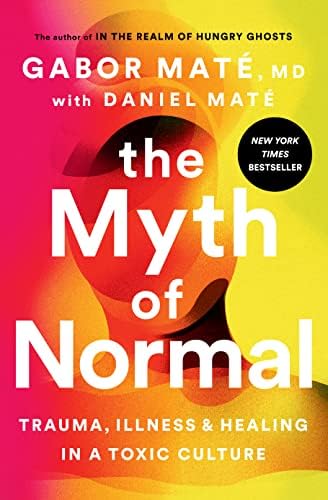
The conversation explores why we become addicted to others' approval, how childhood experiences shape our adult patterns, and the physiological cost of chronic stress. Maté draws from his books When the Body Says No and The Myth of Normal to explain how suppressed emotions manifest as illness.
Through live demonstration of his compassionate inquiry method, Maté shows how self-acceptance and personal growth can coexist. The discussion weaves together ancient wisdom from Agamemnon, modern trauma research from Born for Love, and practical tools for breaking generational patterns of emotional suppression.
Why We Live in Other People's Minds
Thomas Merton identified how "we live in other people's minds" when obsessing over their perceptions, preventing us from living authentically within ourselves.
Children need to be seen for who they are, not who parents want them to be - when this fails, children adapt by hiding authentic parts and exaggerating others to gain approval.
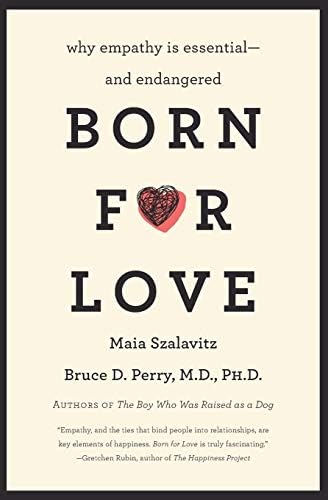
As described in Born for Love by Bruce Perry, humans are born with the developmental need to be truly seen and recognized, not just loved conditionally.
"Parents' own limitations prevent them from seeing their child for exactly who they are, then the child will mold themselves into whoever the parents want them to be" - Maté
The Physiology of Chronic Stress and Saying No
Hans Selye, a Hungarian researcher in Montreal, coined the modern use of "stress" and demonstrated its immune-suppressing, adrenal-enlarging, and intestine-ulcerating effects in laboratory studies.
Long-term stress hormones cause high blood pressure, stroke risk, osteoporosis, autoimmune disease, depression, belly fat accumulation, and can activate cancer genes while suppressing protective genes.
When the Body Says No explores how physical illness manifests when we fail to set emotional boundaries - "when you don't say no, the body will say it for you in the form of illness."
"Where am I not saying no?" serves as the primary diagnostic question for identifying stress sources in personal relationships and work situations.
The Natural Development of Boundaries
Children naturally begin saying "no" around 18 months as nature's way of creating a protective barrier behind which they can develop their authentic self.
Society labels this natural boundary-setting as the "terrible twos" and suppresses it, leading to adults at 45 who cannot say no to protect themselves.
"Before your yeses mean anything, you have to be able to say no" - the foundation of authentic choice requires the capacity for refusal.
A related question emerges: "Where am I not saying yes?" - identifying creative urges and desires suppressed by over-accommodation to others.
Distinguishing Doing from Being
Peter Levine's insight reveals the cultural trap: "Have I done enough? Very much yes. Am I enough? I still don't know the answer."
"Would you say to a one-day-old baby who can't do a thing, 'You're not enough'? Then why are you saying it to yourself?" - Maté's reframe on inherent worth.
The guilt around resting stems from the same belief that we're only valuable for what we produce, not for our essential being.
The Myth of Normal includes a full chapter examining how cultural programming creates the false equation between productivity and self-worth.
Trauma as Adaptation, Not Pathology
"Whatever you think is wrong with you, at some point served a purpose" - all perceived character flaws began as survival adaptations.
An elderly Indigenous woman's story illustrates this: forgetting her native language after being beaten at residential school wasn't cowardice but "her organism's wisdom to save her life."
The Greek playwright Aeschylus wrote in Agamemnon 2,400 years ago that "we have to suffer into truth" - pain often serves as our wake-up call to reality.
"Only when compassion is present will people allow themselves to see the truth" - self-compassion enables honest self-examination without defensive reactions.
Live Demonstration of Compassionate Inquiry
Compassionate inquiry assumes "there's nothing wrong with anybody to start with" and that truth emerges naturally through proper questioning.
A participant worried about passing trauma to her children discovered she had already given them the greatest gift by beginning her healing work when they were young.
"You don't have to try to be yourself. You're already here" - the authentic self doesn't need to be created, only recognized and honored.
The method involves checking in with the body's wisdom: "How does that part feel inside you?" leading to embodied answers like "confidence" spoken with genuine conviction.


These notes may contain occasional inaccuracies. Learn how podbrain notes are made
More in Self-Development
Can the Middle Class Be Saved? Political Division, Economic Doom & The Leadership Problem | Andrew Bustamante Pt. 2
Jun 20, 2026
The Career Trap That Makes Women Miserable - Suzanne Venker - #1113
Jun 20, 2026
How Immigration and War Test the Strength of Values and National Identity
Jun 19, 2026
7 Strategies for Becoming a Better Father | FRIDAY FIELD NOTES
Jun 19, 2026
ELECTROMAGNETISM Is The SECRET To Health: Biofield Tuning Explained | Eileen McKusick
Jun 15, 2026
.svg)