
10 Harsh Truths I Wish I Knew in My 20s
This monologue presents ten counterintuitive truths about navigating your twenties, challenging common assumptions about success, relationships, and personal development. The speaker draws from psychological research, ancient wisdom traditions, and personal experience to reveal how invisible beliefs inherited from...

Episode


- 01
The things you're most proud of avoiding are probably the things you most need to do - avoidance disguised as strategy costs years
- 02
Most of what you're chasing wasn't chosen by you but absorbed from parents, culture, and social media programming
- 03
The person you're pretending to be is costing you everything the person you actually are could have
- 04
Discipline is not forcing yourself to do hard things - it's the art of disappointing the wrong things to show up for what matters
- 05
Your environment programs you unconsciously - if a close friend becomes obese, your likelihood increases by 45 percent
- 06
Being busy is the laziest thing you can do because it requires no thought, strategy, or courage
- 07
You will not be rewarded for your suffering - the universe doesn't keep a cosmic ledger of your pain
- 08
Your twenties are not a rehearsal but a live performance where every choice compounds into your thirties
Get the latest ideas from On Purpose with Jay Shetty.
Plus the best new takeaways about technology from other top podcasts — read in minutes, not hours.
By continuing, you agree to podbrain's Terms and Privacy Policy.
These notes may contain occasional inaccuracies. Learn how podbrain notes are made
This monologue presents ten counterintuitive truths about navigating your twenties, challenging common assumptions about success, relationships, and personal development. The speaker draws from psychological research, ancient wisdom traditions, and personal experience to reveal how invisible beliefs inherited from family and culture shape major life decisions.
The presentation weaves together insights from neuroscience research on mirror neurons and social contagion, Buddhist and Taoist philosophy, and modern psychology studies on self-concordance and vulnerability. Key themes include the danger of avoiding authentic desires, the programming effect of social environments, and the compound nature of daily choices.
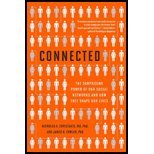
The speaker references foundational texts including the Bhagavad Gita, Tao Te Ching, and Dhammapada, alongside research from Dr. James Fowler's Connected and studies by psychologists like Brené Brown and Kristin Neff on vulnerability and self-compassion.
The Sophisticated Art of Avoidance
University of Virginia research showed 67% of men and 25% of women chose electric shock over sitting alone with their thoughts, revealing how we'll hurt ourselves to avoid internal confrontation.
The Bhagavad Gita warns: 'It is better to live your own destiny imperfectly than to live in imitation of somebody else's life with perfection' - avoidance often masks fear of authentic living.
Smart people become extraordinarily skilled at disguising avoidance as noble qualities like 'waiting for the right time' or 'being strategic' when they're actually terrified.
Programming vs. Authentic Desire
Dr. Kennon Sheldon's research on self-concordance shows people pursuing goals aligned with authentic interests achieve them more often and feel fulfilled, while those chasing absorbed goals feel empty even when successful.
The Tao Te Ching teaches: 'When you are content to be simply yourself and don't compare or compete, everyone will respect you' - authentic living requires separating genuine desires from programmed wants.
The critical test: 'If no one would ever know I achieved this, would I still want it?' reveals which goals are truly yours versus society's expectations wearing your face.
The Performance Trap and Vulnerability
Brené Brown's two decades of research proves genuine connection requires vulnerability - the 'approved version' of yourself creates loneliness because people love the mask, not you.
Zen's concept of Shoshin (beginner's mind) suggests approaching life without pretense - 'In the beginner's mind there are many possibilities, but in the expert's mind there are few.'
The armor that kept you safe in childhood now keeps everything out, including the connection and opportunities that can only reach your authentic self.
Social Programming and Environmental Influence
Dr. James Fowler's research in Connected demonstrates behaviors spread like contagions - if a close friend becomes obese, your likelihood increases by 45%, not through persuasion but unconscious recalibration of normal.
The Dhammapada states: 'An ignorant person is like a log of wood. If they associate with the wise, they become a flame. If they associate with the foolish, they remain a log.'
Mirror neurons fire both when you perform actions and observe others performing them - your brain rehearses witnessed behaviors whether you agree with them or not.
The Suffering Investment Fallacy
The belief that suffering is an investment that will eventually be rewarded by the universe is ruining lives - there's no cosmic ledger tracking your pain for future compensation.
Buddhist teaching identifies clinging to suffering itself as perpetuating pain - we cling to the identity of 'the one who endures' and the narrative that our pain has purpose.
The sunk cost fallacy applied to life keeps people investing in harmful situations because of past suffering, regardless of whether future returns justify continued investment.
Building vs. Figuring Out Your Life
Dr. Herminia Ibarra's research shows successful career transitions happen through action and experimentation, not introspection and planning - the self is discovered through doing, then thinking.
The Taoist concept of the 'uncarved block' represents pure potential before being shaped by expectation - your twenties shouldn't be carved into fixed shapes based on incomplete information.
The four-step system: Experience leads to competence, competence leads to evidence, evidence leads to confidence - you start with experience, not confidence.



These notes may contain occasional inaccuracies. Learn how podbrain notes are made
More in Self-Development

Can the Middle Class Be Saved? Political Division, Economic Doom & The Leadership Problem | Andrew Bustamante Pt. 2
Jun 20, 2026
The Career Trap That Makes Women Miserable - Suzanne Venker - #1113
Jun 20, 2026
How Immigration and War Test the Strength of Values and National Identity
Jun 19, 2026
7 Strategies for Becoming a Better Father | FRIDAY FIELD NOTES
Jun 19, 2026
ELECTROMAGNETISM Is The SECRET To Health: Biofield Tuning Explained | Eileen McKusick
Jun 15, 2026
.svg)