
10 Books That Changed My Life
This presentation explores ten transformative books that fundamentally change how you think, decide, and live, moving beyond mere information to actual life transformation. The speaker argues that most books provide temporary intellectual satisfaction without lasting behavioral change, but these ten works each...

Episode


- 01
Most books inform without transforming - they give temporary dopamine but don't change your actual operating system or decision-making patterns
- 02
How to Decide reveals the critical error of 'resulting' - judging decisions by outcomes rather than the quality of the decision-making process
- 03
The Organized Mind shows that 35,000 daily micro-decisions drain the same neural resources needed for important creative and analytical work
- 04
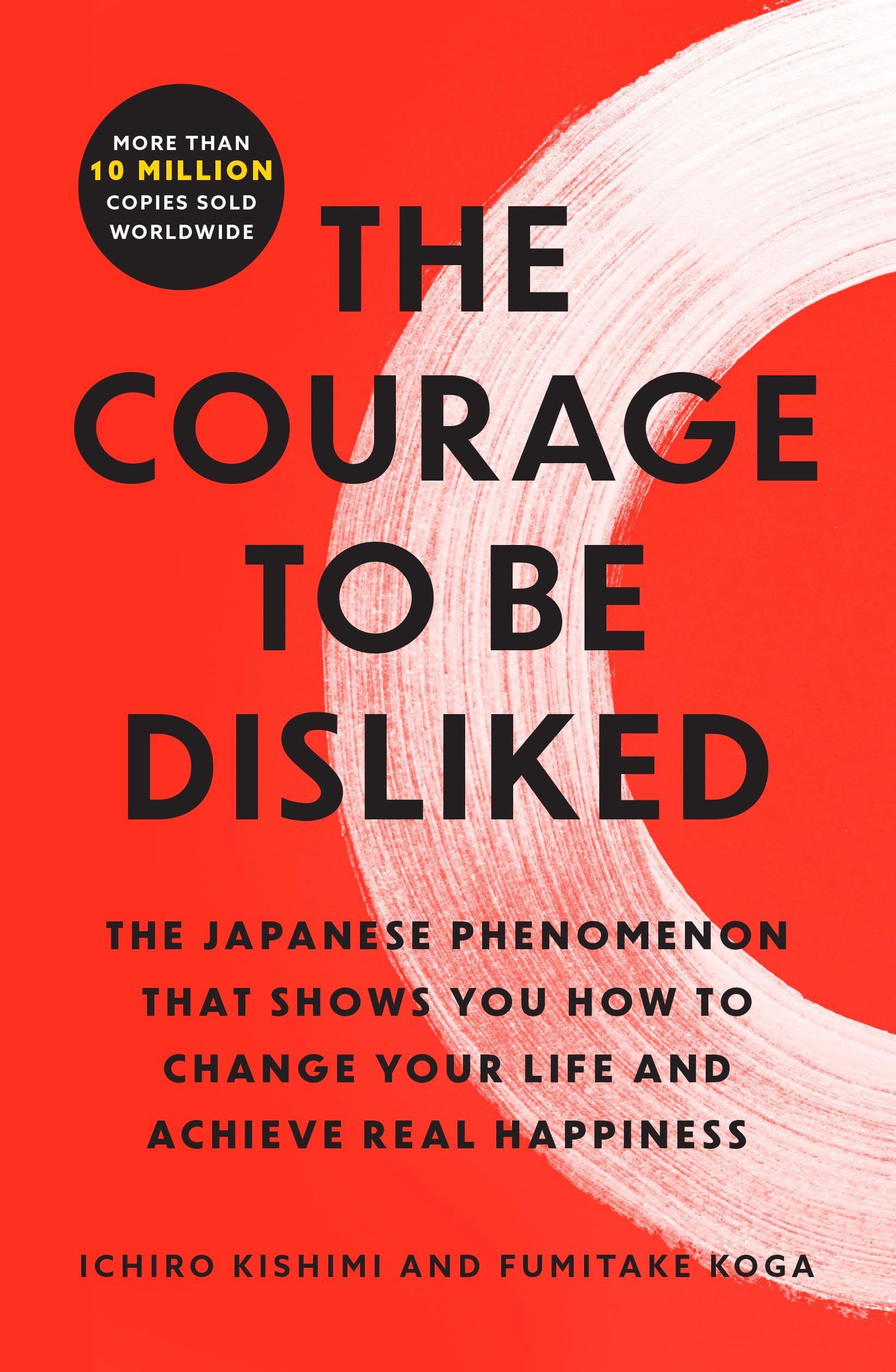
The Courage to Be Disliked argues all problems are interpersonal relationship problems rooted in fear of others' judgment
- 05
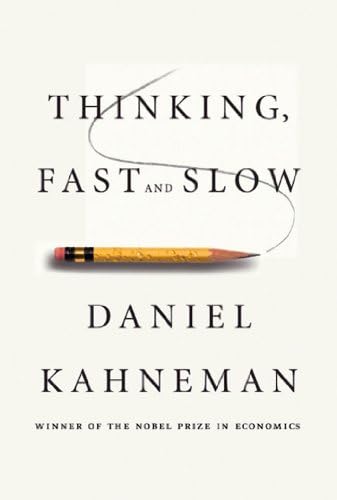
Thinking, Fast and Slow demonstrates that confidence is not evidence of accuracy but merely a signal of cognitive fluency
- 06
The Bhagavad Gita teaches the foundational principle: 'You have the right to work, but never to the fruit of work'
- 07
Breath research at Stanford showed that switching from nasal to mouth breathing alone degraded blood pressure, cognitive performance, and sleep quality within days
Get the latest ideas from On Purpose with Jay Shetty.
Plus the best new takeaways about decision making from other top podcasts — read in minutes, not hours.
By continuing, you agree to podbrain's Terms and Privacy Policy.
These notes may contain occasional inaccuracies. Learn how podbrain notes are made
This presentation explores ten transformative books that fundamentally change how you think, decide, and live, moving beyond mere information to actual life transformation. The speaker argues that most books provide temporary intellectual satisfaction without lasting behavioral change, but these ten works each contributed a single powerful idea that restructured their decision-making and worldview.
The selection spans decision science with How to Decide, career guidance through Finding Your Element, neuroscience insights from The Organized Mind, psychology frameworks from Thinking, Fast and Slow and The Righteous Mind, ancient wisdom from the Bhagavad Gita, and practical applications from The Lean Startup and Breath. Each book builds toward a comprehensive framework for navigating life's complexities.
The speaker emphasizes that book nine, the Bhagavad Gita, serves as the keystone that makes all other insights coherent, providing a 3,000-year-old foundation for modern decision-making and authentic living.
The Resulting Trap: Why Good Outcomes Don't Mean Good Decisions
How to Decide by Annie Duke exposes 'resulting' - the fundamental error of judging decision quality by outcomes rather than the decision-making process itself.
Duke, a former professional poker player turned decision scientist, demonstrates how identical decisions with identical information can produce different outcomes due to luck, timing, and randomness.
The critical shift is evaluating decisions at the moment they were made with available information, asking 'given what I knew then, was that reasonable?' rather than judging with hindsight.
This distinction prevents learning wrong lessons from your life - abandoning good strategies because of bad results or doubling down on bad strategies that happened to work.
Finding Purpose at the Intersection, Not in Isolation
Finding Your Element by Ken Robinson reframes purpose as an intersection where natural aptitude meets personal passion, not a single discoverable calling.
Robinson argues that the element is found through exposure and experimentation, not introspection - you must 'collide with it' rather than think your way to it.
The book provides permission to stop searching for one thing and start paying attention to where different interests, skills, and fascinations naturally converge.
Most people are already standing in their element but don't recognize it because it doesn't match the single-label format society expects.
The Neuroscience of Mental Clutter and Cognitive Load
The Organized Mind by Daniel Levitin reveals that the average person makes 35,000 decisions per day, all drawing from the same finite neural processing capacity.
Every micro-decision - what to eat, wear, or where you put your keys - uses the same prefrontal cortex resources needed for important creative and analytical work.
Mental clutter literally reduces available IQ by taxing working memory, making you 'measurably dumber by trying to keep everything in your head.'
The solution is externalization - writing down decisions, automating routines, and systematizing recurring choices to free neural bandwidth for meaningful thinking.
Liberation Through Accepting Others' Disapproval
The Courage to Be Disliked presents Alfred Adler's framework that all problems are interpersonal relationship problems rooted in fear of judgment.
Adler's 'separation of tasks' distinguishes between your responsibilities (living according to values, doing good work) and others' tasks (having opinions about it).
Dr. Naomi Eisenberger's fMRI research shows social rejection activates the brain's physical pain matrix, explaining why disapproval feels like a threat rather than an option.
Authentic freedom requires accepting that 'you cannot be free and universally approved of at the same time' - every honest life involves disappointing someone.
The Two-Brain System and the Confidence Trap
Thinking, Fast and Slow by Nobel laureate Daniel Kahneman maps systematic errors in human judgment through his two-system cognitive model.
System 1 (fast, automatic, intuitive) runs 95% of mental operations but is riddled with biases, while System 2 (slow, deliberate, analytical) is lazy and mostly rubber-stamps System 1's conclusions.
The devastating insight: 'The feeling of certainty is not evidence of accuracy' - confidence correlates with cognitive fluency, not truth.
The critical question before important decisions becomes: 'Am I sure about this because I've thought it through, or because it feels easy?'
Engineering Happiness Through Optimal Challenge
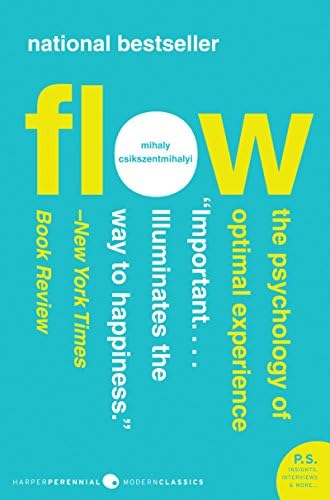
Flow by Mihaly Csikszentmihalyi redefines happiness as a state of deep absorption achieved when skill level perfectly matches task difficulty.
Research across thousands of people found the highest fulfillment occurred not during relaxation or reward, but during challenging tasks at the edge of ability.
The flow framework requires either increasing skills or increasing challenge - if skills exceed challenge you feel bored, if challenge exceeds skills you feel anxious.
Happiness becomes something experienced during properly calibrated work rather than something achieved after work is completed.
Testing Ideas Before Building Perfect Solutions
The Lean Startup by Eric Ries identifies the fundamental startup fallacy: building perfect versions of things nobody asked for due to untested assumptions.
The minimum viable product (MVP) is not a worse version of your idea but the smallest version that tests whether core assumptions are correct before major investment.
The principle applies beyond startups to careers, creative work, and relationships: 'The fastest path to something great is exposing your imperfect thing to reality as early as possible.'
Reality serves as a better editor than internal perfectionism - 'Ship it ugly, ship it incomplete, ship it scared' because real-world feedback accelerates improvement.
Understanding Moral Foundations Behind Disagreement
The Righteous Mind by Jonathan Haidt reveals that moral reasoning follows intuition rather than leading it - reason serves as a 'press secretary' justifying pre-existing emotional responses.
Haidt identifies six moral foundations (care, fairness, liberty, loyalty, authority, sanctity) that function like taste buds, with different people weighting them differently.
Liberals typically emphasize care and fairness while discounting loyalty, authority, and sanctity; conservatives weight all six more equally - neither configuration is wrong.
Understanding someone's moral foundations transforms dismissal into comprehension: 'They stop seeming like an idiot and become a person navigating the same complex world with a different moral instrument panel.'
Ancient Wisdom on Action Without Attachment
The Bhagavad Gita presents Krishna's teaching to Arjuna: 'You have the right to work, but never to the fruit of work' - the foundational principle that makes all other insights coherent.
The text distinguishes between what you control (the work, the process, your effort and integrity) and what you don't control (results, outcomes, others' responses).
This doesn't mean not caring about results but rather not needing results to validate effort or define self-worth - 'do the work with everything you have, then open your hands.'
The moment you need outcomes to be a certain way, 'you've handed your peace to a variable you don't control' - attachment to results undermines both performance and wellbeing.
The Overlooked Foundation: Breathing as Mental State Control
Breath by James Nestor reveals breathing as 'the single most direct lever you have for altering your nervous system, cognitive function, stress response, sleep, and emotional state.'
Stanford research showed that switching from nasal to mouth breathing for ten days increased blood pressure, spiked stress hormones, collapsed sleep quality, and measurably declined cognitive performance.
Nasal breathing filters and humidifies air, increases nitric oxide production, dilates blood vessels, improves oxygen absorption, and activates the parasympathetic nervous system.
The practical application: slow breathing through the nose with extended exhales (five seconds in, seven seconds out) can immediately change your mental and physical state.






These notes may contain occasional inaccuracies. Learn how podbrain notes are made
More in Self-Development

Can the Middle Class Be Saved? Political Division, Economic Doom & The Leadership Problem | Andrew Bustamante Pt. 2
Jun 20, 2026
The Career Trap That Makes Women Miserable - Suzanne Venker - #1113
Jun 20, 2026
How Immigration and War Test the Strength of Values and National Identity
Jun 19, 2026
7 Strategies for Becoming a Better Father | FRIDAY FIELD NOTES
Jun 19, 2026
ELECTROMAGNETISM Is The SECRET To Health: Biofield Tuning Explained | Eileen McKusick
Jun 15, 2026
.svg)