
Essentials: Tools for Setting & Achieving Goals | Dr. Emily Balcetis
Andrew Huberman, professor of neurobiology and ophthalmology at Stanford School of Medicine, interviews Dr. Emily Balchetis, a vision scientist and motivation researcher who studies how visual strategies can enhance goal achievement and performance.

Episode


- 01
Elite Olympic runners use narrowed visual focus like a 'spotlight' on targets, not broad peripheral awareness as expected
- 02
Teaching everyday people spotlight focus made them 27% faster and reduced perceived effort by 17% during exercise
- 03
Vision boards and dream visualization can backfire by lowering systolic blood pressure and reducing motivation to act
- 04
People who are overweight or tired literally perceive distances as farther and hills as steeper than fit individuals
- 05
Michael Phelps won his 8th Olympic gold swimming blind by counting strokes - a pre-planned obstacle strategy
- 06
Drinking sugar vs. artificial sweetener creates visual illusions where finish lines appear closer with real energy
- 07
Data tracking apps reveal memory bias - progress feels worse than actual measured improvement over time
Get the latest ideas from Huberman Lab.
Plus the best new takeaways about productivity from other top podcasts — read in minutes, not hours.
By continuing, you agree to podbrain's Terms and Privacy Policy.
These notes may contain occasional inaccuracies. Learn how podbrain notes are made
Andrew Huberman, professor of neurobiology and ophthalmology at Stanford School of Medicine, interviews Dr. Emily Balchetis, a vision scientist and motivation researcher who studies how visual strategies can enhance goal achievement and performance.
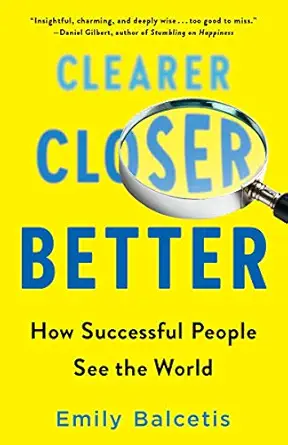
The conversation explores Balchetis's groundbreaking research on how elite athletes use visual attention, the physiological connections between body states and visual perception, and practical applications for everyday goal setting. Balchetis discusses findings from her book Clearer, Closer, Better How Successful People See the World, including studies with Olympic runners, visual illusion experiments, and personal applications like learning drums while managing new parenthood.
Elite Athletes Use Narrowed Visual Focus, Not Broad Awareness
Olympic runners at Brooklyn armories contradicted expectations by using hyper-focused attention rather than broad environmental awareness - 'Like a spotlight is shining on a target' - Emily
Athletes choose specific targets like finish lines for short distances or intermediate goals like 'the shorts on the person up ahead' for longer runs, maintaining laser focus until reaching each target
Joan Benoit Samuelson, multiple marathon winner, exemplifies this strategy by 'finding the shorts on somebody ahead of me and focusing on those shorts until she passes them and then resetting that goal'
Spotlight Focus Training Delivers Measurable Performance Gains
Everyday people taught spotlight focus completed moderately challenging exercises 27% faster and reported 17% less pain compared to natural vision groups
The training involves imagining 'a circle of light that's shining on some target' rather than scanning broadly across finish lines or environmental features
Participants wore ankle weights equal to 15% of body weight and performed high-stepping exercises to a finish line, creating standardized moderate challenge conditions
Vision Boards and Dream Visualization Can Sabotage Motivation
Research by Gabrielle Oettingen at NYU shows vision boards create 'goal satisfied' psychological states that reduce systolic blood pressure - the body's readiness indicator for action
Effective goal setting requires three stages: identifying the goal, planning practical day-to-day steps, and crucially, anticipating obstacles with predetermined solutions
Michael Phelps exemplifies obstacle preparation - when his goggles filled with water during his 8th Olympic gold race, he switched to counting strokes, a strategy practiced extensively with his coach
Body States Literally Change Visual Perception of Difficulty
People who are overweight, chronically tired, elderly, or carrying heavy backpacks perceive distances as farther and hills as steeper than fit individuals
Controlled experiments using sugar vs. Splenda in Kool-Aid showed that increased blood glucose made finish lines appear closer, creating visual illusions of proximity
This creates a motivational cycle where 'people whose bodies might make it more challenging for them to exercise are seeing the world in a more challenging way' - Emily
Memory Bias Distorts Goal Progress Assessment
While learning drums and writing Clearer, Closer, Better, Balchetis discovered her memory severely underestimated practice frequency and progress quality
Using the Reporter app to track daily practice sessions revealed 'I actually had practiced far more than I remembered' with 'a clear upward trajectory' in emotional responses
Data collection becomes essential for long-term goals with deadlines because 'everybody's memories are faulty' and 'our brain has evolved to give us a faulty memory'
These notes may contain occasional inaccuracies. Learn how podbrain notes are made
More in Health & Wellness

The Mental Frame & Specific Daily Actions to Succeed | Andy Stumpf
Jun 15, 2026
#396 ‒ Breast cancer screening: understanding risk, deciding when to start and how often to screen, and choosing the right imaging strategy
Jun 15, 2026
Essentials: Sleep Toolkit for Optimizing Sleep & Sleep-Wake Timing
Jun 11, 2026
Everything Women Need to Know About Perimenopause, Menopause & Hormone Therapy - Compilation
Jun 11, 2026
You Can Get What You Want.... But There’s a Catch
May 21, 2026
.svg)