
The Mental Frame & Specific Daily Actions to Succeed | Andy Stumpf
Andrew Huberman, professor of neurobiology and ophthalmology at Stanford School of Medicine, interviews Andy Stumpf, a retired Navy SEAL who subsequently became a member of the Red Bull high-performance team as a wingsuiter, setting two world records. The conversation was prompted by Huberman's reading of Andy's book...



- 01
Drown Proof introduces the influence versus concern exercise: draw a line down paper, list concerns on left, influence on right - most people find only themselves on the influence side
- 02
Pick the choice that is slightly more difficult as often as possible - the small stuff nobody sees makes the biggest difference in the world
- 03
Wingsuit BASE jumping provided Andy a mental reset where his entire circle of concern disappeared, creating focus only on the next 3 seconds of life
- 04
The anterior midcingulate cortex grows when people do things they don't want to do, predicting successful completion of difficult tasks and healthy aging
- 05
Dave's suicide illustrated the gap between self-perception and how others viewed him - he couldn't live with not meeting his own impossibly high standards
- 06
Social media creates the perfect addiction: low-resolution enough to maintain awareness while scrolling, unlike traditional addictions that fully absorb consciousness
- 07
It always takes longer to do it wrong - small shortcuts like leaving toilet paper rolls create cascading inefficiencies that compound over time
- 08
The Green Beret community has lost more people to suicide than combat operations since 2001, with similar trends likely in SEAL teams
Get the latest ideas from Huberman Lab.
Plus the best new takeaways from other top podcasts — read in minutes, not hours.
By continuing, you agree to Podbrain's Terms and Privacy Policy.
These notes may contain occasional inaccuracies. Learn how Podbrain notes are made
Andrew Huberman, professor of neurobiology and ophthalmology at Stanford School of Medicine, interviews Andy Stumpf, a retired Navy SEAL who subsequently became a member of the Red Bull high-performance team as a wingsuiter, setting two world records. The conversation was prompted by Huberman's reading of Andy's book Drown Proof, which he describes as uniquely valuable among SEAL books for its practical tools and candid personal insights.
The discussion explores Andy's influence versus concern exercise from Drown Proof, which has dramatically improved Huberman's daily life by helping separate actionable issues from distracting concerns. They delve into the psychology of social media addiction, the discipline required for small daily choices, and Andy's experiences with wingsuit BASE jumping as a form of mental reset.
The conversation takes serious turns as they discuss Andy's contentious divorce, the mental health challenges facing the special operations community, and the tragic suicide of Andy's friend Dave. They explore the neuroscience of discipline through the anterior midcingulate cortex, time perception in flow states, and practical strategies for choosing slightly harder paths in daily life.
The Influence Versus Concern Exercise That Changes Everything
Drown Proof presents a simple but powerful exercise: draw a line down a piece of paper with 'concern' on one side and 'influence' on the other, then list everything occupying your waking hours.
"I'm still yet to find more than one thing that you can write down, and that's the direct influence that you have. And all you really can write on that is yourself" - Andy, describing how the exercise reveals our limited but absolute control.
The exercise leads to the realization that "I have no control over what happens to me in my life, but I have absolute and complete and total control over how I respond to it" - Andy.
Huberman has been doing this exercise weekly since reading the book, finding it tremendously useful not just during the exercise but in the days that follow, giving him much more sense of agency.
Social Media: The Perfect Low-Resolution Addiction
Andy and Chad Wright challenged each other to reduce daily phone screen time to under one hour, with Andy achieving 30 minutes by forcing social media use to his laptop, which is "way less sticky."
"My mental health was better in January than it had been in a long time" - Andy, describing the month of reduced screen time, though both reverted to previous habits within 60 days.
Huberman theorizes social media is the "perfect addiction" because it's low-resolution enough that people remain aware they should be doing something else while still being compelled to continue scrolling.
"The fact that you can recognize all of those things... and 60 days later, you're back to the same behavior... That's all you need to know about the platforms" - Andy on the manipulative power of social media algorithms.
Wingsuit BASE Jumping as Mental Reset and Flow State
"At about 1 minute out on a helicopter... your entire circle of concern goes away, completely gone" - Andy describing the mental reset that wingsuit jumping provided for months afterward.
Wingsuit speeds can reach 120 mph face-first when "you really bend those suits over," with the suit feeling like "licking the largest 9-volt battery you've ever licked in your life" when pitched over aggressively.
"If you're not scared in that environment, I would recommend you stop that activity immediately because you're not paying attention" - Andy on the necessary fear response to dangerous activities.
The activity provided a "beautiful place" of focus where "the next 3 seconds of your life is the only thing I was capable of thinking about," creating lasting mental clarity for months.
The Neuroscience of Choosing Difficulty
The anterior midcingulate cortex grows when people successfully diet or add exercise they hate, but only if they don't want to do the activity in the moment they do it.
"Pick the choice as often as possible that is slightly more difficult" - Andy's core philosophy, emphasizing that "it's the small stuff that nobody sees that makes the biggest difference in the world."
Growth of the anterior midcingulate cortex is "the defining feature of what are called super agers" - people who maintain cognitive and physical abilities into their 80s and 90s.
"It always takes longer to do it wrong" - Andy's mantra about shortcuts, using toilet paper replacement and laundry as examples of how small laziness compounds into larger inefficiencies.
The Hidden Trauma Behind Military Suicide Rates
"The Green Beret community has now lost more people to suicide than combat operations since 2001" with SEAL teams likely approaching similar numbers.
Andy's friend Dave exemplified the gap between self-perception and others' views: "I think he arrived at a place where he couldn't live with the reality that he couldn't hold himself to the standard that he had expected from other people."
"The number of guys that I've talked to now... they brought a full sea bag of trauma with them before" entering the military, which compounds with operational experiences.
Dave had multiple treatments with ibogaine and ayahuasca that "oftentimes will instantaneously change the relationship they have with substances," but "it wasn't working for him" despite facilitating treatment for others.
Time Perception and Post-Flow State Benefits
The Secret Pulse of Time explores how certain activities may calibrate time perception, allowing people to "capture moments" with "high fidelity" and maintain clarity for months afterward.
The post-wingsuit state wasn't adrenalized but rather "the opposite of walking around feeling like that. I would describe it as feeling settled or anchored."
"It's like having a stereo dial and the static, and you're just twisting it down" - Andy describing how the mental clarity from extreme activities filters out life's unnecessary concerns.
This flow state aftermath provided "the ability to just sit into it and think clear" with effects lasting "for months afterwards" and making him "better at business, better... a more patient father, a more patient husband."
The Price of Success and Finding Balance
"I would rather have people arrive a little bit under this massive lifetime goal and be a really happy, really fulfilled, really enriched person than somebody who carves out everything from their life" - Andy on sustainable achievement.
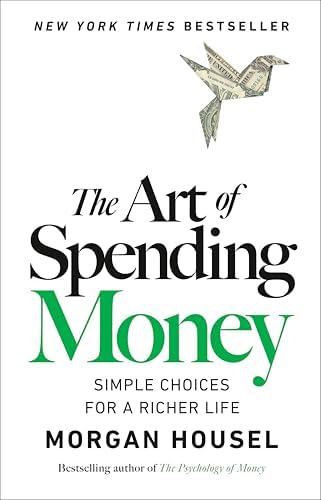
The Art of Spending Money by Morgan Housel offers psychological insights into "how to really assess what's, what things are worth to you, both in terms of what it takes to get the resources and then when to use them."
"I only want to make enough money so I can say no to things. That's my favorite, most powerful word" - Andy on financial freedom as the ability to decline opportunities.
Andy's current excitement comes from "absolutely no idea what I want to do next" while being "old enough to realize that I don't have to white-knuckle it, that it's going to present itself."


These notes may contain occasional inaccuracies. Learn how Podbrain notes are made
More in Health & Wellness
How to Improve Your Memory & Cognitive Function at Any Age | Dr. Alan Castel
Jul 13, 2026
#399 ‒ The evolution of Alzheimer's disease and dementia care: how early detection, personalized treatment, new therapies, and a multimodal approach are changing the landscape | Gayatri Devi, M.D.
Jul 13, 2026
Essentials: The Science of Eating for Health, Fat Loss & Lean Muscle | Dr. Layne Norton
Jun 25, 2026
281. Dr. Phil Reveals The Exercise That Rewires Your Brain in Minutes
Jun 25, 2026
Will Harlow: STOP Losing Muscle After 50 (Do This Instead)
Jun 23, 2026.svg)