
Essentials: Therapy, Treating Trauma & Other Life Challenges | Dr. Paul Conti
Dr. Andrew Huberman, professor of neurobiology and ophthalmology at Stanford School of Medicine, interviews Dr. Paul Conti, a psychiatrist and trauma expert, in this Huberman Lab Essentials episode focused on understanding and treating trauma.

Episode


- 01
Trauma is defined as something that overwhelms our coping skills and leaves us changed, affecting mood, anxiety, behavior, sleep, and physical health - Dr. Paul Conti
- 02
The limbic system always trumps logic; emotions win every time when they come head-to-head with rational thinking
- 03
Repetition compulsion occurs because the emotional brain wants to recreate traumatic situations to 'make them right this time' - it doesn't understand time
- 04
Shame and guilt evolved as powerful behavioral deterrents for survival but become maladaptive in modern life with longer lifespans
- 05
Psychedelics reduce chatter in outer brain regions while activating deeper areas like the insular cortex where 'our humanness really is'
- 06
MDMA floods positive neurotransmitters, creating permissiveness to approach traumatic material without fear-based mental chatter
- 07
The most important factor in therapy is rapport - 'repeat rapport 10 times' when looking for therapeutic characteristics
- 08
Basic self-care fundamentals like sleep, nutrition, and natural light are essential building blocks that are often overlooked
Get the latest ideas from Huberman Lab.
Plus the best new takeaways from other top podcasts — read in minutes, not hours.
By continuing, you agree to podbrain's Terms and Privacy Policy.
These notes may contain occasional inaccuracies. Learn how podbrain notes are made
Dr. Andrew Huberman, professor of neurobiology and ophthalmology at Stanford School of Medicine, interviews Dr. Paul Conti, a psychiatrist and trauma expert, in this Huberman Lab Essentials episode focused on understanding and treating trauma.
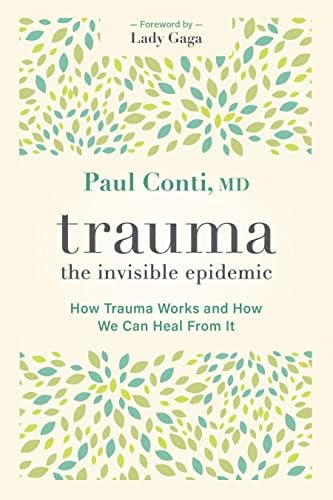
The conversation explores fundamental questions about trauma definition, the evolutionary basis of shame and guilt, therapeutic approaches including psychedelics, and the critical importance of basic self-care practices. Dr. Conti draws from his book Trauma The Invisible Epidemic, which Huberman calls 'the definitive book on trauma,' to explain why our brains are wired to hold onto traumatic experiences and how modern therapeutic interventions can help rewire these patterns.
Defining Trauma Beyond Negative Events
Trauma is not just anything negative that happens to us, but specifically 'something that overwhelms our coping skills and then leaves us different as we move forward' - Paul Conti
Trauma changes brain function in observable ways, manifesting in mood, anxiety, behavior, sleep, and physical health alterations that persist over time
Dr. Conti shares his personal trauma experience: after his younger brother's suicide in his early 20s, he avoided acknowledging the impact due to guilt, shame, and not knowing what to do
The Evolutionary Trap of Shame and Guilt
Traumatic experiences are 'emblazoned in our brain' and 'built to last' because evolutionarily, remembering negative events was crucial for survival when humans lived shorter lives
Shame is an 'aroused affect' that can be triggered without our choice and serves as 'an extremely strong deterrent' - adaptive for tribal survival but maladaptive in modern life
The limbic emotion system 'always trumps logic' - people run into burning buildings not because it's logical, but because emotion wins when someone they love is inside
Repetition Compulsion and Relationship Patterns
People repeat abusive relationships because 'the limbic system does not care about the clock or the calendar' and wants to solve past trauma by recreating similar situations
Dr. Conti observes clinically: 'My last seven relationships have been abusive' typically means 'you've kind of had the same relationship seven times'
The emotional brain operates like 'a medical abscess inside a person' - trauma gets walled off but continues controlling behavior until it's brought to the surface and processed
Therapeutic Approaches and Finding the Right Therapist
The key to trauma healing is communication - putting words to internal experiences through talking or writing, which activates different brain mechanisms than just thinking
When choosing a therapist, 'if you look at what are the top 10 important factors to find in a therapist, just repeat rapport 10 times' - trust and connection are paramount
Good therapists aren't 'pigeonholed by a certain modality' but adapt their approach, and word-of-mouth recommendations significantly increase the 'pre-test probability' of success
Psychedelics as Anti-Trauma Tools
Psychedelics reduce 'chatter' in outer brain regions (language, vision, executive function) while activating deeper areas like the insular cortex 'where our humanness really is'
This neurological shift allows people to 'see with clarity that, oh, that trauma, like that thing is not my fault' and develop self-compassion without guilt-driven mental loops
MDMA works differently by 'flooding with positive neurotransmitters' creating 'greater permissiveness inside to entertain or approach different things' without fear-based thinking
Language Precision and Self-Care Fundamentals
Trauma The Invisible Epidemic emphasizes careful language use - trauma shouldn't mean 'anything kind of negative' as that 'dilutes it down to meaning nothing'
Self-care involves basic fundamentals often overlooked: 'Are you sleeping enough? Are you eating well? Are you getting natural light? Are you interacting with people who are good to interact with?'
Dr. Conti admits his own self-care blind spot: tying his sense of power and success to ignoring basic needs like regular eating and sleeping, realizing this pattern wasn't sustainable
These notes may contain occasional inaccuracies. Learn how podbrain notes are made
More in Health & Wellness

The Mental Frame & Specific Daily Actions to Succeed | Andy Stumpf
Jun 15, 2026
#396 ‒ Breast cancer screening: understanding risk, deciding when to start and how often to screen, and choosing the right imaging strategy
Jun 15, 2026
Essentials: Sleep Toolkit for Optimizing Sleep & Sleep-Wake Timing
Jun 11, 2026
Everything Women Need to Know About Perimenopause, Menopause & Hormone Therapy - Compilation
Jun 11, 2026
You Can Get What You Want.... But There’s a Catch
May 21, 2026
.svg)