
Essentials: The Biology of Aggression, Mating & Arousal | Dr. David Anderson
Andrew Huberman, professor of neurobiology and ophthalmology at Stanford School of Medicine, sits down with Dr. David Anderson to explore the neurobiology of emotions and states. Anderson, a leading researcher in the neural circuits underlying emotion, discusses his lab's groundbreaking work using optogenetics to...

Episode


- 01
Emotions are internal states that control behavior, not just psychological feelings - they represent the neurobiological iceberg below conscious awareness
- 02
Persistence distinguishes emotions from reflexes: 'If you hear a rattlesnake rattling, you're going to be hyper-vigilant' long after it's gone - David
- 03
Male mice find offensive aggression rewarding and will learn to press bars to beat up subordinate males - it has positive valence
- 04
Estrogen receptors, not testosterone, are the key molecular markers for aggression neurons in the ventromedial hypothalamus
- 05
Social isolation massively upregulates tachykinin 2 in mouse brains, making them aggressive, fearful, and anxious for life
- 06
The drug osanetant can reverse social isolation effects so completely that isolated aggressive mice can safely return to their littermates
- 07
Fear-induced analgesia explains why 'it hurt little to get punched during a fight and how much it hurt afterwards' - Andrew
- 08
The periaqueductal gray functions like an old telephone switchboard, routing different hypothalamic inputs to generate specific innate behaviors
Get the latest ideas from Huberman Lab.
Plus the best new takeaways from other top podcasts — read in minutes, not hours.
By continuing, you agree to podbrain's Terms and Privacy Policy.
These notes may contain occasional inaccuracies. Learn how podbrain notes are made
Andrew Huberman, professor of neurobiology and ophthalmology at Stanford School of Medicine, sits down with Dr. David Anderson to explore the neurobiology of emotions and states. Anderson, a leading researcher in the neural circuits underlying emotion, discusses his lab's groundbreaking work using optogenetics to understand aggression, fear, and mating behaviors.
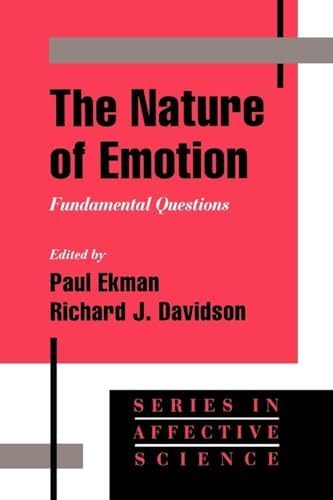
The conversation covers fundamental distinctions between emotions and states, the neural mechanisms of aggression in the ventromedial hypothalamus, and the surprising role of estrogen receptors in male fighting behavior. Anderson also discusses his collaborative research with Ralph Adolfs, which expanded traditional frameworks for understanding emotions beyond simple arousal and valence dimensions, as detailed in their work on emotion theory.
Key topics include the persistence and generalization properties that distinguish emotional states from reflexes, the rewarding nature of offensive aggression in male mice, sex-specific neural populations controlling different behaviors, and the powerful effects of social isolation on tachykinin systems across species from flies to humans.
Emotions as Neurobiological States vs Psychological Feelings
Anderson defines emotions as internal states that control behavior, comparing them to arousal, motivation, and sleep states that 'change the input to output transformation of the brain.'
The iceberg metaphor positions emotion as the neurobiological process below water, while feelings represent only 'the tip' that we can study through human self-reports.
Building on work with Ralph Adolfs, Anderson expands beyond traditional arousal and valence dimensions to include persistence and generalization as key emotional components that distinguish them from motivational states.
Persistence means emotions 'outlast often the stimulus that evoke them' - unlike reflexes that terminate when stimuli end, emotional states like post-rattlesnake hypervigilance continue long after the threat disappears.
Neural Circuits of Aggression: VMH and Surprising Hormone Roles
Dayu Lin's optogenetic work in Anderson's lab revealed that stimulating ventromedial hypothalamus (VMH) neurons can evoke aggression, following Nobel laureate Hess's original findings of defensive versus predatory aggression in cats.
Male mice find offensive aggression intrinsically rewarding: 'They will learn to poke their nose or press a bar to get the opportunity to beat up a subordinate male mouse' - Anderson.
Contrary to popular belief, estrogen receptors, not testosterone, are the molecular markers for aggression neurons in VMH, and castrated mice can have fighting restored with estrogen implants alone.
Fear neurons sit directly above aggression neurons in the pear-shaped VMH structure, with fear being hierarchically dominant - stimulating fear neurons 'stops the fight dead in its tracks.'
Sex-Specific Neural Populations and Behavioral Switching
Female mice only fight when nursing pups, transforming from sexually receptive to hyper-aggressive when the same male is introduced to their cage after giving birth.
Meng Yu Liu's research revealed two distinct estrogen receptor neuron subsets in female VMH: one controlling fighting, another controlling mating, with mating neurons being female-specific.
Anderson's lab identified 'make-love-not-war neurons' in the medial preoptic area that can instantly switch male behavior: activating them during a fight causes males to 'stop fighting, start singing, and try to mount' their opponent.
The dense interconnections between VMH and medial preoptic area may explain how 'coital bliss among lions may suddenly turn into a snap or a growl' during mating encounters.
Social Isolation and the Tachykinin System Across Species
Social isolation increases aggressiveness across species, making solitary confinement 'absolutely the worst, most counterproductive thing you could do' to violent prisoners - Anderson.
Mauriel Zelikovsky's research showed that two weeks of social isolation causes 'massive upregulation of tachykinin 2' in mouse brains, visible as green fluorescence throughout the brain tissue.
The drug osanetant, which blocks tachykinin 2 receptors, completely reverses social isolation effects: isolated mice 'can be returned to the cage with their brothers and will not attack them.'
This tachykinin system is evolutionarily conserved from flies to humans, with the same molecular mechanisms controlling isolation-induced aggression, fear, and anxiety across species.
Pain Modulation and the Periaqueductal Gray Switchboard
Anderson describes the periaqueductal gray (PAG) as 'an old-fashioned telephone switchboard' that routes different hypothalamic inputs to generate specific innate behaviors based on topographic organization.
Fear-induced analgesia explains Huberman's martial arts experience where 'it hurt little to get punched during a fight and how much it hurt afterwards' due to endogenous pain suppression during high-stress states.
The adrenal medulla releases bovine adrenal medullary peptide (22 amino acids) during fight-or-flight responses, which has analgesic properties that may suppress pain during aggressive encounters.
PAG's continuous connection with the spinal cord allows pain modulation at multiple levels, though Anderson distinguishes between 'things that are not known' versus 'things that may be known but I'm ignorant of them.'
Brain-Body Communication Through the Vagus Nerve
The somatic marker hypothesis by Antonio Damasio suggests that subjective emotional feelings partly reflect sensations in specific body parts, supported by heat map studies of where people feel different emotions.
The vagus nerve provides bidirectional communication between brain and body, with 'specific vagal nerves that go to the lung, that control breathing responses, that go to the gut, that go to other organs.'
Recent research reveals 'color-coded lines, labeled lines' within the vagus nerve, with specific fiber subsets controlling different organs and functions with remarkable precision.
The feeling of 'stomach tied up in knots' during stress reflects vagal fibers sensing gut muscle contractions, demonstrating how brain states directly influence and receive feedback from peripheral organs.
These notes may contain occasional inaccuracies. Learn how podbrain notes are made
More in Health & Wellness

The Mental Frame & Specific Daily Actions to Succeed | Andy Stumpf
Jun 15, 2026
#396 ‒ Breast cancer screening: understanding risk, deciding when to start and how often to screen, and choosing the right imaging strategy
Jun 15, 2026
Essentials: Sleep Toolkit for Optimizing Sleep & Sleep-Wake Timing
Jun 11, 2026
Everything Women Need to Know About Perimenopause, Menopause & Hormone Therapy - Compilation
Jun 11, 2026
You Can Get What You Want.... But There’s a Catch
May 21, 2026
.svg)