
Stanford's Most Controversial Professor on Why Power Is Good For You | Jeffrey Pfeffer
Dr. Jeffrey Pfeffer is a professor at Stanford Graduate School of Business whose research focuses on power acquisition and usage from a practical, research-backed perspective. His work challenges conventional wisdom about power being inherently corrupting, instead arguing that good people should actively seek power to...

Episode


- 01
Research shows higher-ranking British civil servants have lower cardiovascular disease risk due to job control - "seek power as if your life depends upon it, because it does" - Jeffrey
- 02
Most people get jobs through weak ties, not strong relationships, because weak ties know different people and information than your close network
- 03
Gary Loveman's principle: "don't be liked, get a dog" - organizations evaluate your ability to make things happen, not your likeability
- 04
Naval Ravikant's "networking is overrated" advice is "insane" according to Pfeffer - even venture capitalists succeed by being networkers and brokers
- 05
Power leads to disinhibition where you attend more to yourself, less to others, and believe rules don't apply - but this isn't necessarily corruption
- 06
The biggest organizational problem is execution: "a great strategy unimplemented is not worth anything" - power enables getting things done
- 07
Most successful people break conventional wisdom - Southwest Airlines' 20-minute turnaround, Apple's design philosophy, Whole Foods' local stocking all violated industry norms
- 08
Omid Kordestani stopped doing his job to network with Netscape executives, became employee #11 at Google, made $2.5 billion - "it makes people rich"
Get the latest ideas from How to Take Over the World.
Plus the best new takeaways from other top podcasts — read in minutes, not hours.
By continuing, you agree to podbrain's Terms and Privacy Policy.
These notes may contain occasional inaccuracies. Learn how podbrain notes are made
Dr. Jeffrey Pfeffer is a professor at Stanford Graduate School of Business whose research focuses on power acquisition and usage from a practical, research-backed perspective. His work challenges conventional wisdom about power being inherently corrupting, instead arguing that good people should actively seek power to create positive change.
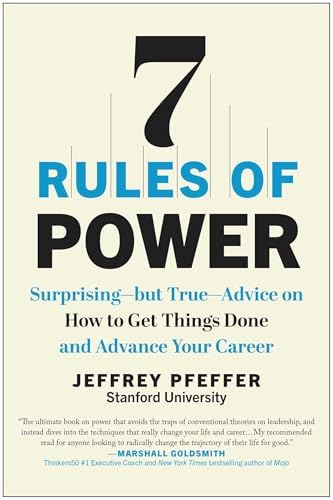
The conversation explores Pfeffer's seven rules of power from his book Seven Rules of Power: get out of your own way, break the rules, show up powerfully, create a powerful brand, network relentlessly, use your power, and accept that success will forgive your methods. These principles draw from his earlier work Power Why Some People Have It and Others Don't, which concludes that power-seeking is essential for both health and effectiveness.
Pfeffer discusses the health benefits of power through the Whitehall Studies, showing how job control reduces stress and cardiovascular disease. He challenges popular Silicon Valley advice against networking, demonstrates why modest behavior often backfires, and explains how power enables organizational execution - the gap between strategy and implementation that his book The Knowing-Doing Gap addresses.
Power Extends Life Through Control and Reduced Stress
The Whitehall Studies by Sir Michael Marmot found that higher-ranking British civil servants had lower cardiovascular disease risk because "the higher your rank, the more control you had over your job and your work" - Jeffrey
Power Why Some People Have It and Others Don't ends with the statement "seek power as if your life depends upon it, because it does" based on epidemiological evidence linking power to longevity
The absence of job control creates stress - being told exactly when, where, and how to work "infantilizes" employees and triggers fight-or-flight responses that damage health
Getting Out of Your Own Way Means Rejecting Modesty
Most people are trained to be "modest and self-effacing" but organizations evaluate "are you able to make things happen? Are you able to get things done? Are you able to essentially bend the world to your will?" - Jeffrey
Gary Loveman's principle: "don't be liked, get a dog" because "a dog will love you unconditionally" while your job requires making difficult decisions that won't please everyone
Good to Great author Jim Collins admitted that level five leaders who are "modest but fiercely determined" as CEOs "is not" how they behaved "on the way up" to power
An Asian-American student transformed his career by changing his elevator pitch from listing credentials to stating: "I'm an African-American medical student going to business school so I can transform the care for black Americans"
Rule Breaking Drives Innovation and Success
Southwest Airlines created the 20-minute turnaround when they "didn't get as many planes as they wanted" - Herb Kelleher realized passengers "paid to get from one place to another," not to wait at major airports
Whole Foods succeeded with John Mackey's insight that "people would pay more for food they wanted to eat" and local tastes varied, so store managers should stock according to regional preferences
Breaking rules creates discomfort - "when you break the rules, not everybody's going to approve" but "if you're right, eventually you will be popular"
The No Asshole Rule author Bob Sutton had to fight his publisher over the controversial title, demonstrating that rule-breaking requires persistence against initial resistance
Networking Beats Performance Alone for Career Success
Naval Ravikant's advice that "networking is overrated, go do something great and your network will instantly emerge" is "insane" because "if you do great work, how in the hell is anybody going to discover that great work if nobody knows who you are?"
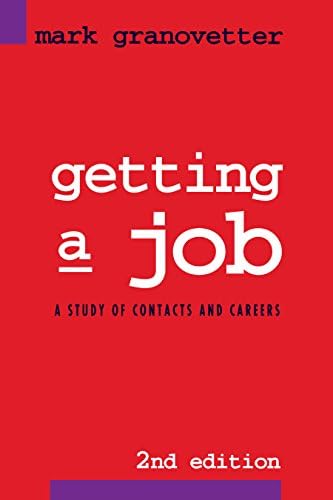
Mark Granovetter's research in Getting a Job shows "most people got jobs and good jobs through their weak ties, not through their strong ties" because weak ties "know different things and different people"
Investment banks promote the most connected people, and "no one has ever gotten promoted if nobody knows who the hell they are" - networking is "necessary but insufficient"
Successful networkers are generous, connecting others who might benefit from knowing each other, creating value beyond direct personal benefit
Building and Using Power Requires Overcoming Imposter Syndrome
Many people fail to use acquired power because "they don't think they deserve where they are" and suffer from imposter syndrome, believing "they got there by luck or by accident"
Gary Loveman laid off 13,000 people during the 2008 recession, including "single moms" and "cancer patients who lost their medical care" - "do you think those people like me? I assure you they don't"
"The higher you rise, the more difficult the decisions will be, because easy decisions are made way below you" - executives only get "decisions that involve trade-offs" where "not everybody's going to be happy"
Success forgives controversial methods - when a product manager used expensive resources and top developers for a freemium model that worked, "everyone forgives me for being expensive when I try it the second time"
Power Practice and Personal Investment Drive Results
Practice power skills individually: "practice networking by figuring out 10 or 15 or 20 people that if they knew who you were and thought positively about you, you could positively affect your career"
Pfeffer charges "$1,500 an hour" for personal coaching and argues people should "invest in yourself" rather than spending money on "an overcoat" or "Starbucks"
Omid Kordestani "decided to stop doing my job" at Netscape to network with senior executives, became employee #11 at Google, and "makes himself $2.5 billion"
The power class is popular "because it makes people rich" - students compare it to "cod liver oil" that "doesn't go down easily, but you need it"




These notes may contain occasional inaccuracies. Learn how podbrain notes are made
More in History

679. Germany: The Song Hitler Stole (Part 3)
Jun 14, 2026
Tom Holland Meets Paul McCartney
May 14, 2026Greece vs. Persia: The Battle of Marathon (Part 2)
May 13, 2026
Adolf Hitler (Part 3)
May 13, 2026Greece vs Persia: The Rise of the First Superpower (Part 1)
May 10, 2026.svg)