
Adolf Hitler (Part 1)
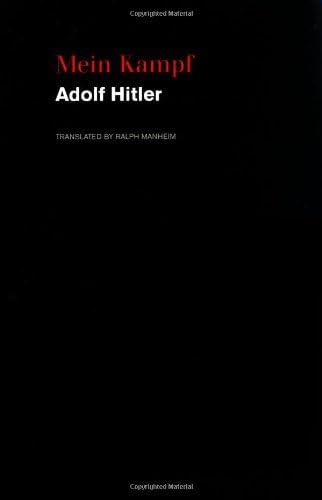
Ben Wilson explores Adolf Hitler's rise from homeless bohemian artist to leader of the National Socialist German Workers' Party, focusing on the development of his extraordinary speaking abilities and political movement-building strategies. Drawing extensively from Mein Kampf, Wilson traces...


- 01
Hitler discovered his speaking ability at age 30 during his first German Workers' Party meeting: "I could speak" - Adolf
- 02
From 1919-1923, Hitler grew the National Socialist Party from 55 members to 50,000 through masterful public speaking and marketing
- 03
Hitler's anti-Semitism developed during his Vienna years (1907-1913) through what he called "the greatest spiritual upheaval I have ever had to go through"
- 04
His speaking strategy combined three elements: exciting events with audience participation, prophetic messaging, and controversial red marketing materials
- 05
Hitler viewed himself as "the drummer" of the movement, initially refusing leadership roles to focus entirely on speaking and propaganda
- 06
The 1923 hyperinflation crisis (30,000% monthly price increases) created conditions that boosted far-right and far-left party popularity across Germany
Get the latest ideas from How to Take Over the World.
Plus the best new takeaways about military & strategy from other top podcasts — read in minutes, not hours.
By continuing, you agree to Podbrain's Terms and Privacy Policy.
These notes may contain occasional inaccuracies. Learn how Podbrain notes are made
Ben Wilson explores Adolf Hitler's rise from homeless bohemian artist to leader of the National Socialist German Workers' Party, focusing on the development of his extraordinary speaking abilities and political movement-building strategies. Drawing extensively from Mein Kampf, Wilson traces Hitler's transformation from a failed art student living in Vienna hostels to Germany's most powerful orator.
The episode covers Hitler's early life in Austria, his artistic ambitions and subsequent failures, his political awakening in multicultural Vienna, his World War I service as a decorated messenger, and his discovery of his speaking talent at a German Workers' Party meeting in 1919. Wilson examines how Hitler's bohemian lifestyle, intensive reading, and artistic temperament shaped his later political approach.
The analysis reveals Hitler's systematic approach to building a movement through controversial marketing, emotional rhetoric, and carefully orchestrated rallies that transformed political meetings into entertainment events. By 1923, Hitler had grown the party from a handful of members to 50,000, setting the stage for his attempted Beer Hall Putsch in Munich.
The Bohemian Artist: Vienna Years and Political Awakening
Hitler lived as a bohemian artist in Vienna from 1907-1913, selling small paintings while developing his political worldview through extensive reading and hostel debates.
His anti-Semitic conversion occurred during this period, which he described in Mein Kampf as "the time of the greatest spiritual upheaval I have ever had to go through."
The multicultural Habsburg Empire's policies of giving government positions to non-Germans created resentment that shaped Hitler's nationalist and anti-Slavic views.
Hitler's artistic temperament and obsession with grandeur meant "everything had to be the grandest, the greatest, the best" - a trait he shared with figures like Steve Jobs.
World War I Service and the Stab-in-the-Back Theory
Hitler served as a regimental dispatch runner, an extremely dangerous position with high casualty rates, earning an Iron Cross for bravery and reliability.
He called his military service "the greatest and most unforgettable time of my earthly existence" and formed his closest wartime friendship with a dog named Fuchsl.
Germany's surrender while troops still held positions in France convinced Hitler of a "stab in the back" by Jewish socialists and factory strikers at home.
The war's end left Hitler writing: "Since the day when I had stood at my mother's grave, I had not wept" - until Germany's defeat.
Discovery of Speaking Talent and Party Leadership
At his first German Workers' Party meeting in September 1919, Hitler spontaneously spoke against Bavarian separatism, captivating the small audience and discovering his oratorical gift.
Anton Drexler's pamphlet My Political Awakening, given to Hitler after the meeting, described escaping Marxist ideology for nationalism, resonating with Hitler's own journey.
Hitler initially viewed himself as "the drummer" of the movement, declining leadership roles to focus entirely on speaking and propaganda work.
By 1921, Hitler demanded dictatorial control of the party, arguing: "We are an anti-parliamentary party... so why do we believe in a parliamentary structure for our party?"
The Science of Mass Persuasion and Rally Strategy
Hitler understood political rallies as entertainment events, creating excitement through controversy, audience participation, and the possibility of confrontation with leftist hecklers.
His speaking strategy emphasized pathos over logos, writing in Mein Kampf: "The less science is involved and the more emotions are involved, the more complete success will be."
The party deliberately used red posters and materials to provoke socialists, with Hitler noting: "Whether they represent us as clowns or criminals, the main thing is that they mention us."
Ian Kershaw observed in Hubris that "unlike other party members, he had no other occupation or interest. Politics consumed practically his entire existence."
Economic Crisis and the Path to the Beer Hall Putsch
The 1923 hyperinflation crisis saw prices increasing 30,000% per month, with people using wheelbarrows of cash for groceries as Germany's economy collapsed.
Bavaria declared a state of emergency, appointing Gustav von Kahr as commissioner with dictatorial powers to negotiate a nationalist government in Berlin.
Hitler grew the National Socialist Party from 55 members in 1919 to 50,000 by 1923, primarily through his speaking abilities and controversial marketing tactics.
On November 8, 1923, Hitler burst into Kahr's speech at a Munich beer hall, firing a shot into the ceiling and declaring: "The national revolution has broken out."


These notes may contain occasional inaccuracies. Learn how Podbrain notes are made
More in History
687. The Odyssey: Hero of the Trojan Horse (Part 1)
Jul 12, 2026682. South Africa: Mandela and the Death of Apartheid (Part 6)
Jun 24, 2026
681. Brazil: The Emperor’s Anthem (Part 5)
Jun 21, 2026679. Germany: The Song Hitler Stole (Part 3)
Jun 14, 2026
Tom Holland Meets Paul McCartney
May 14, 2026.svg)