
Explaining the Prussian Empire
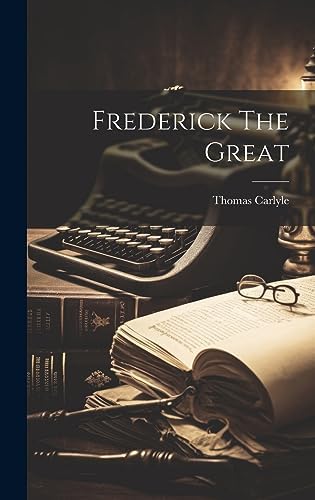
This episode of History 102 features YouTube creator Rudyard Lynch and co-host Austin Padgett exploring the rise and transformation of the Prussian Empire. Lynch draws extensively from Frederick The Great by Thomas Carlyle, despite their...

Episode


- 01
Prussia unified Germany after 600 years of radical disunity through exceptional leadership, particularly the Hohenzollern dynasty and Bismarck
- 02
Frederick The Great pioneered Napoleonic-era tactics a generation early, using compressed vertical lines and mobile artillery to defeat larger armies
- 03
The Prussian school system emerged from military needs to train conscripts, creating the modern educational model used in America today
- 04
Bismarck maintained European peace for decades through careful balance-of-power diplomacy before Kaiser Wilhelm II's errors led to World War I
- 05
Prussia developed as a 'military with a country attached' - Voltaire, establishing extensive welfare systems for veterans and state economic planning
- 06
The dismemberment of Poland-Lithuania occurred because neighboring powers feared Polish modernization, including factories, democracy, and an American-style constitution
- 07
Prussian socialism was fundamentally different from later variants - it was right-wing, reactionary, and based on traditional patronage relationships between nobility and serfs
Get the latest ideas from History102.
Plus the best new takeaways about military & strategy from other top podcasts — read in minutes, not hours.
By continuing, you agree to podbrain's Terms and Privacy Policy.
These notes may contain occasional inaccuracies. Learn how podbrain notes are made
This episode of History 102 features YouTube creator Rudyard Lynch and co-host Austin Padgett exploring the rise and transformation of the Prussian Empire. Lynch draws extensively from Frederick The Great by Thomas Carlyle, despite their opposing political views, to examine how Prussia evolved from marsh people on Germany's eastern frontier into the force that unified Germany.
The discussion traces Prussia's development from medieval German colonization of Eastern Europe through the Teutonic Knights, the devastating Thirty Years' War that killed three-quarters of Brandenburg's population, and Frederick The Great's military innovations that made Prussia a European great power. The conversation examines how Prussian leadership, particularly the Hohenzollern dynasty and later Bismarck, created a unique fusion of authoritarianism, socialism, and militarism that would shape German identity through the world wars.
Medieval Origins: German Colonization and the Teutonic Knights
Prussia emerged from German colonization of Eastern Europe during the Middle Ages, with Germans becoming the predominant merchant class in Transylvania, Hungary, Poland, and the Baltic region through both migration and political conquest.
The Teutonic Knights, a German religious military order, conquered Prussia and the Baltic states from local pagan peoples in the 13th century, establishing the Junker nobility - literally 'young lords' who were often second sons or adventurers who made themselves noblemen on the frontier.
Old Prussia was ethnically diverse, containing Germans, Lithuanians, Poles, Russians, Jews, and others, with huge swamplands like the Masurian marshes that provided natural defensive barriers against Eastern armies.
The Thirty Years' War Trauma and State Formation
Brandenburg lost three-quarters of its population during the Thirty Years' War, becoming a center of constant warfare between Swedish and Austrian forces - 'losing three-quarters of your population, that's one of the worst things you can experience in history because half is really, really bad' - Rudyard.
This devastation created a psychological scar that motivated Prussian militarization and state-building, with many authors arguing that 20th century German barbarism was a remembrance of the Thirty Years' War's trauma.
The war's brutality stemmed from pre-professional armies that would 'burn towns and take supplies and then take local girls as sex slaves,' with commanders like Tilly burning entire cities like Magdeburg.
Frederick the Great's Military Revolution
Frederick The Great pioneered tactics that would become mainstream during the Napoleonic Wars, including compressed vertical line attacks instead of horizontal formations and mobile light artillery attached to horses.
His greatest victories at Rossbach and Leuthen came from superior mobility and flanking maneuvers: 'Frederick The Great would march his army markedly faster than his opponents, attack them on the flank where they weren't prepared, and then compress or crush the flank' - Rudyard.
Despite his military genius, Frederick lived in constant warfare with brief periods of peace mainly serving as preparation for the next conflict, often sharing his depression and anxiety in letters to the French ambassador.
The Seven Years' War nearly destroyed Prussia when Russia, Austria, and France attacked simultaneously, with Frederick considering suicide before being saved by Catherine the Great's death and her successor's admiration for Frederick.
Prussian Social Engineering and the Military State
Voltaire called Prussia 'a military with a country attached,' reflecting its unique structure where the state provided extensive veterans' benefits and guaranteed government jobs to former soldiers as postmaster generals or other civil positions.
The Prussian school system emerged from military necessity to train conscripts, developing the educational model later adopted in America: 'the modern school system that we use in America is called the Prussian school system because they developed this...to train men to be interchangeable cogs.'
Frederick The Great engaged in extensive state economic planning, personally directing farmers on crop selection, land reclamation projects, and forest construction, as documented in Seeing Like a State by James C. Scott regarding ecological failures of centralized planning.
Bismarck's Diplomatic Genius and German Unification
Bismarck unified Germany through a series of calculated wars - defeating Denmark for Schleswig-Holstein, Austria to transfer German leadership from Austria to Prussia, and France to federate all German states against a common enemy.
His diplomatic strategy maintained European peace for decades through balance-of-power politics: 'we're not going to have a major war if we have three countries in Europe out of the five great powers that are on the same side' - Rudyard explaining Bismarck's logic.
Bismarck was 'one of the great seductors of his era' who would 'burst into tears in front of' the German king 'and emotionally blackmail him until he agreed' to his plans, demonstrating the complex personal dynamics behind statecraft.
Kaiser Wilhelm II's dismissal of Bismarck and subsequent errors - wanting a navy to compete with Britain and alienating Russia - set up the coalitions that led to World War I.
The Polish Tragedy and Eastern European Balance
Poland-Lithuania's attempted modernization in the late 18th century terrified neighboring powers: 'they ended serfdom, they started industrializing, they made a modern military and tax code...they even made an American-style constitution and became a democracy.'
The dismemberment of Poland occurred because 'if Poland is a functioning country and industrializing...this terrified every neighboring country because Poland was not allowed to do this,' as Lynch emotionally recounts from History of Poland by Adam Zamoyski.
Prussia's existence as a power depended on Poland being a failed state, since a functioning Poland could have dominated the region given its geographic size and potential resources.


These notes may contain occasional inaccuracies. Learn how podbrain notes are made
More in History

679. Germany: The Song Hitler Stole (Part 3)
Jun 14, 2026
Tom Holland Meets Paul McCartney
May 14, 2026Greece vs. Persia: The Battle of Marathon (Part 2)
May 13, 2026
Adolf Hitler (Part 3)
May 13, 2026Greece vs Persia: The Rise of the First Superpower (Part 1)
May 10, 2026.svg)