
Explaining the Cold War
This episode of History 102 features YouTube creator Rudyard Lynch and co-host Austin Padgett exploring the Cold War's profound psychological impact on Western civilization. Lynch brings his expertise in civilizational analysis while Padgett offers insights on geopolitics and systemic thinking.

Episode


- 01
The Cold War was palpably traumatic to Western civilization in ways we haven't examined, creating psychological damage from living on the knife's edge of complete annihilation for decades
- 02
Nuclear war would have killed over a billion people at peak capacity, yet people lived with knowledge that any bad day could end everything
- 03
The former Mongol Empire crystallized as the Iron Curtain bloc due to authoritarian structures built to defend against nomadic invasions
- 04
About 11 million people died in Cold War-adjacent conflicts, making it comparable to the 30 Years' War in total casualties
- 05
The neoliberal revolution and Soviet failure in Afghanistan were the two tipping point variables that ended the Cold War
- 06
America was terrified of the Soviet Union because we believed their propaganda unironically during our own period of nihilism and self-doubt
- 07
The internet was developed from Foundation novels as a way for universities to share knowledge after potential nuclear war
- 08
We should celebrate that we didn't end the world during the Cold War - it justifies as much celebration as winning any previous war
Get the latest ideas from History102.
Plus the best new takeaways about military & strategy from other top podcasts — read in minutes, not hours.
By continuing, you agree to podbrain's Terms and Privacy Policy.
These notes may contain occasional inaccuracies. Learn how podbrain notes are made
This episode of History 102 features YouTube creator Rudyard Lynch and co-host Austin Padgett exploring the Cold War's profound psychological impact on Western civilization. Lynch brings his expertise in civilizational analysis while Padgett offers insights on geopolitics and systemic thinking.
The conversation begins with observations about developmental psychology and abstraction levels, drawing parallels between individual development and societal evolution. They explore how modern society resembles a teenager - rebellious, arrogant, yet self-critical - while ancient societies operated more like children with their mythological thinking.
The discussion covers the Cold War's origins in World War II, the division of Europe, proxy conflicts that killed millions, and the nuclear standoff that created mutually assured destruction. Key themes include the psychological trauma of living under constant threat of annihilation, the role of ideology in global conflicts, and how the neoliberal revolution ultimately ended the standoff.
Throughout, they reference influential works including Maps of Meaning by Jordan Peterson, Matthew White's casualty analyses, and Isaac Asimov's Foundation series that inspired the internet's development as a Cold War communication system.
The Psychological Architecture of Cold War Trauma
The Cold War created unprecedented psychological damage by forcing industrial societies to live with the constant threat of nuclear annihilation, something Jordan Peterson explored in Maps of Meaning after his own spiritual crisis over nuclear war planning.
At peak capacity, nuclear war would have killed over a billion people, with Americans and Soviets maintaining 30,000 warheads and detailed war room scenarios for staggered diplomatic nuclear exchanges.
The threat created a reflexive dislike of masculinity and aggression among boomers, leading to false mental dichotomies where many believed 'slavery is preferable to war' because their frame of reference was nuclear annihilation.
Cold War war rooms created lasting cognitive biases: radically simplified transcontinental thinking, godlike governmental power, destroyed long-termism, and highly binary divisions that boomers cannot move past.
The Geographic Logic of Ideological Division
The Iron Curtain crystallized around the former Mongol Empire because these regions developed authoritarian structures to defend against nomadic invasions, making them culturally predisposed to communism.
Mackinder's heartland theory was tested and proven wrong - the Soviet alliance perfectly mapped his heartland while the American alliance controlled the maritime exterior, yet the exterior powers won.
Islam proved immune to global communism because strong religion and family structures prevented the social atomization that enabled communist movements to take root.
The division created two great fronts: the North European Plain centered on Germany, and the Far East with the 'Bamboo Curtain' encompassing Korea, Vietnam, and Japan.
The Casualty Count of Proxy Warfare
According to Matthew White's research in The Great Big Book of Horrible Things, about 11 million people died in Cold War-adjacent conflicts, making it comparable to the 30 Years' War.
Vietnam killed 3.5 million, Korea killed 3 million (plus another million under North Korean government), Afghanistan killed 1.5 million, and Mozambique killed nearly a million.
The conflicts followed a pattern where first-generation Soviet-sympathizing socialist regimes gave Marxists too much power, leading to military coups that eventually transitioned to democracies once the Marxist threat was removed.
In the third world, ideology often flowed after political alliances rather than driving them - tribes used political differences to rationalize seizing central government apparatus.
Nuclear Diplomacy and Mutually Assured Destruction
The Cuban Missile Crisis brought the world closest to nuclear war, with Americans and Soviets communicating through a single phone line while planning scenarios for staggered nuclear exchanges.
Game theory was invented specifically for nuclear diplomacy, as atomic warfare operated by different strategic logic than conventional war.
The development of ICBMs and nuclear submarines made geographical positioning irrelevant, allowing strikes from anywhere and rendering the Cuba-Turkey missile trade obsolete.
Stalin assumed war with the West was inevitable and constantly prepared for it, while American offers like the Marshall Plan for Eastern Europe were rejected due to Soviet paranoia about American influence.
The Neoliberal Revolution and Soviet Collapse
The neoliberal revolution under Reagan and Thatcher, combined with Soviet failure in Afghanistan, were the two tipping point variables that ended the Cold War.
The computer revolution and internet development, inspired by Asimov's Foundation novels, gave the West massive technological advantages that the Soviets couldn't match.
By the 1980s, most of the world became capitalist democracies, creating unprecedented wealth and forcing remaining totalitarian regimes to liberalize due to the shining alternative.
The Soviet collapse paralleled a pathetic relationship breakup - they proposed 'seeing other people' while their Eastern European allies immediately chose America, leading to complete abandonment.
The Ideological Aftermath and Mouse Utopia
The Cold War ended too well, avoiding nuclear war, global famine, and totalitarianism, but leaving Mouse Utopia as the remaining 'off-switch' for 20th-century dynamics.
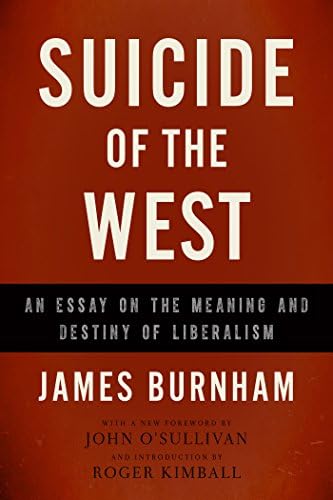
James Burnham predicted in Suicide of the West (1961) that liberal accommodation to Marxism would lead to Western suicide, as passive liberals never held Marxists accountable.
Much of postmodern culture was literal Marxist propaganda designed to hurt Western society, with authors like Marcuse openly stating they wrote new arguments for Marxism after old ones failed.
The 21st century map resembles a zombie apocalypse from Plague Inc., showing which areas can resist Mouse Utopia entropy through strong cultural identity and external threats.





These notes may contain occasional inaccuracies. Learn how podbrain notes are made
More in History

679. Germany: The Song Hitler Stole (Part 3)
Jun 14, 2026
Tom Holland Meets Paul McCartney
May 14, 2026Greece vs. Persia: The Battle of Marathon (Part 2)
May 13, 2026
Adolf Hitler (Part 3)
May 13, 2026Greece vs Persia: The Rise of the First Superpower (Part 1)
May 10, 2026.svg)