
Explaining the Age of the Last Men
This episode features Rudyard Lynch and Austin Padgett exploring Nietzsche's prophetic concept of the 'Age of the Last Men' - the era we're currently living through and potentially witnessing the end of. Lynch argues this represents the final chronological episode in the History 102 series, as it describes an ongoing...

Episode


- 01
Nietzsche predicted in Thus Spake Zarathustra that the 21st century would be the 'Age of the Last Men' - characterized by unprecedented wealth yet shocking conformity and spiritual emptiness
- 02
Mouse utopia experiments showed that when populations hit 2,000 in spaces for 6,000, complete social breakdown occurs with effeminate males, aggressive females, and zero reproduction
- 03
The Age of the Last Men would be 'the singular era of history that would most crush human agency' through resentiment - French for an extra-strong form of envy
- 04
Nietzsche said only 'a hundred brave soldiers' could defeat the Last Men because breaking out of the behavioral sink provides staggering advantages over those trapped inside
- 05
The transition from Last Men to Übermensch follows three stages: camel (bearing society's weight), lion (the great eternal 'no'), and child (space for healthy growth)
- 06
Beyond Good and Evil argues we need moral complexity beyond good-evil, adding 'grand versus petty' - where figures like Napoleon are clearly grand but unclear if good
- 07
The Last Men's greatest taboo is 'forcing others to care about their own society's death' - enabling democratically elected populations to vote for national suicide
- 08
Current crises like Epstein and Iran wars represent political legitimacy crises that may signal the end of the Last Men era within the next few years
Get the latest ideas from History102.
Plus the best new takeaways about philosophy from other top podcasts — read in minutes, not hours.
By continuing, you agree to podbrain's Terms and Privacy Policy.
These notes may contain occasional inaccuracies. Learn how podbrain notes are made
This episode features Rudyard Lynch and Austin Padgett exploring Nietzsche's prophetic concept of the 'Age of the Last Men' - the era we're currently living through and potentially witnessing the end of. Lynch argues this represents the final chronological episode in the History 102 series, as it describes an ongoing historical process that began around World War I and may be concluding within the next few years.
The discussion centers on Nietzsche's prediction from Thus Spake Zarathustra that the 21st century would be characterized by unprecedented material wealth and connectivity, yet marked by spiritual emptiness, conformity, and the systematic crushing of human agency. Lynch connects this to mouse utopia experiments, postmodern philosophy, and the broader cultural shifts that have shaped Western civilization since the early 20th century.
The conversation explores how various 20th century traumas - from World Wars to the Cold War - created cultural wounds that were never properly healed, leading to a society built around avoiding depth and challenge. They examine how this connects to works like Brave New World and The Giver, and discuss Nietzsche's prediction that this age would ultimately collapse under its own contradictions, giving rise to a new class of 'creators' or Übermensch.
The Paradox of 8 Billion Connected Souls Living in Conformity
Despite having 8 billion people who are 'the best educated, fed, provisioned, and connected of any era ever in human history,' the world shows 'shocking conformity' with identical problems across all cultures - expensive housing, career difficulties, family formation struggles, and collapsing birth rates.
Lynch observes that watching documentaries from South Korea, Brazil, Singapore, China, and Europe reveals the same issues everywhere: 'houses that are too expensive, young people not being able to get gainful careers, not being able to start families.'
Technological and cultural innovation is 'predominantly driven by a handful of great men' while 'cultural innovation is practically dead around the world' - even America, despite being ahead in most metrics, faces the same fundamental problems as everywhere else.
Nietzsche's Prophecy of Resentiment and the Crushing of Agency
Thus Spake Zarathustra predicted that the Age of the Last Men would be 'the singular era of history that would most crush human agency' through what Nietzsche called resentiment - a French word for resentment carrying 'an extra strong flavor' of envy that German couldn't convey.
Nietzsche witnessed the 1871 Paris communist revolution and 'saw these communist undercurrents,' using the French word because he 'wanted to convey the sort of extra layer of the envy' that would drive modernity psychologically.
The Last Men would have a perception of time stretching 'not more than three generations' because traditional institutions like nobility and church that established long time horizons would be destroyed, leaving no external standard besides 'the delusion of your given era.'
Mouse Utopia and the Behavioral Sink of Modern Society
Calhoun's mouse utopia experiments placed 9 mice in cages holding 6,000, and when populations hit 2,000, complete social breakdown occurred: 'Male mice became effeminate. You saw these mice who would just groom themselves all day and do nothing else called the beautiful ones.'
The behavioral sink affected all mice except 'the alpha male mice who died defending their harems' and 'the tunneler mice who had hobby' building complex tunnel networks - representing the only two archetypes that maintained sanity.
Modern society enforces mouse utopia norms globally through 'mass media and social media and dating apps and socialist governments' where 'majority urban societies vote in governments that use the regulatory state to enforce mouse utopia social norms across the entire population.'
Lynch notes that in rural Pennsylvania growing up, 'we didn't have most of the mouse utopian norms' and 'didn't know socially left-wing people until I was a teenager' - but feminism and 50% divorce rates still affected even rural areas.
The Postmodern Filibuster and Marxist Co-optation
Postmodernism emerged from French thinkers like 'Foucault or Sartre or Camus or Simone de Beauvoir' in the 1960s, many of whom 'were legitimate pedophiles or degenerates' who 'signed a waiver to legalize pedophilia.'
Postmodernism functions as 'intellectual masturbation' and 'a form of intellectual filibuster' - arguing that because moral categories can change, 'nothing is real,' which 'you can't actually live as a person with those ideas.'
The system uses moral relativism as 'a sleight of hands deception to just enforce a dogmatic Marxist worldview' where 'no value codes are okay except ours. You're not allowed to question this.'
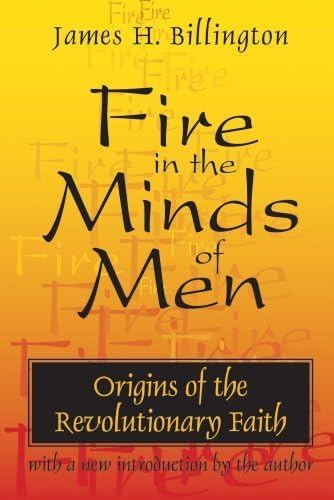
Fire in the Minds of Men by Billington shows that 'Marx was special because Marx made a comprehensive worldview and code that you can plug and play either for governments or for revolutionary movements' - unlike earlier cafe-level leftist movements that lacked structure.
Beyond Good and Evil: The Need for Grand Versus Petty
Beyond Good and Evil argues that Christian morality had degenerated into its inverse - 'Christianity's core emotion is love, and envy is the inverse of love' - requiring a new moral framework beyond simple good-evil dichotomies.
Nietzsche proposed adding 'grand versus petty' to moral evaluation: 'figures like Genghis Khan or Alexander are grand, and it's unclear if they're good. Genghis Khan clearly wasn't good... But they're clearly grand.'
The Last Men use pettiness to invalidate greatness: 'when people look at Napoleon, they try to call him an incel for his relationship with Josephine without realizing he was sleeping with like half a dozen other women at the same time.'
Examples like Christopher Columbus show the need for grandness: 'he was not very good person in his personal life, but he got us to reach the new world. And in the grand scheme of things, Christopher Columbus's personal life is vastly less important.'
The Three Stages: Camel, Lion, and Child
The Übermensch emerges through three stages, starting with 'the age of the camel' when 'you take on the weight of the society's social structure and it piles up... like a camel's back getting overlaid and wait until the camel snaps.'
The 'age of the lion' represents 'the great eternal no' when 'the society realizes that this is all bullshit' and 'only a hundred men could defeat it' because the Last Men system is so weak.
The 'age of the child' follows after 'the age of the lion shatters the last men's social structure' - providing 'space for the social structure to decompress to allow growth' because 'you have to give people freedom to let them grow.'
This creates 'a new social class called the creators' based around 'creativity and self-overcoming' - 'people like founders or artists or adventurers who cooperate together' as individuals building structures against conformity.
Dystopian Warnings and the Terrarium Effect
Brave New World by Huxley warned of 'a society that's built around humans' base biological needs, but none of their higher virtues or transcendence' with 'genetically engineered people to be complacent' and 'ritualistic orgies to keep people sexually satisfied.'
The Giver depicts 'this society, much like Brave New World, where everyone's numb, and the main character gradually breaks out of the numbness' - paralleling Lynch's experience of leaving 'the terrarium' and finding 'my sensation of my environment became much more richer.'
The 'terrarium' represents the controlled environment of modern consciousness where 'the system is actively built and designed to make that the incentive so the people in charge can control it' because 'in a natural, healthy society, they would not be in charge.'
The End of the Last Men and What Comes Next
Lynch believes 'we're watching its end now' with 'Epstein, as well as the Iran war, are political crises of legitimacy' and 'within the next few years, we can't continue the last man operating system for very long.'
The Age of the Last Men is unique as 'the last era of history where we can assume just human players will be operating' - before AI, genetic engineering, and robots change the fundamental nature of agency and power.
Tragedy and Hope by Quigley argued that 'the great crisis of modernity is the society is not mature enough for the levels... of power that people have now' requiring 'a philosophic or a spiritual breakthrough in the next century.'
The transition will be 'one of the most staggering jumps ever in human history because the last men repressed their entire shadow. So when the shadow comes out, it's insane' - moving from a society preventing individual growth to one where 'humans have the power of gods.'




These notes may contain occasional inaccuracies. Learn how podbrain notes are made
More in History

679. Germany: The Song Hitler Stole (Part 3)
Jun 14, 2026
Tom Holland Meets Paul McCartney
May 14, 2026Greece vs. Persia: The Battle of Marathon (Part 2)
May 13, 2026
Adolf Hitler (Part 3)
May 13, 2026Greece vs Persia: The Rise of the First Superpower (Part 1)
May 10, 2026.svg)