
Explaining Protestantism's History
This episode features YouTube creator Rudyard Lynch and co-host Austin Padgett exploring 400 years of Protestant history from 1600 to the present. Lynch argues that Protestantism has been unfairly overlooked in historical analysis despite building the modern world and dominating as the defining identity for most North...

Episode


- 01
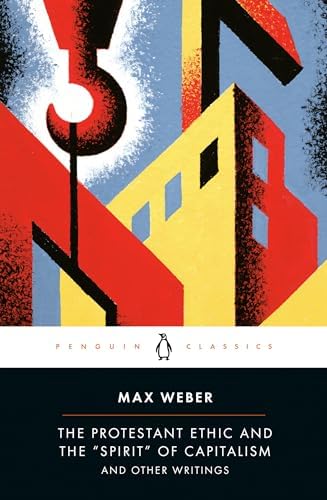
The Protestant Ethic and the Spirit of Capitalism by Max Weber demonstrates how Calvinist work ethic drove industrialization and capitalism in Germanic countries
- 02
Protestant countries were the 'spear tip of scientific and technological and military and political innovation' from the 17th century onwards
- 03
Yante's Law in Lutheran Scandinavia created conformist societies where 'you're not allowed to say that you're unhappy' despite happiness rankings
- 04
America was over 80% Christian in 2000, with most Americans in the 1990s wanting Christian theocracy according to Who Are We?
- 05
Pentecostalism has 800 million adherents globally, predominantly in Africa where missionaries present 'Christ as a great sorcerer who will protect you'
- 06
The death of God occurred in America only in the 21st century, decades after Europe's religious collapse
- 07
Calvinism was 'the origin of totalitarianism' but also 'the foundation for capitalism and a lot of freedom and science'
- 08
Protestant countries achieved near-universal literacy centuries before others, with literacy directly correlating to national wealth until the 20th century
Get the latest ideas from History102.
Plus the best new takeaways from other top podcasts — read in minutes, not hours.
By continuing, you agree to podbrain's Terms and Privacy Policy.
These notes may contain occasional inaccuracies. Learn how podbrain notes are made
This episode features YouTube creator Rudyard Lynch and co-host Austin Padgett exploring 400 years of Protestant history from 1600 to the present. Lynch argues that Protestantism has been unfairly overlooked in historical analysis despite building the modern world and dominating as the defining identity for most North Europeans until World War I.
The discussion covers how Protestant countries became the great powers of recent centuries, examining the theological and cultural differences between Lutheran, Calvinist, and nonconformist sects. Lynch draws heavily from Max Weber's analysis of the Protestant work ethic, David Hackett Fischer's cultural studies, and other scholarly works to trace how different Protestant traditions shaped national characters and political systems.
The conversation spans from the rigid theocracies of 17th-century Calvinists to modern evangelical resistance against secular culture, examining how Protestant adaptability enabled both capitalism and totalitarianism. They explore the global expansion of Protestantism, particularly Pentecostalism's growth in Africa and Latin America, while analyzing the recent collapse of religious belief in formerly Protestant nations.
The Protestant Map of 1600: Germanic Dominance and Religious Wars
Protestantism crystallized around northern Germany, England, Scotland, and Scandinavia after centuries of religious wars, with conversion typically driven by elites who forced populations beneath them to convert.
Germanic cultures predominantly converted to Protestantism while Celtic populations largely remained Catholic, though Welsh became an exception by maintaining their language through Welsh church documents.
The Habsburgs and French actively crushed Protestantism across Central Europe, forcing areas like Austria and Czechia back to Catholicism despite initial Protestant majorities.
Poland's Protestant minority nearly seized power in the 16th century, but as the country moved from a free society to serfdom, Catholicism became fused with Polish identity for social cohesion.
Lutheran Conformity and the Yante's Law Problem
Lutherans achieved universal literacy by requiring individual Bible reading, but maintained established church hierarchies run by monarchs, creating intellectual freedom within set dogmatic boundaries.
Lutheran societies developed Yante's Law - a conformist social code with rules like 'You're not to think you're anything special' and 'You're not to think you're smarter than us.'
Modern Scandinavian countries are 'supposedly the happiest societies in the world' but 'you're not allowed to say that you're unhappy' due to this conformist culture - Lynch
German Pietist traditions created introspective study groups discussing personal relationships with God, becoming 'supercharges for philosophy and abstract thinking' that influenced thinkers like Kant.
Calvinist Totalitarianism and the Origins of Capitalism
The Protestant Ethic and the Spirit of Capitalism by Weber identified how Calvinist countries like the Netherlands and eastern England became the industrialized nations through their work ethic.
Calvinism was 'the origin of totalitarianism' where 'basically, all of the totalitarian philosophies stem back to Calvinism' but also enabled capitalism and scientific advancement - Lynch
Escape from Freedom by Fromm explains how Calvinism appealed to merchant classes during rapid social changes, using faith as psychological unification when traditional hierarchies failed in capitalist structures.
Calvinist societies like Geneva and Scotland formed 'Taliban-like states' that removed freedom, with their concept of freedom being 'freedom to follow God' rather than individual liberty.
American Protestant Evolution and Sectarian Diversity
Albion's Seed by Fischer documents how New England Calvinists had 'psychology like a lot of Zoomers' with periodic anxiety attacks about reaching heaven and constant struggle sessions.
The Cousin Wars by Phillips describes how Scots-Irish converted from Calvinism to Baptist traditions partly because Baptist baptisms involved 'scantily clad women' and 'significantly more loose social structure.'
Baptists emerged as the dominant Southern religion through their principle of adult baptism, requiring conscious choice to be Christian rather than childhood conversion.
American Protestantism developed three psychological drives: 'busyness' (former Calvinists), 'sovereignty' (Midwest/South), and 'therapy wellness culture' (West Coast derived from Freudian psychology).
Global Protestant Expansion and Pentecostal Growth
Pentecostalism emerged in 1920s Los Angeles and now has 800 million adherents globally, predominantly in Africa where it blends with local shamanic cultures.
African missionaries present Christianity magically: 'Christ is a great sorcerer who will protect you, and Christ will drive away demons' because these are local spiritual concerns.
Protestant conversions in Latin America and Africa succeeded because they 'provided social order and weren't attached to the local corrupt elites,' creating high-trust communities independent of outside society.
Most global Protestant populations now exist outside Europe and North America, with majority Quaker populations in Kenya and East Africa, and majority Anglican populations in Africa.
The Death of God and Protestant Collapse
Darwin was 'a turning point for Protestantism' by pointing to 'the innate Darwinistic brutality of life,' leading to stupid battles over creationism versus evolution.
Who Are We? by Huntington documents that 'most Americans in the 90s basically wanted America to be a Christian theocracy' with over 80% Christian population as late as 2000.
Protestant countries like England, Netherlands, and Australia are now 'less than a quarter Protestant,' representing 'a huge historic shift' that has been 'almost entirely negative.'
America's religious collapse occurred in the 21st century as part of a global process affecting the Middle East, Vietnam, and Thailand simultaneously, not the earlier European decline.




These notes may contain occasional inaccuracies. Learn how podbrain notes are made
More in History

679. Germany: The Song Hitler Stole (Part 3)
Jun 14, 2026
Tom Holland Meets Paul McCartney
May 14, 2026Greece vs. Persia: The Battle of Marathon (Part 2)
May 13, 2026
Adolf Hitler (Part 3)
May 13, 2026Greece vs Persia: The Rise of the First Superpower (Part 1)
May 10, 2026.svg)