
Explaining American Cultural History
Rudyard Lynch, creator of WhatIfAltHist, and recurring co-host Austin Padgett explore America's cultural history through the lens of distinct regional sub-nations rather than a unified national identity. Lynch draws on his expertise in American cultural mapping and his family's multi-generational presence since the...

Episode


- 01
America consists of distinct sub-nations with different cultures and values, not a homogeneous population - 'out of many, one' originally acknowledged these differences
- 02
About 60% of Americans descend from colonial-era British migrations described in Albion's Seed, making this the demographic foundation despite later immigration waves
- 03
Standard American culture dominated from the Civil War to 1960s, crystallizing in Ohio/Pennsylvania/upstate New York as industrial synthesis of Quaker, Yankee, and German traits
- 04
The South developed master morality culture through slavery, while the North prized work - 'when de Tocqueville crossed the Ohio River, he said it was a seismic difference' - Rudyard
- 05
Frederick Jackson Turner's frontier thesis explains how westward expansion Americanized settlers, creating more fluid social structures than European village life
- 06
Blue State and Red State America have become 'different civilizations' with distinct religious, economic, family, and social structures according to Beautiful Losers analysis
- 07
Mouse utopia demographic collapse affects all groups, but rural populations have better survival chances than urban-concentrated recent immigrant populations
- 08
Small groups of radicals can seize historic moments and control institutions for generations - 'World War I progressives kept power for the next century' - Rudyard
Get the latest ideas from History102.
Plus the best new takeaways about history from other top podcasts — read in minutes, not hours.
By continuing, you agree to podbrain's Terms and Privacy Policy.
These notes may contain occasional inaccuracies. Learn how podbrain notes are made
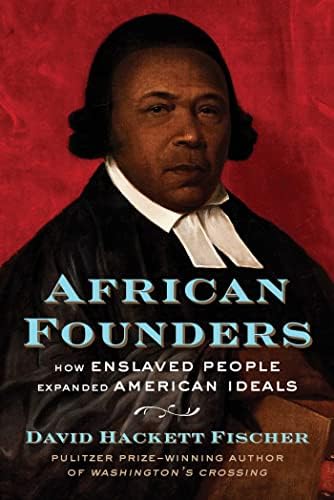
Rudyard Lynch, creator of WhatIfAltHist, and recurring co-host Austin Padgett explore America's cultural history through the lens of distinct regional sub-nations rather than a unified national identity. Lynch draws on his expertise in American cultural mapping and his family's multi-generational presence since the Mayflower to examine how different British colonial groups, described in David Hackett Fisher's Albion's Seed, established America's foundational cultures.
The discussion covers the evolution of these cultures from colonial settlement through the frontier period, industrial revolution, and into the modern managerial empire. Lynch argues that America's 'e pluribus unum' motto originally acknowledged these distinct sub-nations, but modern discourse ignores these cultural differences in favor of oversimplified racial categories. The conversation examines how geographic factors, migration patterns, and institutional control have shaped American identity, while critiquing both leftist multiculturalism and conservative cultural passivity.
The Albion Seed Foundation: Four British Migrations
Albion's Seed documents how four distinct British subgroups created America's regional cultures: Puritans from eastern England to New England, Cavaliers from Wessex to the Chesapeake, Quakers from the English Rust Belt to Pennsylvania, and Scots-Irish from the borderlands to Appalachia.
These groups represent 60% of American genetics today, making them larger than many European countries - 'there's more Americans of Scots-Irish ancestry than there are black Americans' - Rudyard.
Each group established distinct settlement patterns: New England built towns around churches, the Middle States around markets, and the South around courthouses reflecting their different social structures.
Geographic Determinism and Cultural Evolution
American geography created different cultural responses than Europe, with the 100th parallel marking where 'European-derived societies can no longer survive' and requiring new adaptations.
Lynch theorizes that 'different lands and geographies have innate characters and spirits that rub off on their inhabitants,' comparing the American intermountain west to the biblical Middle East.
The frontier created more fluid social structures than European village life, where 'social institutions are contractual relationships' rather than inherited obligations.
Native American cultural traits may influence white American development over time, as both societies developed individualistic cultures with high female status in response to the same geographic incentives.
The Rise and Fall of Standard American Culture
Standard American culture emerged in Ohio, Pennsylvania, and upstate New York as a synthesis of Quaker, Yankee, and German industrial values, dominating from the Civil War to the 1960s.
This culture became 'a useful aggregate for industrial America' because it rewarded individualism, hard work, and separation from family cliques over group cohesion.
The culture's fatal flaw was 'profound myopia about complex issues' - treating abstract thinking as 'hippie BS' while valorizing 'just work hard, don't worry about the government.'
Post-1960s elite institutions deliberately attacked standard American culture, creating a 'crisis of confidence' because it lacked 'immunological defenses against Marxist seizure of institutions.'
Slavery's Impact on Regional Development
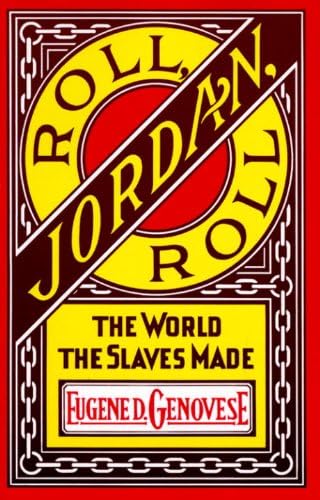
Roll, Jordan, Roll by Eugene Genovese shows how Southerners defended slavery using classical authors like Aristotle and Plato, creating a master morality culture.
The cotton gin paradoxically increased slavery's expansion despite technological efficiency, demonstrating how 'innovation can lead to increased demand for labor' through competitive advantage.
Bound Away reveals that Virginia experienced total population decline from the Revolution to Civil War, with more land reverting to forest as people migrated west.
The Civil War represented 'an economic reparation bigger than what Germany did to France' after the Franco-Prussian War, leaving the South poor for a century.
Immigration Waves and Cultural Assimilation
German Americans became the largest non-British group, assimilating rapidly because they were 'Anglo-Saxon, Protestant, and liked freedom,' with ancestry often hidden during World Wars as 'clean or dirty German ancestry.'
Irish Catholic migration concentrated in northeastern ghettos, taking over institutions after being 'widely hated' as pre-modern people who 'had not experienced the Enlightenment or science.'
Earlier migrants of the same ethnicity often disliked later waves: 'German Jews disliked Ashkenazi Jews from Eastern European ghettos,' and 'North Italians disliked South Italians.'
These European ethnic identities survived strongly in the Northeast into the 21st century, where 'everyone knew you're either British, German, Italian, or Irish.'
The Managerial Empire and Cultural Warfare
Beautiful Losers by Sam Francis analyzes how World War I progressives seized institutional control and maintained power for a century by constantly changing platforms while holding 'the mantle of command.'
Imperial American culture emerged around Washington D.C., New York, and Boston, creating an 'alliance against merit' between high-status elites, midwit bureaucrats, and controlled oppressed groups.
Blue State and Red State America became 'different civilizations' with distinct 'religious structure, economic structure, family structure, social formation' - but 'you're not allowed to say it.'
Red State culture developed 'artificial Philistinism' and 'peasant mindset,' rationalizing 'deliberate dumbing down by the managerial system as continuation of frontier culture.'
Demographic Transformation and Mouse Utopia
America shifted from 90% white in 1960 to the 50s today, but 'nearly every nation in Latin America has lower population growth than white Anglo-Americans' now.
Mouse utopia affects all demographics, but 'rural populations have much better chance of surviving' than urban-concentrated immigrant populations lacking 'coherent cultures.'
Recent immigrants face 'industrial-grade population transfer' into 'level five of mouse utopia,' creating historically unprecedented 'cultureless populations' in major cities.
Lynch predicts demographic sustainability issues because 'cities are never demographically replaceable' and atomized urban life prevents 'intergenerational mating and families.'






These notes may contain occasional inaccuracies. Learn how podbrain notes are made
More in History

679. Germany: The Song Hitler Stole (Part 3)
Jun 14, 2026
Tom Holland Meets Paul McCartney
May 14, 2026Greece vs. Persia: The Battle of Marathon (Part 2)
May 13, 2026
Adolf Hitler (Part 3)
May 13, 2026Greece vs Persia: The Rise of the First Superpower (Part 1)
May 10, 2026.svg)