
Kratom Addiction, Naked Justice & The Uber Eats To OF Pipeline -
This wide-ranging conversation features George (a UK content creator), Gary (an investigative journalist), and Sean (a business analyst) discussing everything from ancient Roman athletes to modern AI developments. The discussion weaves through topics including unusual food combinations, economic trends, technological...

Episode


- 01
Gaius Apuleius Diocles earned $15 billion in today's money as a Roman chariot racer, making him the highest-paid athlete in history
- 02
Kratom with 7OH extract is being called 'liquid heroin' with withdrawal potentially worse than actual heroin according to users
- 03
California's proposed 'Stop Nick Shirley Act' would criminalize investigative journalism that exposes healthcare fraud
- 04
Forbes 30 Under 30 has become a fraud watchlist with multiple inductees now incarcerated including Sam Bankman-Fried and Elizabeth Holmes
- 05
AI is making people less politically polarized by fact-checking claims, contrary to social media's divisive effects
- 06
Tesla plans to train 10,000 robots through self-play in a warehouse, similar to how AlphaZero mastered chess without human data
- 07
Supernormal stimuli explain why we're addicted to processed foods, social media, and cosmetic surgery - they hijack evolutionary responses
- 08
Mainstream media still drives political decision-making despite low viewership, making it an undervalued influence channel
Get the latest ideas from Chris Williamson.
Plus the best new takeaways from other top podcasts — read in minutes, not hours.
By continuing, you agree to podbrain's Terms and Privacy Policy.
These notes may contain occasional inaccuracies. Learn how podbrain notes are made
This wide-ranging conversation features George (a UK content creator), Gary (an investigative journalist), and Sean (a business analyst) discussing everything from ancient Roman athletes to modern AI developments. The discussion weaves through topics including unusual food combinations, economic trends, technological disruption, and social phenomena.
Key themes include the power of momentum over merit in success, the psychology behind supernormal stimuli, and how technology platforms shape human behavior. The conversation touches on investigative journalism challenges, AI's societal impact, and the recurring patterns of human adaptation to new technologies throughout history.
The $15 Billion Roman Chariot Racer
Gaius Apuleius Diocles earned $15 billion in today's money as a Roman chariot racer, making him the highest-paid athlete in history - far exceeding Michael Jordan's $1.8 billion career earnings.
The comparison highlights how pure athletic income without modern sponsorship deals could still generate massive wealth in ancient economies.
Kratom: The Gas Station Opioid Crisis
Gary is documenting kratom addiction for a documentary, describing the 7OH extract version as 'liquid heroin' with withdrawal potentially worse than actual heroin.
"I was drinking two of those a day, which is, it turns out it's a lot for that. But there's not a lot of 70H in it, from what I understand" - Gary on his kratom consumption.
The drug is sold over-the-counter at gas stations despite its potent psychoactive effects, creating a potential epidemic according to Gary's investigation.
The Attack on Investigative Journalism
California's proposed 'Stop Nick Shirley Act' would criminalize posting personal information of healthcare providers, effectively preventing fraud investigations.
The legislation appears designed to prevent exposure of fraud rather than protect against violence, according to Gary's analysis of similar transparency rollbacks in Puerto Rico.
Gary exposed a $2 billion financial scheme in Puerto Rico where taxpayer money was funneled to Wall Street consultants while residents lacked basic electricity.
Forbes 30 Under 30: The Fraud Pipeline
The Forbes 30 Under 30 list has become an unintentional fraud watchlist with Sam Bankman-Fried, Elizabeth Holmes, and Martin Shkreli all incarcerated.
One featured entrepreneur sold a student loan app to JP Morgan for $175 million claiming 4.25 million users when the real number was 300,000.
The pattern suggests momentum and hype often matter more than actual substance in business success, as described in The Score - choosing the right game matters more than playing well.
AI's Unexpected Political Moderation Effect
AI platforms are making people less politically polarized by fact-checking claims, contrary to social media's divisive algorithmic effects.
George successfully used AI to diagnose a 10-year skin condition that multiple doctors misdiagnosed, demonstrating practical health applications beyond the doom narratives.
Tesla plans to train 10,000 robots through self-play in a warehouse, similar to how AlphaZero mastered chess without human training data.
Supernormal Stimuli and Modern Addiction
Supernormal stimuli explain modern addictions - birds will abandon real eggs for fake ones that are bigger and brighter, just as humans choose processed foods over natural ones.
The solution involves resetting baseline expectations through detox periods, similar to how giving up soda makes it taste overly sweet when resumed.
Social media platforms exploit these same psychological mechanisms, but George has developed 'boom scrolling' - consuming content while exercising at high intensity to maintain flow state.
The Undervalued Power of Mainstream Media
Despite low viewership, mainstream media still drives political decision-making because leaders like Trump, Starmer, and Macron react heavily to coverage.
"The amount of reactionary time just goes to what's on the headlines that nobody's reading, really, apart from a few geriatric 65-year-olds" - George on political responsiveness to media.
This creates an arbitrage opportunity where mainstream media remains underpriced relative to its actual influence on policy and decision-makers.
The Problem-Solving Arc of Human History
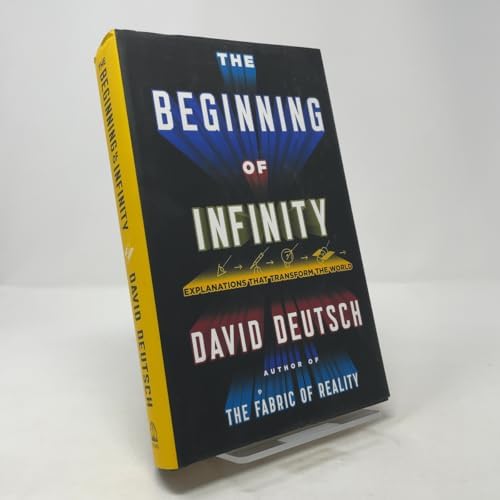
The Beginning of Infinity argues that human history is essentially continuous problem-solving, with each solution creating new challenges that drive further innovation.
The precautionary principle suggests we can identify problems but cannot forecast solutions - if we could, we'd already be implementing them and worth trillions.
This optimistic framework suggests that current AI concerns, like historical technology fears, will likely be solved through human ingenuity and adaptation.


These notes may contain occasional inaccuracies. Learn how podbrain notes are made
More in Self-Development

Can the Middle Class Be Saved? Political Division, Economic Doom & The Leadership Problem | Andrew Bustamante Pt. 2
Jun 20, 2026
The Career Trap That Makes Women Miserable - Suzanne Venker - #1113
Jun 20, 2026
How Immigration and War Test the Strength of Values and National Identity
Jun 19, 2026
7 Strategies for Becoming a Better Father | FRIDAY FIELD NOTES
Jun 19, 2026
ELECTROMAGNETISM Is The SECRET To Health: Biofield Tuning Explained | Eileen McKusick
Jun 15, 2026
.svg)