
David Friedberg - Everything You Know is About to Collapse
David Friedberg, founder and CEO of Ohalo and former Google executive, joins the conversation to discuss his optimistic vision for humanity's future. Despite widespread pessimism about AI, climate change, and economic inequality, Friedberg argues we're entering an era of unprecedented abundance driven by exponential...

Episode


- 01
David Friedberg predicts fusion energy will drop power costs to one cent per kilowatt hour this century, enabling massive economic expansion
- 02
Moon-based manufacturing using AI and robotics could reduce Mars colonization costs by 100x through mass drivers and local material production
- 03
Yamanaka factor research shows age reversal is entering clinical trials, potentially extending human lifespan indefinitely within 10-20 years
- 04
California's wealth tax proposal threatens private property rights by taxing post-tax assets, setting precedent for broader confiscation
- 05
AI technology is rapidly diffusing from centralized data centers to local devices, with models now running on desktop computers
- 06
Embryo selection for positive traits will likely become mainstream as parents see competitive advantages in enhanced children
- 07
Turning off meiosis in plants enables seed production in previously sterile crops, revolutionizing agriculture through consistent genetics
- 08
Government intervention correlates directly with price increases - healthcare and education costs skyrocket while unregulated goods become cheaper
Get the latest ideas from Chris Williamson.
Plus the best new takeaways from other top podcasts — read in minutes, not hours.
By continuing, you agree to podbrain's Terms and Privacy Policy.
These notes may contain occasional inaccuracies. Learn how podbrain notes are made
David Friedberg, founder and CEO of Ohalo and former Google executive, joins the conversation to discuss his optimistic vision for humanity's future. Despite widespread pessimism about AI, climate change, and economic inequality, Friedberg argues we're entering an era of unprecedented abundance driven by exponential technological progress.
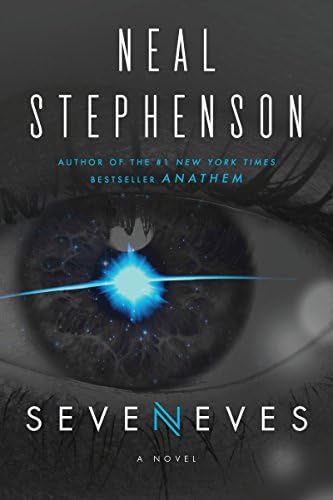
The discussion spans multiple transformative technologies currently in development: fusion energy that could drop power costs by orders of magnitude, age reversal therapies entering clinical trials, AI-powered robotics enabling moon-based manufacturing, and agricultural innovations that could revolutionize food production. Friedberg draws from Seveneves by Neal Stephenson to illustrate how space colonization will require entirely new legal and governance frameworks.
However, this technological optimism contrasts sharply with concerning political trends, particularly California's proposed wealth tax that threatens private property rights. Friedberg warns that while the East embraces these technologies for economic growth, the West's regulatory approach could stifle innovation and lead to capital flight, creating a dangerous divergence in global technological adoption.
Why Humans Are Programmed for Pessimism Despite Progress
Humans evolved to worry about existential threats, from biblical floods to 19th-century fears of running out of fertilizer from South American guano fields, until the Haber-Bosch process solved nitrogen production
"Every generation has these existential threats, climate change, COVID. There's always, and now it's AI" - David, explaining the pattern of technological fear cycles
Objective metrics show people living longer, healthier lives with access to homes, cars, and technologies unimaginable 100 years ago, despite relative prosperity concerns
The West has more to lose than gain from change, while Eastern countries like China embrace technology because they have more to gain, creating different adoption patterns
AI Diffusion Will Prevent Monopolization
Technology always starts centralized but eventually diffuses - just as early internet fears about Cisco dominating switches proved unfounded, AI is already moving from cloud to local devices
Andre Karpathy's weekend experiment showed 30 AI agents running on a home computer created better LLM models than early ChatGPT versions, demonstrating rapid decentralization
Startups are reducing AI token costs by 1,000x through better architecture, distributed models, and new chip designs, making large data centers less necessary
Physical AI will enable everyone to own robots that work 24/7 in their garages, creating custom bicycle shops or other businesses without needing manufacturing knowledge
Moon Manufacturing Could Transform Space Economics
Moving materials from moon to Mars costs 100x less than Earth to Mars due to one-sixth gravity and no atmosphere resistance
Moon dust contains aluminum, silicon, carbon, plus hydrogen and oxygen from polar ice - all raw materials needed for machines, housing, and chemical reactions
A 9-kilometer electromagnetic rail track could launch one ton of material off the moon using just a couple megawatt hours of solar power in 4.5 seconds
AI-powered robots could self-replicate on the moon, building factories, rails, and mining operations with minimal human oversight, creating a massive new economy
Fusion Energy Will Drop Power Costs to Near Zero
Fusion works by jamming protons together at 100 million degrees Celsius, releasing energy as hydrogen becomes helium without radioactive waste or meltdown risk
AI is solving the magnetic field control problem that previously prevented stable plasma, with China now holding fusion reactions for 30 minutes compared to 17 seconds just years ago
A swimming pool of ocean water could theoretically power the entire planet for a year through fusion, representing unlimited clean energy potential
Energy costs dropping from 15-40 cents to one cent per kilowatt hour would enable robot swarms to build mansions at near-zero marginal cost
Age Reversal Through Yamanaka Factors Entering Trials
Aging occurs when DNA repair processes accidentally move epigenetic markers to wrong positions, causing cells to lose their proper function over time
Yamanaka factors can reset these epigenetic markers to make old cells young again - demonstrated in mice living equivalent to 250+ human years
"We are in clinical trials now on several of these cocktails" - David, indicating age reversal treatments could arrive within 10-20 years
Exercise naturally releases molecules that address the epigenome, making it the best current intervention for maintaining youthful cellular function
Embryo Selection Will Become Mainstream Competition
IVF already involves selecting embryos by appearance, but genetic screening can now predict IQ, immune function, and disease risk with high accuracy
Parents who see enhanced children outperforming their own in school and sports will quickly adopt genetic selection despite initial moral objections
Higher IQ correlates with lower life satisfaction despite objective improvements, creating complex decisions for parents choosing traits
In a world with superintelligence, enhanced human capabilities may become necessary for children to remain competitive and relevant
California's Wealth Tax Threatens Private Property Rights
The proposed 5% wealth tax on billionaires sets precedent for government seizure of private property already purchased with post-tax income
"87% of people are going to leave" California according to informal surveys of tech leaders, with many startups already relocating to Nevada and other states
California spent $30 billion on a bullet train with nothing to show, while $220 million in homeless spending helped only six people escape poverty
The state faces $600 billion to $1 trillion in unfunded pension liabilities, driving desperate searches for new revenue sources through wealth confiscation
Government Intervention Drives Price Inflation
Healthcare, education, and housing costs skyrocketed 200%+ since 2000 due to government funding, while unregulated goods like TVs became 50-100% cheaper
Federal student loans with no underwriting standards allowed colleges to raise tuition from $10,000 to $60,000 annually without market discipline
Food stamp spending reached $100 billion annually with 60-70% of recipients clinically obese and $20 billion spent on soda rather than nutrition
Nearly half the U.S. population now depends on government checks through employment, contracts, retirement, or welfare, creating unsustainable voting dynamics
These notes may contain occasional inaccuracies. Learn how podbrain notes are made
More in Self-Development

Can the Middle Class Be Saved? Political Division, Economic Doom & The Leadership Problem | Andrew Bustamante Pt. 2
Jun 20, 2026
The Career Trap That Makes Women Miserable - Suzanne Venker - #1113
Jun 20, 2026
How Immigration and War Test the Strength of Values and National Identity
Jun 19, 2026
7 Strategies for Becoming a Better Father | FRIDAY FIELD NOTES
Jun 19, 2026
ELECTROMAGNETISM Is The SECRET To Health: Biofield Tuning Explained | Eileen McKusick
Jun 15, 2026
.svg)