
Eric Jorgenson - The Wild Psychology of Elon Musk
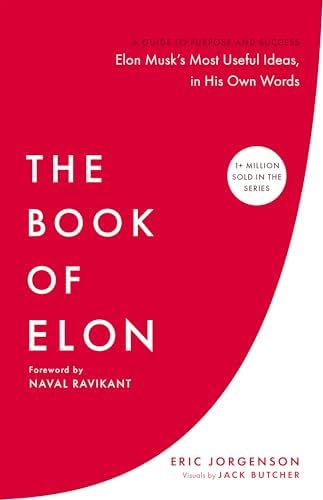
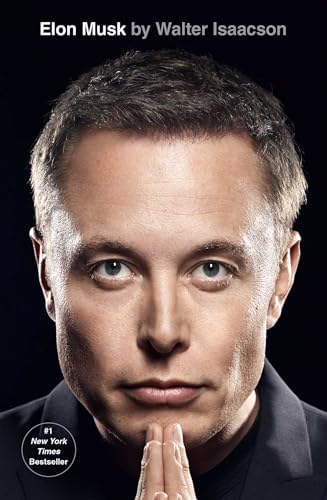
Eric Jorgensen, author of The Almanack of Naval Ravikant and founder of Scribe Media, discusses his new book Elon Musk A Guide to Purpose and Success with podcast host Chris Williamson. Jorgensen has compiled...

Episode


- 01
The Almanack of Naval Ravikant has sold nearly two million copies with millions more given away free, becoming one of the most gifted books in personal development
- 02
Elon Musk's new compensation package requires taking Tesla from $1 trillion to $10 trillion valuation - 'you don't have to pay me anything unless I do'
- 03
Musk chooses deadlines with 50% success probability: 'I don't want to be making 100% of my deadlines. That means they're way too conservative'
- 04
The idiot index reveals massive cost savings - one steel part costing $13,000 had raw material value of only $200
- 05
SpaceX started as pure philanthropy to inspire Mars missions, not as a business venture to dominate space launch
- 06
Musk's hiring philosophy: 'I'm looking for evidence of exceptional ability' in young, brilliant engineers willing to work maniacally
- 07
Fear of failure prevents more attempts than actual skill deficits: 'Fear of failure is the biggest cause of failure'
- 08
Purpose drives extreme risk tolerance - Musk's missions justify putting hundreds of millions on impossible odds
Get the latest ideas from Chris Williamson.
Plus the best new takeaways about space from other top podcasts — read in minutes, not hours.
By continuing, you agree to podbrain's Terms and Privacy Policy.
These notes may contain occasional inaccuracies. Learn how podbrain notes are made
Eric Jorgensen, author of The Almanack of Naval Ravikant and founder of Scribe Media, discusses his new book Elon Musk A Guide to Purpose and Success with podcast host Chris Williamson. Jorgensen has compiled millions of words from Musk's public statements into a tactical guide focusing on the two pillars of Musk's success: purpose and productivity.
The conversation explores how The Almanack of Naval Ravikant unexpectedly sold nearly two million copies across 40 languages, with millions more distributed free online. Jorgensen explains his unique approach of distilling entrepreneurs' wisdom from their own words rather than traditional biography writing.
They examine Musk's extraordinary achievements across Tesla, SpaceX, and other ventures, analyzing the specific methods behind his success. The discussion covers Musk's 69 core methods, from maniacal urgency and first principles thinking to his controversial management style and risk tolerance.
Drawing parallels to The Precipice by Toby Ord, they explore Musk's existential risk motivations and his mission to make life multi-planetary. The conversation also touches on the intensity philosophy found in Can't Hurt Me by David Goggins, comparing different approaches to pushing human limits.
The Unexpected Success of The Almanack of Naval Ravikant
The Almanack of Naval Ravikant has sold approximately two million copies with an additional five million distributed free online, translated into 40 languages despite Jorgensen initially expecting only 'a few thousand Naval nerds' to read it
The book frequently appears alongside Essentialism by Greg McKeown as the most recommended starting point for personal development, with its highest compliment being how often it gets gifted to others
Jorgensen's approach differs from traditional biography by focusing on usefulness - 'I try to collect all the most useful things that person has ever said' rather than comprehensive historical coverage
Purpose as Elon Musk's Hidden Success Driver
Elon Musk A Guide to Purpose and Success emerged from analyzing millions of words of source material, revealing purpose as the second pillar alongside productivity in explaining Musk's achievements
Musk's risk tolerance stems from purpose-driven missions: 'he's trying to accomplish something and he almost doesn't care how much risk it takes. He'll just keep taking chances until he breaks through'
His quote 'failure is irrelevant unless it's catastrophic' explains his attitude toward long odds - the importance of the mission justifies extreme risk-taking
Tesla and SpaceX were 'on nobody's radar' when Musk started them, appearing 'absurd' but driven by massive purposes rather than financial motivation
The Singular Nature of Musk's Achievements
Musk is 'the greatest living entrepreneur, hardstop, and maybe the greatest of all time' - accomplishing both Tesla and SpaceX simultaneously would each be singular achievements alone
He combines 'the intensity of David Goggins, the unconventional but natural brilliance of Richard Feynman, and the strategic brilliance and bias to action of Napoleon'
The scale is equivalent to 'if Zuckerberg had also started Google' - founding two top-10 companies in parallel while having 14 kids and running other ventures
At 53, with potentially 20 more productive years, the question becomes 'where does this go in 20 more years?' given his track record of impossible achievements
Maniacal Urgency and the Bias Toward Action
Musk's hiring process demonstrates extreme urgency - conducting a 20-minute SpaceX interview that ended with 'here's a job offer, fill in the blanks, sign it, go to work' at 6 PM on Saturday
He creates artificial urgency even when unnecessary: 'I don't feel enough urgency from you. I'm giving you a deadline. I don't care that it's arbitrary'
The Boring Company started at 2 AM when Musk called an engineer about traffic, saying 'start researching drilling machines, I'll call you back in two hours'
His daily routine: 'I wake up, I check my phone, I look for an emergency. There's always an emergency. And sometimes if there's not, he creates one'
First Principles Thinking and Cost Optimization
The 'idiot index' reveals massive cost savings opportunities - the ratio between raw material cost and final price, exemplified by a $13,000 steel part with $200 worth of raw materials
'The most common mistake of smart engineers is to optimize something that should not exist' - questioning requirements comes before optimization in Musk's five-step process
Tesla is the only car company actively driving prices down while competitors increase costs - a Ford F-150 should cost $15,000 adjusted for inflation but sells for $40,000-50,000
'If we don't make stuff, there is no stuff' - Musk's emphasis on production over financial engineering during COVID when others sought government assistance
The Personal Cost of Extreme Performance
Musk shows little evidence of self-care: 'barely sleeps, lives on his private jet, works maniacally all the time. No discernible good habits from what I can tell'
During the 2018 crisis, his COO found him 'catatonic under his desk' before an earnings call, requiring intervention to get him functional
His childhood trauma from an abusive father and severe bullying created 'this furnace in you that will never stop' - he's 'not comfortable with peace'
He describes his mind as 'a storm or a nonstop explosion' and when asked if it's a happy storm, responded 'No'
SpaceX and the Multi-Planetary Mission
SpaceX began as pure philanthropy called 'Mars Oasis' - Musk wanted to spend $100 million on a greenhouse photo from Mars to inspire NASA budget increases
The mission connects to The Precipice themes: 'we should all agree that we do not want the only form of life that we know in the universe to die'
SpaceX has 'essentially a monopoly on the toll booth off the planet' with 90%+ market share, making it incredibly valuable even without Starship development
The historical analogy: 'this is when the new world was discovered' - accessing raw materials throughout the solar system represents an 'unbelievable boon for humanity'
Lessons for Personal Application
The core insight from studying Musk: 'you're capable of a lot more than you think' - most people can push 10% or 50% harder without breaking
'Do not separate yourself from the pain of your decisions' - staying physically close to problems and their consequences improves decision-making
Parallel execution beats sequential: 'most normal people would start an electric car company, grow it, make it successful, and then start their space company' but doing both simultaneously compresses timelines
The entrepreneurship reality: 'If you don't eat the glass, you're not going to be successful' - eventually you must 'start to like the taste of it'



These notes may contain occasional inaccuracies. Learn how podbrain notes are made
More in Self-Development
Can the Middle Class Be Saved? Political Division, Economic Doom & The Leadership Problem | Andrew Bustamante Pt. 2
Jun 20, 2026
The Career Trap That Makes Women Miserable - Suzanne Venker - #1113
Jun 20, 2026
How Immigration and War Test the Strength of Values and National Identity
Jun 19, 2026
7 Strategies for Becoming a Better Father | FRIDAY FIELD NOTES
Jun 19, 2026
ELECTROMAGNETISM Is The SECRET To Health: Biofield Tuning Explained | Eileen McKusick
Jun 15, 2026
.svg)