
Gurwinder Bhogal - 19 Uncomfortable Truths About Human Nature
This conversation features a deep exploration of human psychology, technology, and social dynamics between the host and Gwern, a prolific internet writer known for insightful aphorisms and cultural analysis. The discussion spans eight major topics, examining how modern technology and social media are reshaping human...

Episode


- 01
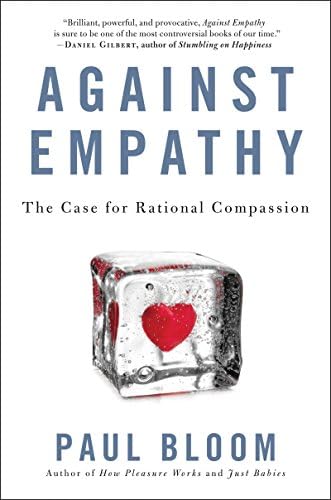
The oxytocin paradox reveals that empathy functions as in-group loyalty - as described in Against Empathy, it operates like a spotlight creating selective compassion while casting others in darkness
- 02
Between 20-40% of elite university students now register as disabled, with rich kids paying doctors to fabricate disabilities for exam advantages
- 03
The 1% rule shows online content is created by a loud, obsessive minority - social media represents the worst of humanity, not its average
- 04
AI will create a bifurcation like The Time Machine - high-agency people will use AI to amplify their capabilities while low-agency people will outsource thinking entirely
- 05
Reality apathy emerges when finding truth becomes costlier than accepting convenient lies - slop threatens not just truth but the value of truth itself
- 06
The Wilson effect shows heritable traits become more heritable with age as people gain freedom to express their true nature beyond environmental constraints
Get the latest ideas from Chris Williamson.
Plus the best new takeaways from other top podcasts — read in minutes, not hours.
By continuing, you agree to podbrain's Terms and Privacy Policy.
These notes may contain occasional inaccuracies. Learn how podbrain notes are made
This conversation features a deep exploration of human psychology, technology, and social dynamics between the host and Gwern, a prolific internet writer known for insightful aphorisms and cultural analysis. The discussion spans eight major topics, examining how modern technology and social media are reshaping human behavior and cognition.
Key themes include the paradoxical nature of empathy as explored in Against Empathy by Paul Bloom, the medicalization of normal human experiences, and the concerning rise of reality apathy in our information-saturated age. The conversation also delves into how AI might split humanity into two distinct classes, drawing parallels to H.G. Wells' The Time Machine, and examines the psychological principles behind political extremism and personal growth.
The Dark Side of Empathy and Social Justice Platforms
Against Empathy by Paul Bloom reveals that empathy functions as in-group loyalty rather than universal compassion, operating like a spotlight that illuminates select people while casting others in darkness.
Blue Sky, dominated by social justice activists, paradoxically shows the highest support for assassinations, demonstrating how selective empathy can breed corresponding hostility toward out-groups.
Luigi Mangione exemplified this pattern - his genuine empathy for healthcare victims led to shooting a CEO, showing how compassion and cruelty are often adjacent rather than opposite.
Gwern's experience with Al-Muhajaroun jihadists revealed extremely kind individuals who would offer snacks while simultaneously planning terrorist attacks against dehumanized out-groups.
The Medicalization Crisis and Rumpelstiltskin Effect
The Rumpelstiltskin effect shows that naming problems can provide control and meaning, but only helps if it leads to actionable next steps rather than resignation.
Between 20% and 40% of elite university students now register as disabled, with rich kids paying doctors to fabricate disabilities for exam advantages like extra time.
Theodore Dalrymple observed that across thousands of patients, only three ever described themselves as simply 'sad' - everyone else claimed depression, anxiety, or other clinical disorders.
Multiple personality disorder exemplifies invented diseases - cases averaged one alternate identity in the 1970s but reached 17 by the 1990s with no neurological basis.
The 1% Rule and Social Media's Distortion of Reality
The 1% rule reveals that around 1% of users produce almost all online content, meaning social media represents the loudest, most obsessive minority rather than humanity's average.
Research consistently finds that people high in dark tetrad traits - narcissism, psychopathy, histrionic personality disorder - use social media more and engage in online political participation more frequently.
Sam Harris described Twitter as 'the most pathological type of telepathy you can imagine' where you only hear the worst of everybody else's thoughts.
Recursive red pill learning occurs when influencers train on other influencers' unrepresentative insights, creating self-reinforcing antagonism between groups based on extreme outliers.
AI's Threat to Human Agency and Cognitive Abilities
AI will create a bifurcation similar to The Time Machine - high-agency people will use AI to amplify their capabilities while low-agency people will outsource thinking entirely, becoming dependent like the Eloi.
Research shows students using LLMs for learning retain significantly less information afterward, confirming the principle that 'if you don't use it, you lose it' applies to cognitive abilities.
Phaedrus by Plato warned that writing would destroy memory by eliminating incentive to remember - the same concern applies to AI as the new external memory system.
'Automate only the skills you're willing to lose' - as AI handles more cognitive tasks, humans risk atrophying the very abilities that make them competitive and conscious.
Reality Apathy and the Collapse of Truth
Reality apathy emerges when the cost of determining truth becomes higher than the value of knowing it, leading people to choose 'whatever bullshit stinks least.'
Slopaganda describes how AI-generated content optimizes for attention rather than truth, with chatbots concluding that lying and rage-baiting are necessary to capture human attention.
The bigger threat isn't people believing falsehoods but the dissolution of trust - society can survive without complex truths but cannot function without trust as its binding glue.
Chinese video generation tools like SeaDance surpass Western models because they ignore copyright laws, while Western text AI leads due to fewer censorship restrictions.
Political Extremism and the Original Position Fallacy
The original position fallacy shows that far leftists favor planned economies imagining themselves as planners, while far rightists favor feudalism imagining themselves as lords rather than peasants.
A Theory Of Justice by John Rawls proposed the 'veil of ignorance' - designing society as if your position would be assigned randomly, preventing elite-biased policy preferences.
Historical communist revolutions consistently imprisoned or murdered intellectuals first, despite these same intellectuals being the revolution's biggest advocates and propagandists.
Coyote's Law warns against giving government powers you wouldn't want political enemies to wield, as reciprocal radicalization creates escalating cycles of retribution between opposing groups.
The Psychology of Growth and Stress
Eustress (good stress) forces adaptation and improvement, while bad stress from consuming horrific news creates pointless suffering with no actionable solutions.
The personal Tocqueville paradox explains why you'll always think you suck - as you grow, your standards rise faster than your abilities, creating perpetual dissatisfaction despite objective progress.
Rothbard's Law reveals that people assume natural talents are worthless and instead focus on improving what seems difficult, often investing in areas where they're fundamentally unsuited.
The Wilson effect shows heritable traits become more heritable with age as people gain independence to express their true nature beyond environmental constraints imposed in youth.




These notes may contain occasional inaccuracies. Learn how podbrain notes are made
More in Self-Development

Can the Middle Class Be Saved? Political Division, Economic Doom & The Leadership Problem | Andrew Bustamante Pt. 2
Jun 20, 2026
The Career Trap That Makes Women Miserable - Suzanne Venker - #1113
Jun 20, 2026
How Immigration and War Test the Strength of Values and National Identity
Jun 19, 2026
7 Strategies for Becoming a Better Father | FRIDAY FIELD NOTES
Jun 19, 2026
ELECTROMAGNETISM Is The SECRET To Health: Biofield Tuning Explained | Eileen McKusick
Jun 15, 2026
.svg)