
Cal Newport - The collapse of modern attention (and how to get it back)
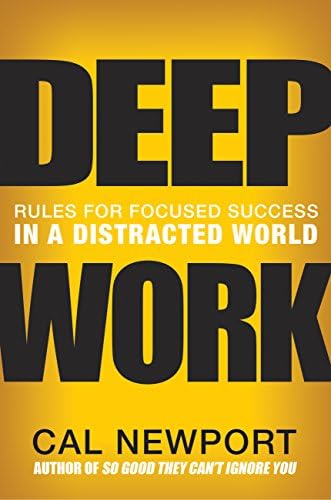
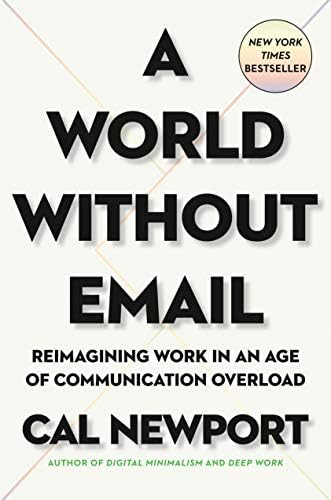
Cal Newport, computer science professor at Georgetown University and author of Deep Work, A World Without Email, and Slow Productivity, reflects on his decade-long campaign against distraction culture and the attention...

Episode


- 01
Microsoft data shows knowledge workers switch communication contexts once every two minutes, with actual productive work happening Saturday and Sunday mornings when communication expectations cease
- 02
Deep Work celebrates its 10-year anniversary this month, but the attention problems Newport identified have gotten significantly worse despite widespread recognition
- 03
AI 'work slop' - quickly generated but low-quality content - is making collaboration harder by creating outputs that require more effort to process than they save
- 04
The Kaplan scaling curve that drove AI excitement from GPT-2 to GPT-4 hit a wall with GPT-5, forcing companies toward narrow benchmark improvements rather than general capability gains
- 05
Default 'no' becomes essential as opportunities improve - the better your options become, the more seductive they are and the harder it becomes to maintain focus
- 06
Cognitive strain should be embraced like physical exercise burn - it's the differentiating factor in knowledge work as AI handles routine tasks
- 07
Reading physical books rewires the brain in ways that short-form content cannot, creating deep reading processes essential for complex thought
- 08
Hyperactive hive mind collaboration is a 'low energy state' that organizations naturally fall into because it minimizes complexity while still allowing companies to function
Get the latest ideas from Chris Williamson.
Plus the best new takeaways about productivity from other top podcasts — read in minutes, not hours.
By continuing, you agree to podbrain's Terms and Privacy Policy.
These notes may contain occasional inaccuracies. Learn how podbrain notes are made
Cal Newport, computer science professor at Georgetown University and author of Deep Work, A World Without Email, and Slow Productivity, reflects on his decade-long campaign against distraction culture and the attention economy. As Deep Work reaches its 10-year anniversary, Newport examines how his early warnings about social media ubiquity and hyperactive workplace communication have proven prescient, though the problems have worsened rather than improved.
The conversation explores the current state of knowledge work, where Microsoft data shows workers switching communication contexts every two minutes, with actual productive work relegated to weekend mornings. Newport discusses the rise of AI 'work slop' - quickly generated but low-quality content that paradoxically makes collaboration harder - and explains why the scaling laws that drove AI excitement from GPT-2 to GPT-4 have hit fundamental limitations.
Newport outlines his three-pillar approach to productivity: training focus as a skill, restructuring communication protocols away from constant messaging, and implementing explicit workload management. The discussion covers practical organizational reforms, the neuroscience of attention switching, and why reading full-length books remains essential for developing complex thinking in an age of algorithmic content optimization.
The Vindication of Deep Work's Predictions
Newport felt like 'Cassandra' 10 years ago when arguing against social media ubiquity and email-driven work culture, but his predictions about attention degradation have proven accurate.
His 2016 New York Times op-ed suggesting young people focus on career skills over social media was so controversial that the Times commissioned a response piece two weeks later.
While social media skepticism has become mainstream, the workplace distraction problem has actually worsened - 'It's gotten worse than it was' despite widespread recognition of the issue.
Microsoft's annual report on Office 365 usage shows knowledge workers now switch to communication tools once every two minutes, with productive work relegated to Saturday and Sunday mornings.
The Hyperactive Hive Mind as a Low Energy State
Newport coined 'hyperactive hive mind' to describe ad hoc, unscheduled messaging collaboration that emerged with email and was optimized by Slack.
Slack is 'the right tool for the wrong way to work' - it excellently facilitates constant back-and-forth messaging, but that collaboration style makes humans miserable.
This work style is a 'suboptimal Nash equilibrium' - a low energy state that minimizes complexity while allowing companies to function, making it extremely difficult to escape.
Human brains require 10-20 minutes to fully switch attention contexts between abstract targets, making constant interruption torture for cognitive systems evolved for physical world attention switching.
AI Work Slop and the Scaling Wall
Harvard Business Review identified 'work slop' - AI-generated emails, reports, and presentations that are quick to produce but so low quality they make everyone else's jobs harder.
The Kaplan scaling curve that drove AI excitement from GPT-2 to GPT-4 hit a fundamental wall with GPT-5, forcing companies toward narrow benchmark improvements rather than general capability gains.
OpenAI's Project Orion, Grok's 200,000 GPU Colossus data center, and Meta's unreleased BeMyth model all failed to achieve significant improvements through scale alone.
Newport predicts distributed AGI rather than HAL 9000 - thousands of specialized AI systems with hybrid architectures including LLMs, world models, policy networks, and logic engines.
The Three Pillars of Productivity Reform
Deep Work established focus training as a learnable skill, A World Without Email critiqued hyperactive hive mind communication, and Slow Productivity addressed workload management as the third essential pillar.
Newport advocates explicit workload tracking with work-in-progress limits, suggesting individuals work on only 3 things simultaneously to avoid the 'overhead tax' of administrative burden.
Communication reform requires eliminating hyperactive hive mind through daily office hours, morning stand-ups, and protocols for recurring collaboration types.
Organizations should implement company-wide 'intermittent fasting for communication' - no Slack before 1 PM with accountability meetings before and after deep work blocks.
Cognitive Strain as Competitive Advantage
Workers must embrace cognitive strain like weightlifters embrace muscle burn - 'That pain is directly translating to more strength and more muscle mass' for the brain.
Knowledge work is shifting toward more cognitively demanding tasks as lower-level work gets automated, making focus ability the primary differentiator.
Newport advocates the 'default no' rule for opportunities - as options improve, they become more seductive, requiring stronger rejection mechanisms to maintain focus.
Employment is ultimately a marketplace where 'busyness can't be monetized' - only rare and valuable output generated through concentration creates lasting economic value.
The Neuroscience of Deep Reading
Reading physically rewires the brain by connecting regions not originally meant to work together, creating what Marianne Wolf calls 'deep reading processes.'
The Shallows by Nicholas Carr documents research showing people skim more aggressively on screens versus physical pages, undermining comprehension depth.
Newport recommends daily page counts (20-25 pages) as 'cognitive steps' - baseline reading to maintain the modern brain's rewired architecture.
Book-length reading develops tolerance for complexity and nuanced truth, while short-form content creates 'slam dunk' thinking where simple arguments feel definitive.


These notes may contain occasional inaccuracies. Learn how podbrain notes are made
More in Self-Development
Can the Middle Class Be Saved? Political Division, Economic Doom & The Leadership Problem | Andrew Bustamante Pt. 2
Jun 20, 2026
The Career Trap That Makes Women Miserable - Suzanne Venker - #1113
Jun 20, 2026
How Immigration and War Test the Strength of Values and National Identity
Jun 19, 2026
7 Strategies for Becoming a Better Father | FRIDAY FIELD NOTES
Jun 19, 2026
ELECTROMAGNETISM Is The SECRET To Health: Biofield Tuning Explained | Eileen McKusick
Jun 15, 2026
.svg)