
Charlie Houpert - How to Survive the Death of Your Old Self
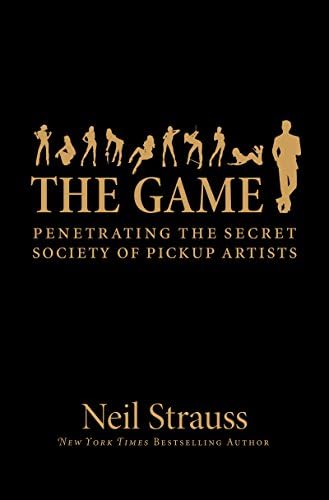
Charlie Houpert, founder of Charisma on Command with nearly 7 million subscribers, sits down with Chris Williamson to explore his evolution from pickup artistry and optimization to emotional and spiritual development. Charlie's journey began with reading The Game and...

Episode


- 01
Charlie identifies a 'second lonely chapter' when optimization stops working and friends remain in that optimized zone - 'I did not know where to go, but I just knew that it wasn't working'
- 02
The hierarchy of development moves from results to actions to emotions to spirituality, with each transition requiring sacrifice of previous certainty and creating temporary isolation
- 03
The Game and How to Win Friends and Influence People represent the shift from victim consciousness to behavioral change, but success without spiritual connection creates emptiness
- 04
Unteachable lessons persist because 'we prefer to disregard mountains of warnings from our elders' and convince ourselves we're exceptions to universal wisdom
- 05
Charisma originally meant 'divinely given gift' - not manipulation tactics but authentic radiance when 'God moves through you' in speech, dance, or love
- 06
Modern sensitivity requires new armor: 'how many patterns I have in life that are compensatory mechanisms for a world that is not very gentle with somebody that is an open vessel'
- 07
The masculine-feminine integration involves both 'order out of chaos' analytical structure and 'receptive, listening, what does life want for me' flowing intuition
- 08
Mythology serves as a bridge between emotions and spirituality, with archetypal patterns like Hephaestus-Aphrodite-Ares revealing universal psychological structures we can learn from
Get the latest ideas from Chris Williamson.
Plus the best new takeaways about psychology from other top podcasts — read in minutes, not hours.
By continuing, you agree to podbrain's Terms and Privacy Policy.
These notes may contain occasional inaccuracies. Learn how podbrain notes are made
Charlie Houpert, founder of Charisma on Command with nearly 7 million subscribers, sits down with Chris Williamson to explore his evolution from pickup artistry and optimization to emotional and spiritual development. Charlie's journey began with reading The Game and Dale Carnegie to overcome shyness, building a successful business teaching charisma, but eventually hitting an existential wall despite achieving all his material goals.
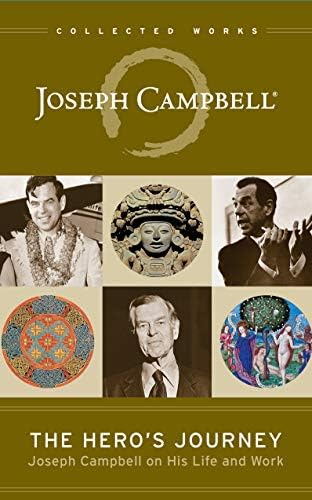
The conversation maps Charlie's progression through what he calls a developmental hierarchy: from focusing on results to actions to emotions to spirituality. Each transition created what Charlie terms 'lonely chapters' - periods of isolation as he outgrew previous paradigms while friends remained behind. His recent spiritual awakening, influenced by mythology and Joseph Campbell's hero's journey framework, has led him to redefine charisma from manipulation tactics to authentic divine expression.
Chris and Charlie explore the broader cultural moment around masculinity, discussing how figures like Dr. K, Joe Hudson, and others are pioneering a 'third wave' of the manosphere that integrates sensitivity with strength. They examine the tension between real-world success and inner peace, the role of mythology in psychological development, and how ancient wisdom from works like The Odyssey and Dante's Inferno can guide modern personal transformation.
The Terror of No Unifying Thread
Charlie discovered a 'second lonely chapter' beyond the typical optimization phase: 'when you bottom out on the optimizing thing and your friends are still very much in that optimized zone'
The common thread was attending to life's greatest problems by learning from others, starting with shyness and victim consciousness before reading The Game and How to Win Friends and Influence People
Success without spiritual connection created emptiness: 'I was 30 years old, had this business that I dreamed of, the girlfriend that I'd imagined myself dating, a bunch of friends, money was coming in' but felt profound hollowness
Breaking things unconsciously occurred because 'my soul was waking up' - the lack of emotional and spiritual nourishment from the previous decade had caught up
The Unteachable Lessons We All Learn the Hard Way
Chris presents his theory of unteachable lessons: 'No matter how arduous, or costly, or effortful it is going to be for us to find out for ourselves, we prefer to disregard the mountains of warnings from our elders'
The most important lessons are always the obvious ones: 'money won't make you happy, fame won't fix your self-worth, you don't love that pretty girl, she's just hot and difficult to get'
Charlie reframes this as necessary development: 'You are not supposed to listen to other people tell you that it hurts to bump your head or burn your hand on the stove'
The shame comes from the voice saying 'I told you so' - but the lesson is that everybody fails to learn these lessons, making the experience universal rather than personal failure
The Hierarchy of Results, Actions, Emotions, and Spirit
Charlie maps development as a pyramid: results (victim mindset) → actions (behavioral focus) → emotions (feeling-based) → spiritual (connection to something greater)
Each transition creates loneliness because 'you don't get to bring all your friends with you' and there's a performance dip while learning the new level
The emotional level requires switching from discipline-based fuel ('turn sadness into rage') to sitting with shame, helplessness, and grief as sources of authentic power
The spiritual level addresses 'separation from life, separation from God' - particularly relevant for Americans who are 'ancestrally disconnected, spiritually disconnected, disconnected from the land'
Mythology as Bridge Between Psychology and Spirituality
Carl Jung bridges analytical Western thinking with Eastern spirituality, while Joseph Campbell's hero's journey provides a 12-year developmental cycle framework
Charlie used Campbell's stages to navigate his own journey, recognizing the 'temptation of the woman' when offered a business buyout, just like Odysseus with Calypso in The Odyssey
Greek myths reveal archetypal patterns: Hephaestus (craftsman), Aphrodite (beauty), and Ares (warrior) represent the eternal triangle of intellectual, aesthetic, and physical power
Mythology provides 'metaphysically real' structures in human psychology that help reconnect with missing parental archetypes and universal patterns
Redefining Charisma from Manipulation to Divine Expression
Original charisma etymology comes from Greek meaning 'divinely given gift' - not behavioral tactics but authentic radiance when 'God moves through you'
Charlie's evolution: 'I had understood charisma to be what do people like about me?' but now sees it as 'finding the intersection of radiance and authenticity'
The challenge is serving his core audience wanting 'tips, tricks' while expanding into 'how does God move through you?' - a significant platform pivot
Jordan Peterson successfully made this transition from clinical psychology to mythology with Genesis and Pinocchio analysis, proving public appetite for Jungian content
The Masculine-Feminine Integration Challenge
The over-optimizer creates 'order out of chaos' by constraining uncertainty, but this prevents the receptive, intuitive 'what does life want for me?' approach
Carl Jung's Hieros Gamos (sacred marriage) suggests integrating both masculine (analytical, structured) and feminine (receptive, flowing) principles within oneself
Modern relationships suffer when partners depend on each other for missing aspects: 'when you are dependent upon the other person for feminine access, there's a sense of dependency and resentment'
True vulnerability means 'telling the truth even when it's scary' while maintaining containment - feeling everything but having a vessel that can hold it
Navigating Sensitivity in an Insensitive World
Post-retreat sensitivity required recognizing 'how many patterns I have in life that are compensatory mechanisms for a world that is not very gentle with somebody that is an open vessel'
Autism may represent 'people entering the world with intense sensitivity' who lack coping mechanisms for overstimulation but possess unique gifts
The challenge is maintaining armor when necessary while staying open to beauty: 'when you tune everything out, you miss the beauty of the flowers and the cars and the cicada'
Chris's realization about saying 'ouch' when hurt rather than immediately problem-solving: acknowledging pain before moving to solutions
The Third Wave Manosphere and Future Direction
Three manosphere waves: pickup artistry (The Game), red pill/black pill complaints, and emerging emotional integration featuring Dr. K, Joe Hudson, and others
The missing piece is 'strength in sensitivity' - how to 'navigate the things that you feel and still get the outcomes that you want'
Charlie envisions serving as a 'digital older brother' helping men through developmental stages from 'what do I text her' to 'how do I be a good dad'
The role model desert requires new archetypes: 'I couldn't find a marriage that I wanted' - creating need for integrated masculine-feminine examples



These notes may contain occasional inaccuracies. Learn how podbrain notes are made
More in Self-Development

Can the Middle Class Be Saved? Political Division, Economic Doom & The Leadership Problem | Andrew Bustamante Pt. 2
Jun 20, 2026
The Career Trap That Makes Women Miserable - Suzanne Venker - #1113
Jun 20, 2026
How Immigration and War Test the Strength of Values and National Identity
Jun 19, 2026
7 Strategies for Becoming a Better Father | FRIDAY FIELD NOTES
Jun 19, 2026
ELECTROMAGNETISM Is The SECRET To Health: Biofield Tuning Explained | Eileen McKusick
Jun 15, 2026
.svg)